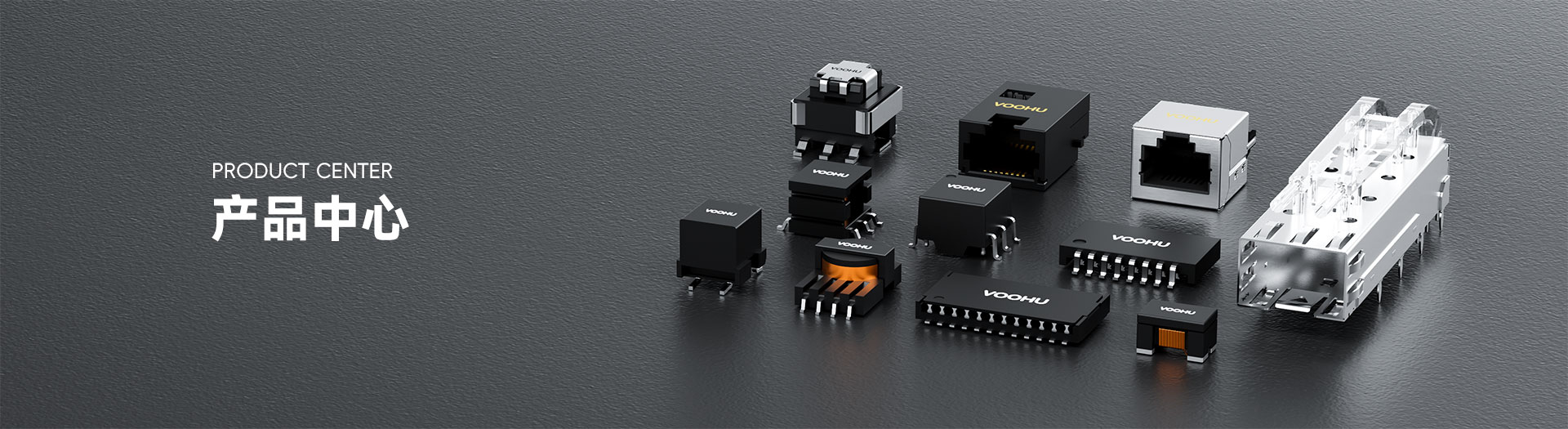
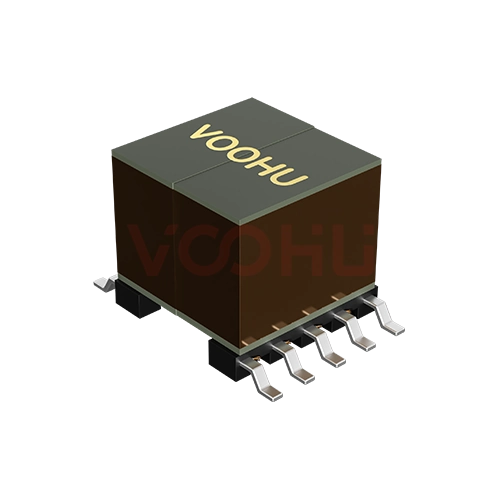
WHSQ24702-1PTG Single Port SMD 2.5G/5G PIN24 LAN Transformer


Request a Quote
Leave your details and we will send a tailored volume quote.
Our sales team will contact you within 1 business day.
Contact Sales
Reach our sales team for pricing and lead time.

Submitted
We have received your request. Our sales team will contact you within 1 business day.



For technical assistance, pleaseclick the button below to add customer service or visit the sample request pageto fill out the form. We will serve you as soon as possible.
Technical Support Email: fae.thorne@voohu.cn Phone: +86 400-1048-018
For more details, please visit theDownload Centerto get documents or click the button below to add customer service. We will serve you as soon as possible.


For purchases and small-volume orders, please contact our sales team. We support VAT general/special invoices with a convenient and efficient process.
For technical assistance or sample requests, pleaseclick the button belowto add customer service orvisit the sample request pageto fill out the form. We will serve you as soon as possible.
Customer Service Email: song.lei@voohu.cn Phone: +86 180 2130 1120
The WHSQ24702-1PTG carries 720 mA of DC balance current in each magnetic channel, and its datasheet rates the device at 30 W for PoE.The figure belongs to each channel individually, not to the port's two channels together, and must not be multiplied by the coil count. The datasheet names no IEEE 802.3 clause, so VOOHU states the current and wattage capability of the WHSQ24702-1PTG rather than compliance with a standard.
Where the steady current in the target port will exceed that level, theWHSQ24706-2PTGpublishes 1200 mA per channel in the same footprint, pin assignment and temperature range.
The WHSQ24702-1PTG and the WHSQ24706-2PTG share footprint, pin assignment and operating temperature; the differences are the current rating, the frequency ceiling of the high-frequency items, and the OCL test condition.The WHSQ24702-1PTG carries 720 mA per channel at a 30 W device rating, with its four high-frequency items specified to 250 MHz.
TheWHSQ24706-2PTGcarries 1200 mA at 60 W, with the same four items specified only to 200 MHz, and its OCL minimum is quoted with a DC bias applied where that of the WHSQ24702-1PTG is not. Settle the rating from the steady port current first. If the higher rating is chosen, write the qualification plan to that part's lower frequency ceiling.
The WHSQ24702-1PTG suits single-port 2.5G/5G equipment that has to deliver power while the component sits anywhere between -40 °C and +85 °C.The WHSQ24702-1PTG is a 24-pin single-port SMD 2.5G/5G BASE-T transformer that combines the wide temperature range with PoE current capability, which is the combination outdoor access points, trackside and roadside industrial switch ports, and edge gateways in poorly conditioned cabinets all need.
The datasheet gives the component temperature only and publishes no temperature-rise figure, so the permitted ambient has to be established by measuring self-heating in the finished unit. Do not read the upper limit of the component range as an ambient limit. Other options are listed in the2.5G/5G BASE-T range.