

Nombre de broches
Sets the number of winding taps and the board footprint. Parts with different pin counts are not drop-in replacements for each other.
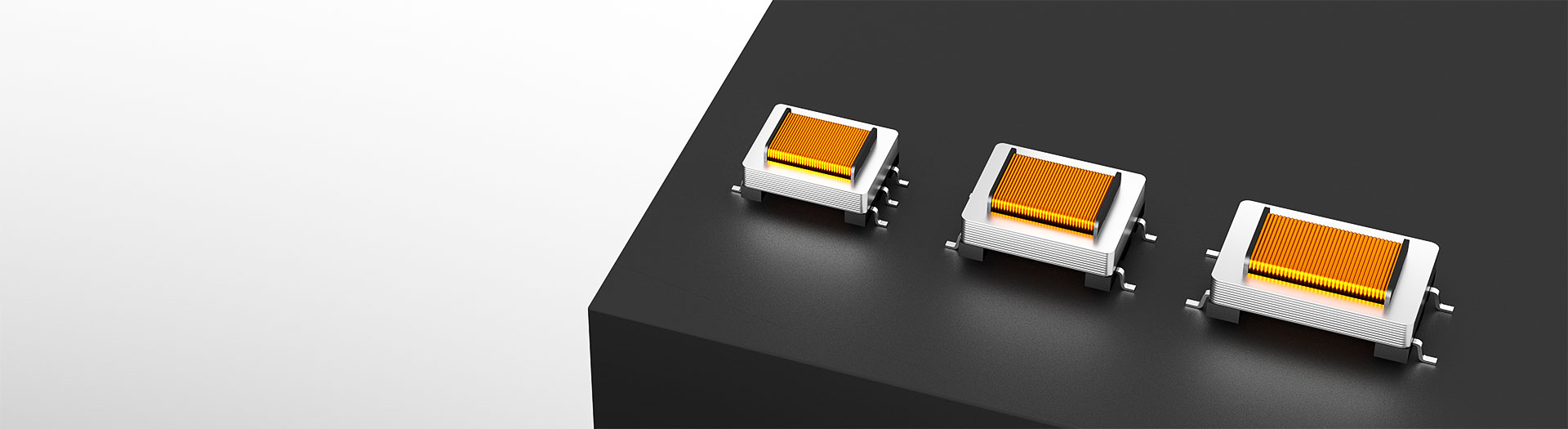
Gamme de transformateurs
Audio transformers match impedance and provide galvanic isolation on audio lines, breaking the ground loops that cause hum. Filter by pin count, AC impedance, turns ratio and withstand voltage, then check insertion loss, frequency response and the mounting footprint before you commit to a part.
Recherche et sélection de références
Le tableau utilise les fiches produits actuelles du site anglophone, les critères de sélection publiés et les liens vers les fichiers techniques propres à chaque référence.
* Colonnes Image et Référence figées · faites glisser horizontalement pour consulter toutes les caractéristiques
| Image | Fiche technique | Comparer | Téléchargements |
Broches
|
L/l/H (mm×mm×mm)
|
Impédance AC PRI:SEC (Ω)
|
Résistance DC PRI:SEC (Ω)
|
Rapport de transformation (PRI:SEC)
|
Mode de montage
|
Essai diélectrique (AC)
|
Perte d'insertion (dB)
|
Perte d'insertion (dB)
|
Échantillon |
|---|
| Image | Référence | Fiche technique | Comparer | Téléchargements | Broches | L/l/H (mm×mm×mm) | Impédance AC PRI:SEC (Ω) | Résistance DC PRI:SEC (Ω) | Rapport de transformation (PRI:SEC) | Mode de montage | Essai diélectrique (AC) | Perte d'insertion (dB) | Perte d'insertion (dB) | Échantillon |
|---|---|---|---|---|---|---|---|---|---|---|---|---|---|---|
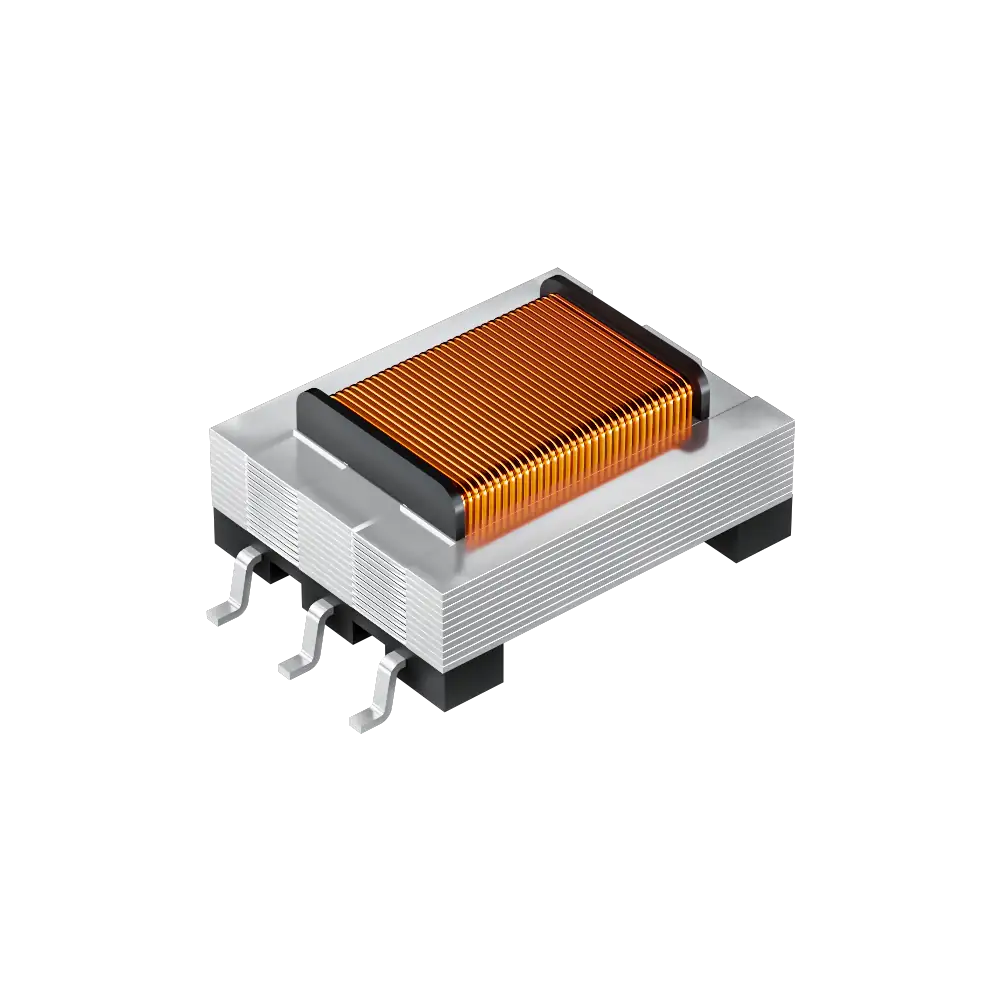 |
WHTT6016 | SPEC | 6 broches | 13.5*10.0*7.50 | 10000:10000 | 1620:1620 | 1±1% | SMD | 3750V | 2 | — |
|
||
|
|
WHTT6010 | SPEC | 6 broches | 14*8*4.4 | 600:412 | 115:115 | - | SMD | 4600V | - | — |
|
||
|
|
WHTT6001 | SPEC | 6 broches | 13.2*8.2*5 | 600:316 | 155:150 | 1±1% | SMD | 1250V | 3.0±0.25 | — |
|
||
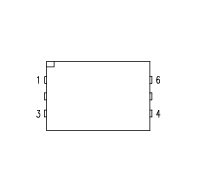 |
WHTT6033 | SPEC | 6 broches | 13.5*9.5*7.5 | 600:430 | 170: 170 | 1±1% | SMD | 3880V | 4.5 | — |
|
||
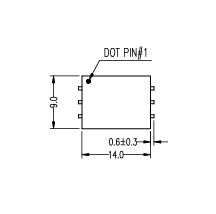 |
WHTT6017 | SPEC | 6 broches | 15.2*9.0*7.5 | Aucun | 50:50 | 1±2% | SMD | 1500V | - | — |
|
||
 |
WHTT14131 | SPEC | 6 broches | 14*8*4.4 | 600:316 | 30:38 | - | DIP | 1200V | - | — |
|
Élargissez les filtres sélectionnés ou effacez la recherche en cours.
By pin count
Pin count sets the winding taps and the board footprint, so start from the circuit you have.
Comment sélectionner
Work from the source and load impedance outward to the mechanical constraints.
State the source impedance, load impedance, signal level and frequency range, and whether the stage has to convert balanced to unbalanced.
The impedance ratio is the square of the turns ratio. A 600:600 part is 1:1; stepping 600 down to 150 ohm needs a 2:1 turns ratio.
Confirm the maximum signal level the core can carry without saturating, then confirm the dielectric strength the safety case demands.
Match pin count, pin pitch and height against the board, then verify insertion loss and frequency response on your own hardware.
Parameters
Each figure is measured under stated conditions; read the conditions with the number.
Sets the number of winding taps and the board footprint. Parts with different pin counts are not drop-in replacements for each other.
Quoted for a stated frequency, commonly 1 kHz. Read the test frequency with the value; the same part reads differently elsewhere in the band.
Fixes the impedance transformation and the voltage relationship between windings. Impedance ratio equals turns ratio squared.
Winding copper loss. It adds to insertion loss and matters most when the winding also carries a bias current.
The isolation the barrier withstands under the stated test. Choose against the safety requirement, not against the working voltage alone.
Signal lost through the transformer at the stated frequency. Compare candidates at the same frequency or the numbers do not mean the same thing.
Comparer
Pin count and impedance separate the families more than package size does.
Revenir au sélecteur ↑| Broches | Références | L/l/H (mm×mm×mm) | Impédance AC PRI:SEC (Ω) | Résistance DC PRI:SEC (Ω) | Rapport de transformation (PRI:SEC) | Mode de montage | Essai diélectrique (AC) | Perte d'insertion (dB) | Perte d'insertion (dB) | Action |
|---|---|---|---|---|---|---|---|---|---|---|
| 4 broches | 17 | 11*8.2*5, 14*8*4.4, 14.5*8.2*5, 14*8.15*5.08, 15.2*8.2*5, 15.2*8*5.08, 15.2*8.2*4.9, 15.6*8.5*5, 18.5*5.08*4.6, 18.2*8.5*4.6, 20.9*8.5*4.5, 20.5*8.5*4.5 | 600:287, 600:290, 600:301, 600:346, 600:400, 600:600, 20000:20000 | 140:170, 105:105, 48:42, 160:135, 157:146, 73:73, 150:150, 160:133, 118:140, 62:3.2, 155:144, 180:160, 141:171, 2370:2820 | 1±1%, 1±2%, 1±3%, 6±1% | SMD | 1000V, 1250V, 1500V, 1650V | 1, 1.3±0.5, 1.5, 2.9±0.1, 3.3±0.2, 3.3±0.25, 3.5, 3.85, -, 2.3 | Non spécifié | Filtrer → |
| 5 broches | 5 | 14.5*8.2*5, 14.5*8.2*4.8, 14.5*8.5*5.08 | 600:600, 600:365, 600:460, 300:600, Aucun | 120:250, 138:130, 90.5:112:102, 45:55, 65:75 | 1±1%, 1±2%, 2±1% | SMD | 500V, 1000V | 2.8, -, Non spécifié | 1.3, Non spécifié | Filtrer → |
| 6 broches | 6 | 13.2*8.2*5, 13.5*9.5*7.5, 13.5*10.0*7.50, 14*8*4.4, 15.2*9.0*7.5 | 600:316, 600:412, 600:430, 10000:10000, Aucun | 155:150, 115:115, 30:38, 50:50, 170: 170, 1620:1620 | 1±1%, 1±2%, - | SMD, DIP | 1200V, 1250V, 1500V, 3750V, 3880V, 4600V | 2, 3.0±0.25, 4.5, - | Non spécifié | Filtrer → |
Analyse de l’application
Confirm line level, balanced wiring and the impedance ratio the circuit expects.
Documents
Datasheets carry the tested impedance, frequency response and recommended footprint.
Affichage de jeux de fichiers disponibles représentatifs. Recherchez un SKU précis.
Le contenu produit publié par VOOHU est vérifié par son équipe technique. Les caractéristiques, les téléchargements et les informations d’assistance technique sont associés à des références précises afin que vous puissiez les vérifier avant de demander des échantillons ou un devis.
Présentation de la catégorie
Two questions come up on almost every audio transformer enquiry: what the part is actually for, and why so many datasheets quote 600 ohm.
Discuter d’une nouvelle conception
Contacter l’équipe FAE pour une évaluation de remplacement.
Vous avez déjà une référence ? Demander des échantillons ou un devis.
An audio transformer couples a signal magnetically between two windings. Nothing conducts across the barrier, so a ground loop between two pieces of equipment cannot push current through the signal path. That is what removes hum. The second job is impedance matching, so a source drives a load it can actually deliver power into.
600 ohm is a telephone and broadcast line convention rather than a law of physics. It became the reference impedance for balanced audio lines, so parts and equipment were built around it. A 600:600 transformer is a 1:1 isolation part; a 600:150 part steps impedance down by four, which is a 2:1 turns ratio.
Identify the primary, secondary and any centre tap from the datasheet pinout, not from the physical symmetry of the package. Keep the balanced pair symmetric on the board. Then measure insertion loss and frequency response on your own hardware, because the published curve is taken under the datasheet's stated source and load.
FAQ
Answers cover function, the 600 ohm convention, wiring and interchange limits.
It couples an audio signal magnetically between two windings, so the two sides share no electrical connection. That breaks ground loops, which is the usual cure for hum between two pieces of equipment. It also transforms impedance, letting a source drive a load it can deliver power into, and it can convert between balanced and unbalanced wiring.
600 ohm is a convention inherited from telephone and broadcast line practice, not a physical constant. It became the reference impedance for balanced audio lines, so equipment and parts were designed around it. A 600:600 part is a 1:1 isolation transformer. If the datasheet quotes a different pair, read the test frequency alongside it.
Impedance ratio is the square of the turns ratio. To go from 600 ohm to 150 ohm the impedance ratio is four, so the turns ratio is two to one. Fix the source and load impedance first, then derive the ratio, then confirm the part carries your maximum signal level without the core saturating.
Yes. Pin count sets how many winding taps are brought out and therefore how the part can be wired: whether a centre tap is available, whether both windings are fully accessible, and how it sits on the board. Parts with different pin counts are not interchangeable even when the electrical ratings look similar.
Not automatically. Matching impedance is necessary but not sufficient. Compare turns ratio, DC resistance, dielectric strength, maximum level and insertion loss, and check the pinout and footprint. After any change, re-measure frequency response and distortion on your own board rather than relying on the datasheet curve.
It will have some effect. Every transformer has insertion loss, a finite bandwidth and a level above which the core saturates and distortion rises. How audible that is depends on the part and on how hard you drive it. Compare candidates at the same test frequency and level, and verify on your own hardware.
Choose against the safety requirement that applies to the equipment, not against the normal working voltage. The datasheet dielectric strength is measured under a stated test condition, so read the condition with the number. If the design has to meet a specific standard, tell us which one and our engineers will confirm which parts qualify.
If you already have a complete part number, send the part number, quantity, delivery region and the date you need it. If you are still selecting, send the source and load impedance, signal level, frequency range and any isolation requirement, and a sales engineer will shortlist candidates before you commit to samples.
Assistance technique
Envoyez la référence candidate et la condition à examiner. Vous pourrez demander des échantillons une fois la sélection précisée ; les questions commerciales peuvent être abordées au cours du même échange technique.
Indiquez la révision du document
Température, tension d’isolement et conditions de courant PoE prises comme référence
Nombre de broches, pas et espacement entre les rangées de broches
Pour faciliter la priorisation des échantillons et de l’évaluation
Date à laquelle vous avez besoin de références candidates et d’un comparatif des différences
L’analyse technique identifie les références candidates et explique les différences.
Issues du sélecteur ou de l’analyse technique
Prototypage / présérie / production
Précisez séparément les délais des échantillons et de la production
Documents de conformité, déclarations de matières ou rapports de tiers
La quantité d’échantillons, le délai et le coût dépendent de la phase du projet et de la référence. L’équipe commerciale répond les jours ouvrés.