Bob Smith Termination: How Do You Connect the LAN Transformer Center Taps?
Bob Smith termination connects the cable-side center tap of each pair in the LAN transformer through a 75 Ω resistor to one common node, and returns that node to chassis ground through a single high-voltage capacitor. It gives common-mode noise on the cable, including noise on unused pairs, a controlled path to chassis. A typical PHY vendor layout guide, TI AN-1469, suggests 75 Ω resistors and a 1000 pF capacitor rated at least 2 kV, and notes that this termination does not apply to PoE ports. The PHY-side center taps are a separate question: wire them as your PHY datasheet specifies. VOOHU MagJacks such as the SYT111Q066AA2A1D have the four 75 Ω resistors and a 1000 pF/2 kV capacitor built in; with a discrete LAN transformer such as the WHSM24706C2, you place the network on the board.
What is Bob Smith termination?
Bob Smith termination is a common-mode termination for Ethernet ports. Each twisted pair carries a differential signal, which the transformer passes to the PHY, and some common-mode voltage, which it should not. The termination gives that common-mode energy somewhere to go: from each cable-side center tap, through a resistor, to a shared capacitor and on to chassis ground. TI AN-1469 describes its purpose as reducing noise from common-mode currents and noise picked up by unused pairs.
How does Bob Smith termination work?
On the cable side of the transformer, the center tap of each winding sits at the common-mode voltage of its pair. Connecting each center tap through its own 75 Ω resistor to a common node terminates the common mode of every pair through a defined impedance, and the capacitor passes the high-frequency common-mode current to chassis while blocking DC.
On a 10/100 port only two pairs carry data, but the two unused pairs are terminated the same way so they do not float. The VOOHU SYT111B002BA2A1D 10/100 MagJack shows this: its datasheet schematic has a 75 Ω resistor for each of the two unused pairs, on jack pins 4/5 and 7/8, alongside the two data pairs.
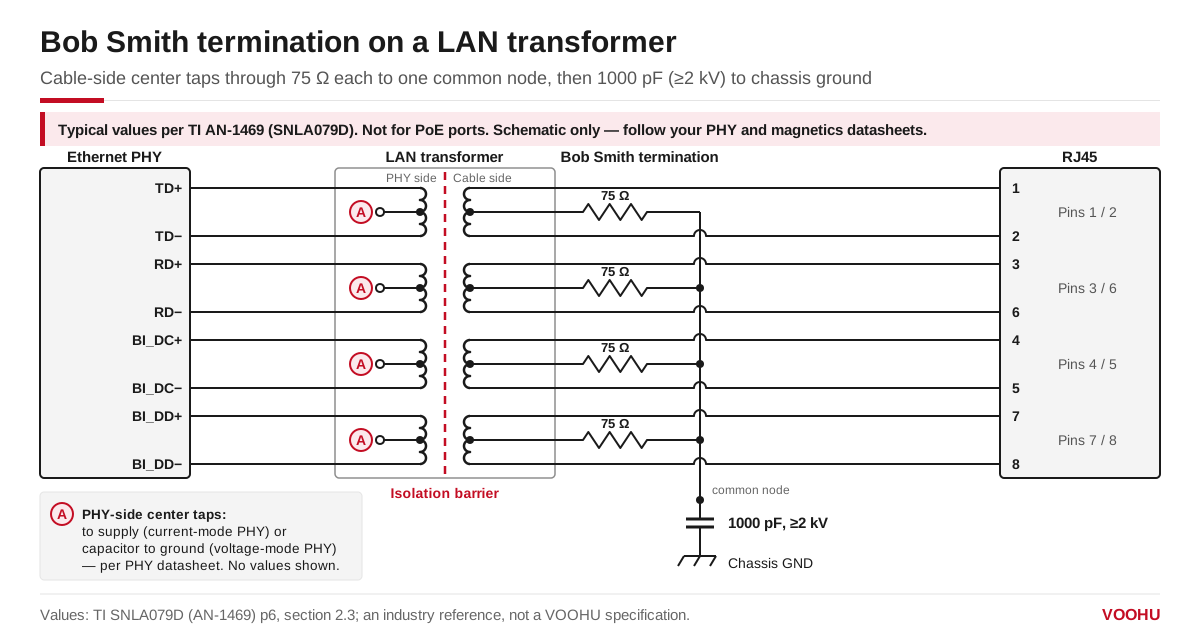
Bob Smith termination on the cable side of a LAN transformer, with the typical values from TI AN-1469. The PHY-side center taps are wired separately, as the PHY datasheet specifies. Not for PoE ports.
How do you connect the Ethernet transformer center taps on the cable side and the PHY side?
- Cable side (toward the RJ45):use the Bob Smith network. Keep the four resistors equal and their traces symmetrical, and place the network close to the transformer.
- PHY side:this is not Bob Smith termination. The connection depends on the PHY's line driver. A current-mode PHY needs its center taps connected to a supply voltage given in the PHY datasheet; a voltage-mode PHY needs them decoupled to ground through a capacitor and not connected to a supply. Wiring them the wrong way can stop the link from coming up. Seevoltage-mode vs current-mode PHYs.
- Never join the two sides.Cable-side center taps must not go to the PHY ground or the logic supply; that would bridge the isolation barrier the transformer provides.
Check how your magnetics bring the center taps out before you lay out the board. The VOOHUWHSM24706C2discrete LAN transformer brings each of its four cable-side center taps out on its own pin (pins 24, 21, 18 and 15) and has no resistor or capacitor inside, so the Bob Smith network goes on your PCB. In the non-PoE MagJacks below, the cable-side center taps are not brought out at all, because the termination is inside the connector.
What resistor and capacitor values does Bob Smith termination use?
TI AN-1469 suggests a 75 Ω resistor from each center tap and a 1000 pF capacitor to chassis ground, with the capacitor rated at least 2 kV. Reference designs from other PHY and magnetics vendors do not all use the same capacitor value, so take the values from your PHY vendor's reference design and confirm the port in EMC testing.
Isolation and Hi-Pot testing of the port are a separate topic; seewhy an Ethernet port fails the Hi-Pot test.
Does Bob Smith termination work with PoE?
Not in the form shown above. On a PoE port the cable-side center taps carry the DC supply, and TI AN-1469 notes that Bob Smith termination does not apply to Power over Ethernet applications. VOOHU PoE MagJacks use a different arrangement: in theSYT111Q334AB2A2DP057, each cable-side center tap goes through a 22 nF capacitor in series with its 75 Ω resistor, the four branches meet at one node that returns to the shield through 1000 pF/2 kV, and the same center tap is also brought out to a VC pin for the PoE supply. With a discrete transformer on a PoE port, follow the reference design of your PSE or PD controller for the center taps.
MagJack or discrete transformer: where does the termination go?
The table shows how four VOOHU parts handle the center taps, read from the schematic in each datasheet.
| VOOHU part | Type (product page) | Cable-side center taps | PHY-side center taps | What you add on the board |
|---|---|---|---|---|
| SYT111Q066AA2A1D | MagJack, 100/1000M, non-PoE | 4 × 75 Ω inside, to one node, then 1000 pF/2 kV to pin 10 (GND); not brought out | All four joined inside to pin 1 (labeled VCC) | PHY-side wiring on pin 1 as the PHY datasheet specifies; GND pin connection |
| SYT111B002BA2A1D | MagJack, 10/100M, non-PoE | 4 × 75 Ω inside, including the two unused pairs, then 1000 pF/2 kV to pin 8 (GND); not brought out | TX on pin 4, RX on pin 5 | PHY-side wiring on pins 4 and 5; GND pin connection |
| SYT111Q334AB2A2DP057 | MagJack, 100/1000M, PoE | Each through 22 nF in series with 75 Ω, then 1000 pF/2 kV to SHIELD; also brought out to VC pins for PoE | See the datasheet | PoE supply on the VC pins per your PSE or PD design |
| WHSM24706C2 | Discrete LAN transformer, 10G, SMD, single port | Brought out on pins 24, 21, 18 and 15; no termination inside | See the datasheet | The full Bob Smith network on your PCB |
A MagJack with the termination built in removes the resistors and the high-voltage capacitor from your bill of materials and keeps the cable side inside the connector. A discrete transformer lets you choose the values and the layout yourself. To compare, filter theRJ45 selector for integrated magnetics, or browseLAN transformers. If you are still choosing the PHY, seewhat an Ethernet PHY chip does.
产品WHSM24706C2
产品SYT111Q066AA2A1D
方案/solution-ethernet/
FAQ
Q1: Is Bob Smith termination still recommended?
It still appears in many PHY vendor layout guides, including TI AN-1469, but some engineers question whether 75 Ω matches the cable's actual impedance. In practice, follow your PHY vendor's reference design and judge the result by your EMC test.
Q2: Do the unused pairs on a 10/100 port need Bob Smith termination?
Yes, in a typical design all four pairs are terminated so the unused pairs do not float. The VOOHU SYT111B002BA2A1D 10/100 MagJack includes a 75 Ω resistor for each unused pair inside the connector.
Q3: Should the Bob Smith capacitor go to chassis ground or signal ground?
TI AN-1469 returns it to chassis ground. Keep it off the PHY's signal ground, because the cable side and the PHY side must stay isolated from each other.
Q4: Can I leave the center taps of a MagJack unconnected?
In a non-PoE MagJack such as the SYT111Q066AA2A1D, the cable-side center taps are terminated inside and not brought out, so there is nothing to connect except the GND pin. In a PoE MagJack, the cable-side center taps come out on VC pins, and on a PoE port they carry the supply. The PHY-side center-tap pins must always be connected as your PHY datasheet specifies.
Get help checking your Bob Smith termination
Not sure how to wire the center taps for your PHY? Send the PHY part number, the port speed and whether the port carries PoE through oursample and support form. We can suggest a MagJack with the termination built in or a discrete LAN transformer, and check your center-tap and Bob Smith wiring against the PHY datasheet. Samples are available for evaluation, and selected parts are free of charge. Our FAE team will be glad to confirm the options for your project. VOOHU supplies RJ45 and SFP connectors, LAN and PoE transformers and common mode chokes from Suzhou, China, to more than 1,500 customers.
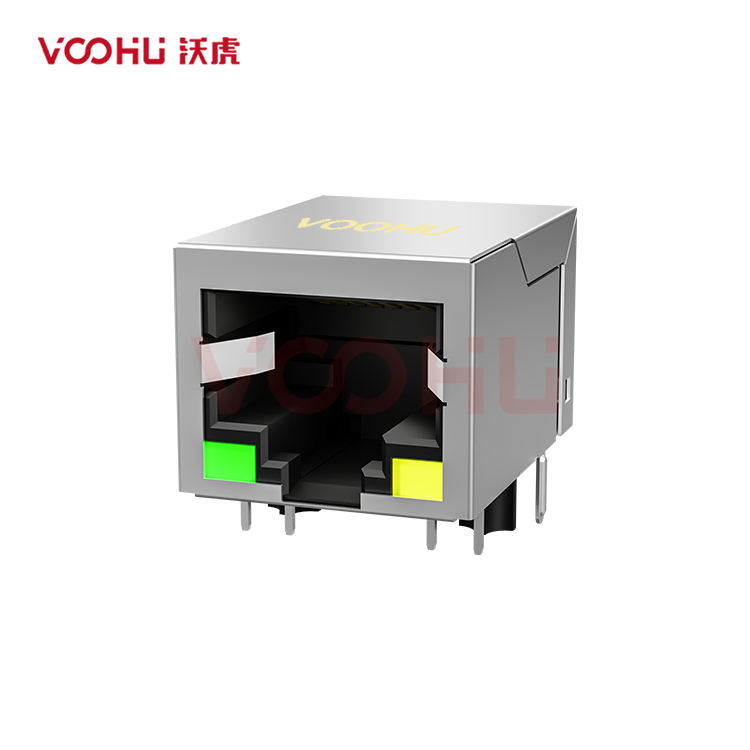 SYT111B002BA2A1D 90° side insertion 1*1 Tab Down 10/100M LED G/Y Shield Tabs DIP RJ45
> View Details
 SYT111Q334AB2A2DP057 90° side insertion 1*1 Tab Down POE 600mA G/Y 100/1000M DIP RJ45
> View Details
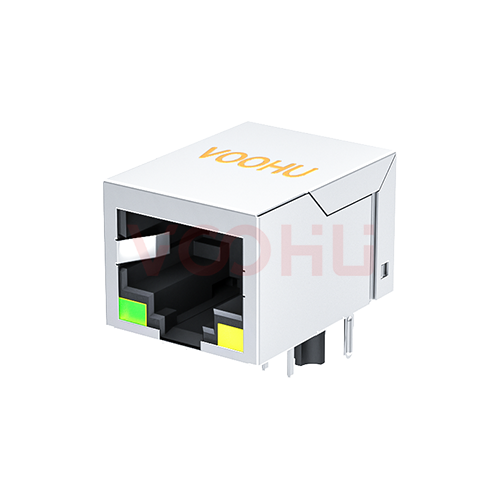 SYT111Q066AA2A1D 90° 1*1 Tab Down LED G/Y 100/1000BASE DIP RJ45
> View Details
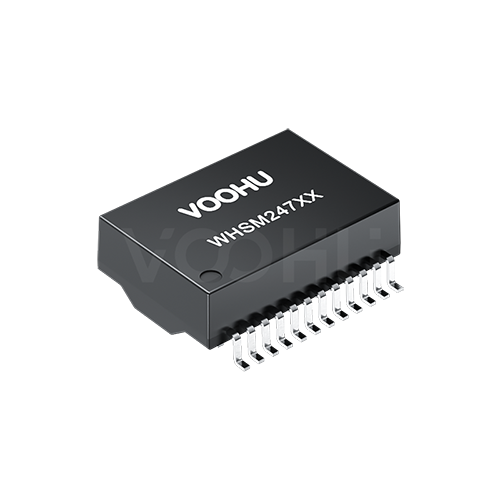 WHSM24706C2 10G Base-T Single Port 24PIN PoE++ LAN Transformer
> View Details