

Pin count
Sets the number of winding taps and the board footprint. Parts with different pin counts are not drop-in replacements for each other.
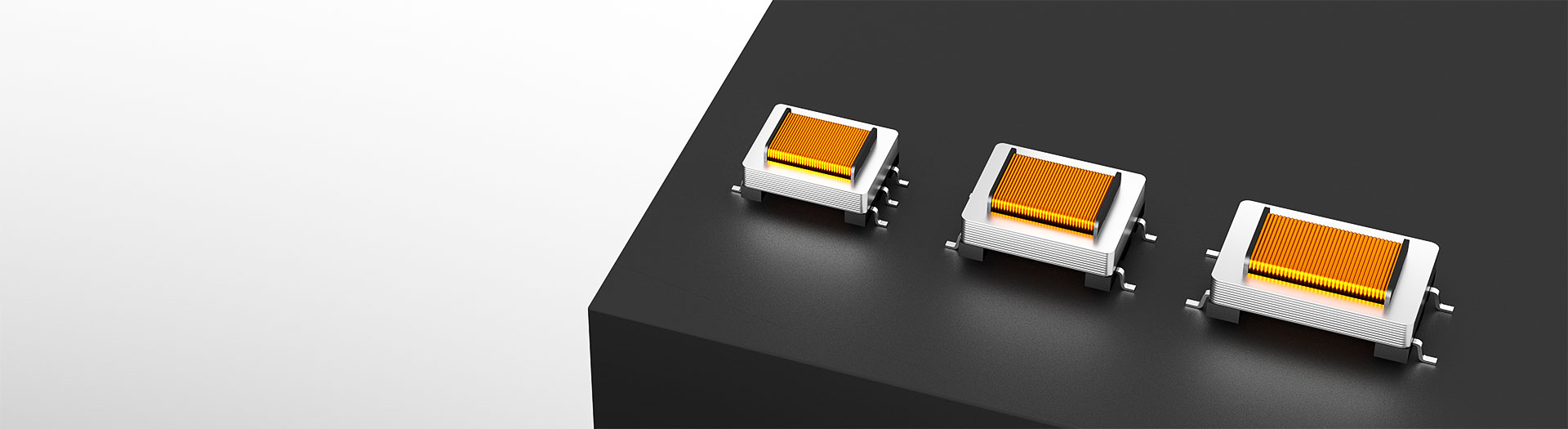
トランス製品
Audio transformers match impedance and provide galvanic isolation on audio lines, breaking the ground loops that cause hum. Filter by pin count, AC impedance, turns ratio and withstand voltage, then check insertion loss, frequency response and the mounting footprint before you commit to a part.
型番検索・選定
この表では、海外サイトの現行製品データ、公開済みの選定項目、型番別の技術資料リンクを使用しています。
※画像列と型番列は固定されています。横にドラッグしてすべての仕様を確認できます
| 画像 | データシート | 比較 | ダウンロード |
ピン数
|
L/W/H(mm×mm×mm)
|
ACインピーダンス PRI:SEC(Ω)
|
DC抵抗 PRI:SEC(Ω)
|
巻数比(PRI:SEC)
|
実装方式
|
耐電圧(AC)
|
挿入損失(dB)
|
挿入損失(dB)
|
サンプル |
|---|
| 画像 | 型番 | データシート | 比較 | ダウンロード | ピン数 | L/W/H(mm×mm×mm) | ACインピーダンス PRI:SEC(Ω) | DC抵抗 PRI:SEC(Ω) | 巻数比(PRI:SEC) | 実装方式 | 耐電圧(AC) | 挿入損失(dB) | 挿入損失(dB) | サンプル |
|---|---|---|---|---|---|---|---|---|---|---|---|---|---|---|
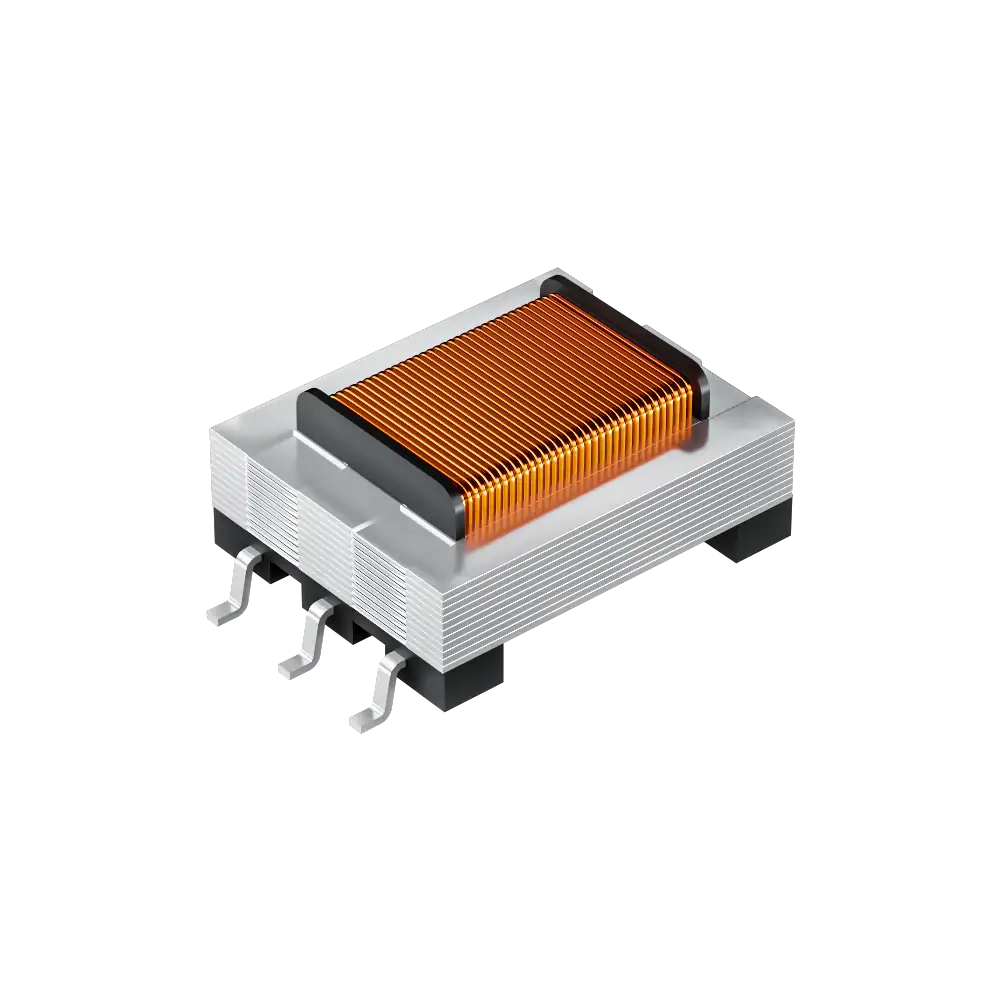 |
WHTT5005 | SPEC | 5ピン | 14.5*8.2*5 | 600:600 | 65:75 | 1±2% | SMD | 1000V | — | 1.3 |
|
||
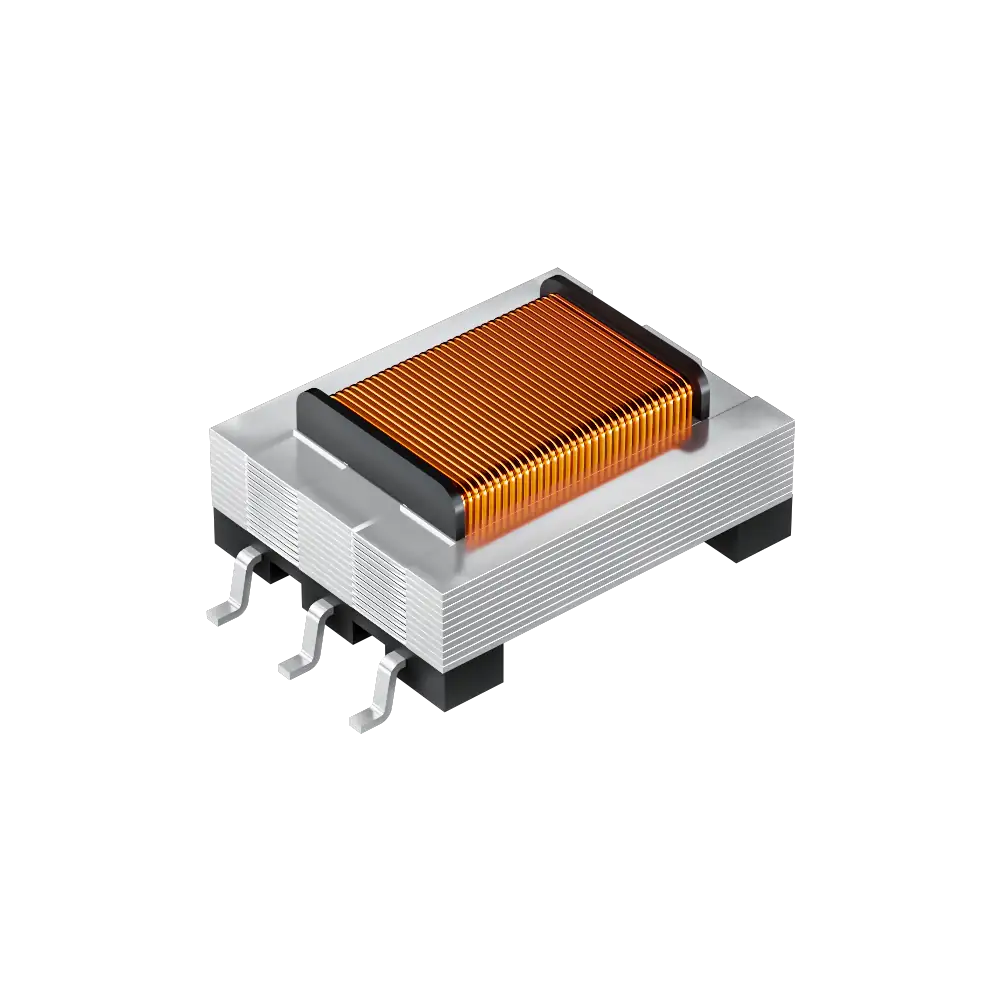 |
WHTT5003 | SPEC | 5ピン | 14.5*8.5*5.08 | なし | 45:55 | 1±1% | SMD | 500V | - | — |
|
||
|
|
WHTT5002 | SPEC | 5ピン | 14.5*8.5*5.08 | 600:460 | 90.5:112:102 | 1±1% | SMD | 500V | - | — |
|
||
|
|
WHTT5001 | SPEC | 5ピン | 14.5*8.2*4.8 | 600:365 | 138:130 | 1±1% | SMD | 1000V | 2.8 | — |
|
||
|
|
WHTT5000 | SPEC | 5ピン | 14.5*8.2*4.8 | 300:600 | 120:250 | 2±1% | SMD | 1000V | - | — |
|
選択した条件を広げるか、現在の検索条件をクリアしてください。
By pin count
Pin count sets the winding taps and the board footprint, so start from the circuit you have.
選定方法
Work from the source and load impedance outward to the mechanical constraints.
State the source impedance, load impedance, signal level and frequency range, and whether the stage has to convert balanced to unbalanced.
The impedance ratio is the square of the turns ratio. A 600:600 part is 1:1; stepping 600 down to 150 ohm needs a 2:1 turns ratio.
Confirm the maximum signal level the core can carry without saturating, then confirm the dielectric strength the safety case demands.
Match pin count, pin pitch and height against the board, then verify insertion loss and frequency response on your own hardware.
Parameters
Each figure is measured under stated conditions; read the conditions with the number.
Sets the number of winding taps and the board footprint. Parts with different pin counts are not drop-in replacements for each other.
Quoted for a stated frequency, commonly 1 kHz. Read the test frequency with the value; the same part reads differently elsewhere in the band.
Fixes the impedance transformation and the voltage relationship between windings. Impedance ratio equals turns ratio squared.
Winding copper loss. It adds to insertion loss and matters most when the winding also carries a bias current.
The isolation the barrier withstands under the stated test. Choose against the safety requirement, not against the working voltage alone.
Signal lost through the transformer at the stated frequency. Compare candidates at the same frequency or the numbers do not mean the same thing.
比較
Pin count and impedance separate the families more than package size does.
選定表に戻る ↑| ピン数 | 型番数 | L/W/H(mm×mm×mm) | ACインピーダンス PRI:SEC(Ω) | DC抵抗 PRI:SEC(Ω) | 巻数比(PRI:SEC) | 実装方式 | 耐電圧(AC) | 挿入損失(dB) | 挿入損失(dB) | 操作 |
|---|---|---|---|---|---|---|---|---|---|---|
| 4ピン | 17 | 11*8.2*5, 14*8*4.4, 14.5*8.2*5, 14*8.15*5.08, 15.2*8.2*5, 15.2*8*5.08, 15.2*8.2*4.9, 15.6*8.5*5, 18.5*5.08*4.6, 18.2*8.5*4.6, 20.9*8.5*4.5, 20.5*8.5*4.5 | 600:287, 600:290, 600:301, 600:346, 600:400, 600:600, 20000:20000 | 140:170, 105:105, 48:42, 160:135, 157:146, 73:73, 150:150, 160:133, 118:140, 62:3.2, 155:144, 180:160, 141:171, 2370:2820 | 1±1%, 1±2%, 1±3%, 6±1% | SMD | 1000V, 1250V, 1500V, 1650V | 1, 1.3±0.5, 1.5, 2.9±0.1, 3.3±0.2, 3.3±0.25, 3.5, 3.85, -, 2.3 | 未指定 | 絞り込み → |
| 5ピン | 5 | 14.5*8.2*5, 14.5*8.2*4.8, 14.5*8.5*5.08 | 600:600、600:365、600:460、300:600、なし | 120:250, 138:130, 90.5:112:102, 45:55, 65:75 | 1±1%, 1±2%, 2±1% | SMD | 500V, 1000V | 2.8, -, 未指定 | 1.3, 未指定 | 絞り込み → |
| 6ピン | 6 | 13.2*8.2*5, 13.5*9.5*7.5, 13.5*10.0*7.50, 14*8*4.4, 15.2*9.0*7.5 | 600:316、600:412、600:430、10000:10000、なし | 155:150, 115:115, 30:38, 50:50, 170: 170, 1620:1620 | 1±1%, 1±2%, - | SMD、DIP | 1200V, 1250V, 1500V, 3750V, 3880V, 4600V | 2, 3.0±0.25, 4.5, - | 未指定 | 絞り込み → |
用途別確認
Confirm line level, balanced wiring and the impedance ratio the circuit expects.
Documents
Datasheets carry the tested impedance, frequency response and recommended footprint.
代表的な入手可能資料を表示しています。特定のSKUは検索して確認してください。
VOOHUが公開する製品情報は、エンジニアリングチームが確認しています。仕様、ダウンロード資料、技術サポート情報は型番ごとに紐付けられているため、サンプルや見積もりを依頼する前に確認できます。
カテゴリー概要
Two questions come up on almost every audio transformer enquiry: what the part is actually for, and why so many datasheets quote 600 ohm.
型番が決まっている場合は、サンプルまたは見積もりを依頼。
An audio transformer couples a signal magnetically between two windings. Nothing conducts across the barrier, so a ground loop between two pieces of equipment cannot push current through the signal path. That is what removes hum. The second job is impedance matching, so a source drives a load it can actually deliver power into.
600 ohm is a telephone and broadcast line convention rather than a law of physics. It became the reference impedance for balanced audio lines, so parts and equipment were built around it. A 600:600 transformer is a 1:1 isolation part; a 600:150 part steps impedance down by four, which is a 2:1 turns ratio.
Identify the primary, secondary and any centre tap from the datasheet pinout, not from the physical symmetry of the package. Keep the balanced pair symmetric on the board. Then measure insertion loss and frequency response on your own hardware, because the published curve is taken under the datasheet's stated source and load.
よくあるご質問
Answers cover function, the 600 ohm convention, wiring and interchange limits.
It couples an audio signal magnetically between two windings, so the two sides share no electrical connection. That breaks ground loops, which is the usual cure for hum between two pieces of equipment. It also transforms impedance, letting a source drive a load it can deliver power into, and it can convert between balanced and unbalanced wiring.
600 ohm is a convention inherited from telephone and broadcast line practice, not a physical constant. It became the reference impedance for balanced audio lines, so equipment and parts were designed around it. A 600:600 part is a 1:1 isolation transformer. If the datasheet quotes a different pair, read the test frequency alongside it.
Impedance ratio is the square of the turns ratio. To go from 600 ohm to 150 ohm the impedance ratio is four, so the turns ratio is two to one. Fix the source and load impedance first, then derive the ratio, then confirm the part carries your maximum signal level without the core saturating.
Yes. Pin count sets how many winding taps are brought out and therefore how the part can be wired: whether a centre tap is available, whether both windings are fully accessible, and how it sits on the board. Parts with different pin counts are not interchangeable even when the electrical ratings look similar.
Not automatically. Matching impedance is necessary but not sufficient. Compare turns ratio, DC resistance, dielectric strength, maximum level and insertion loss, and check the pinout and footprint. After any change, re-measure frequency response and distortion on your own board rather than relying on the datasheet curve.
It will have some effect. Every transformer has insertion loss, a finite bandwidth and a level above which the core saturates and distortion rises. How audible that is depends on the part and on how hard you drive it. Compare candidates at the same test frequency and level, and verify on your own hardware.
Choose against the safety requirement that applies to the equipment, not against the normal working voltage. The datasheet dielectric strength is measured under a stated test condition, so read the condition with the number. If the design has to meet a specific standard, tell us which one and our engineers will confirm which parts qualify.
If you already have a complete part number, send the part number, quantity, delivery region and the date you need it. If you are still selecting, send the source and load impedance, signal level, frequency range and any isolation requirement, and a sales engineer will shortlist candidates before you commit to samples.
エンジニアサポート
候補型番と、確認が必要な条件をお送りください。候補が明確になった後にサンプル支援を追加でき、商取引に関するご質問も同じ技術相談の中でご相談いただけます。
資料のリビジョンも記載してください
温度、絶縁電圧、PoE電流の条件
ピン数、ピッチ、ピン列間隔
サンプルと評価の優先度確認に使用します
候補と相違点の比較が必要な時期
エンジニア確認により候補型番を選び、相違点をご説明します。
選定表またはエンジニア確認で選んだ型番
試作/パイロット生産/量産
サンプルと量産の時期を分けて記載してください
適合資料、材料宣言、第三者機関レポートなど
サンプル数量、リードタイム、費用は、プロジェクト段階と型番によって異なります。営業担当者より営業日にご回答します。