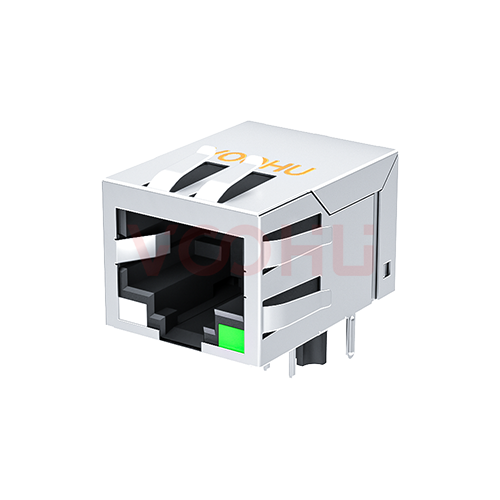
WHDG18110G Single Port DIP Gigabit Base-T PIN18 non-PoE LAN Transformer


Request a Quote
Leave your details and we will send a tailored volume quote.
Our sales team will contact you within 1 business day.
Contact Sales
Reach our sales team for pricing and lead time.

Submitted
We have received your request. Our sales team will contact you within 1 business day.



For technical assistance, pleaseclick the button below to add customer service or visit the sample request pageto fill out the form. We will serve you as soon as possible.
Technical Support Email: fae.thorne@voohu.cn Phone: +86 400-1048-018
For more details, please visit theDownload Centerto get documents or click the button below to add customer service. We will serve you as soon as possible.


For purchases and small-volume orders, please contact our sales team. We support VAT general/special invoices with a convenient and efficient process.
For technical assistance or sample requests, pleaseclick the button belowto add customer service orvisit the sample request pageto fill out the form. We will serve you as soon as possible.
Customer Service Email: song.lei@voohu.cn Phone: +86 180 2130 1120
Evaluate the formula at the frequency you actually care about; do not carry a low-band figure across the whole range.The WHDG18110G specifies insertion loss in two segments: -1.2 dB max from 0.5 to 1 MHz, and -0.2-0.002×f^1.4 dB max from 1 to 125 MHz with f in MHz.
That form means the permitted loss grows with frequency, so link margin is tightest at the top of the band. Return loss is segmented the same way: -16 dB min from 1 to 40 MHz, and -10+20×log(f/80) dB min from 40.1 to 100 MHz. For worst-case analysis, take the value at the highest operating frequency of the target link.
Indoor Gigabit data ports with a component temperature between 0 °C and +70 °C, particularly designs whose link budget has to be worked out frequency by frequency.The WHDG18110G is an 18-pin DIP single-port 100/1000 BASE-T transformer without PoE, so the port needs local power.
Because its insertion and return loss are given as formulas rather than fixed limits, a designer can compute the permitted loss at each frequency of interest, which suits links where margin is tight enough to need that resolution. Other options are in the10/100/1000 BASE-T range.
No. The datasheet assigns no DC balance current capability to the centre taps of the WHDG18110G, so they cannot be used as a supply path.Terminate them according to the reference design for the target PHY.