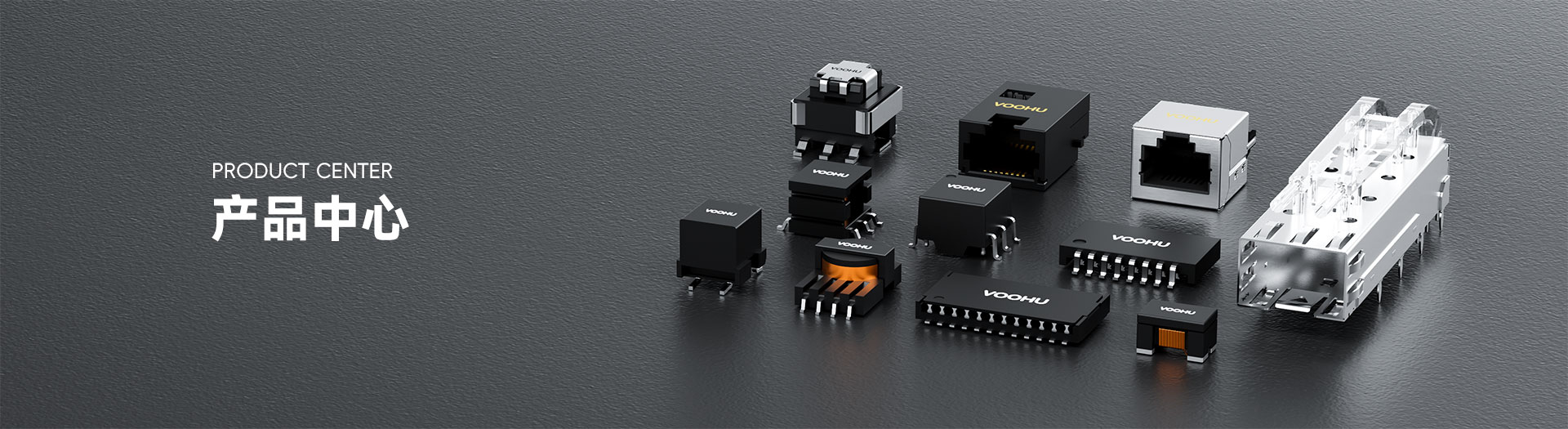
WHDG30102G Triple Port DIP 10/100Base-TX PIN30 non-PoE LAN Transformer


Request a Quote
Leave your details and we will send a tailored volume quote.
Our sales team will contact you within 1 business day.
Contact Sales
Reach our sales team for pricing and lead time.

Submitted
We have received your request. Our sales team will contact you within 1 business day.


For technical assistance, pleaseclick the button below to add customer service or visit the sample request pageto fill out the form. We will serve you as soon as possible.
Technical Support Email: fae.thorne@voohu.cn Phone: +86 400-1048-018
For more details, please visit theDownload Centerto get documents or click the button below to add customer service. We will serve you as soon as possible.


For purchases and small-volume orders, please contact our sales team. We support VAT general/special invoices with a convenient and efficient process.
For technical assistance or sample requests, pleaseclick the button belowto add customer service orvisit the sample request pageto fill out the form. We will serve you as soon as possible.
Customer Service Email: song.lei@voohu.cn Phone: +86 180 2130 1120
The WHDG30102G and the WHDG30101G are two separate part numbers, not revisions of each other; their electrical figures, outline dimensions and hole pattern nevertheless match item for item, and only the internal running order differs.
On the WHDG30102G schematic the common-mode choke and the transformer sit in the reverse order to theWHDG30101Gdrawing. That does not change the external electrical behaviour — every electrical item is identical on both — so there is no "which performs better" question between them. Both sit in the10/100 BASE-T range.
Yes. The three transformer groups inside the WHDG30102G are independent, so leaving one unconnected does not affect the ports that are wired.
The trade-off is cost: a triple-port part takes the board area and the price of three ports, and using two wastes one of each. The deciding question is whether the board keeps headroom for a third port. Terminate the unused group in the normal way rather than leaving the traces floating. Dual-port alternatives are listed in the10/100 BASE-T range.
No. The WHDG30102G electrical block runs to eleven items and none of them states a current capability or an IEEE power class.
The 8 mA in the datasheet is the DC bias applied while measuring open-circuit inductance, used to verify magnetising behaviour — it is not current available to a load. Whether a part can deliver power is decided by a separate line stating current capability and the applicable IEEE class. Where a port has to be powered over the cable, move to a PoE part during selection; the capability cannot be added later. PoE parts are listed in the10/100 BASE-T range.