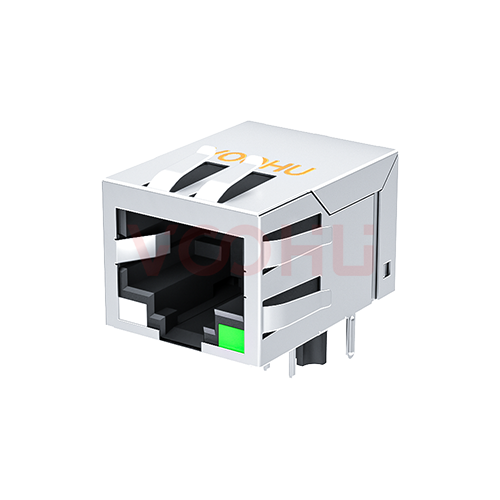
WHDG88409G Quad Ports DIP Gigabit Base-T PIN88 LAN Transformer


Request a Quote
Leave your details and we will send a tailored volume quote.
Our sales team will contact you within 1 business day.
Contact Sales
Reach our sales team for pricing and lead time.

Submitted
We have received your request. Our sales team will contact you within 1 business day.



For technical assistance, pleaseclick the button below to add customer service or visit the sample request pageto fill out the form. We will serve you as soon as possible.
Technical Support Email: fae.thorne@voohu.cn Phone: +86 400-1048-018
For more details, please visit theDownload Centerto get documents or click the button below to add customer service. We will serve you as soon as possible.


For purchases and small-volume orders, please contact our sales team. We support VAT general/special invoices with a convenient and efficient process.
For technical assistance or sample requests, pleaseclick the button belowto add customer service orvisit the sample request pageto fill out the form. We will serve you as soon as possible.
Customer Service Email: song.lei@voohu.cn Phone: +86 180 2130 1120
The two match on electrical ratings and land pattern, so choose purely by which side the common-mode choke should land on: the WHDG88409G puts it toward the low-numbered pins, theWHDG88403Gtoward the high-numbered ones.
The deciding factor is the PHY-to-RJ45 arrangement on the board and the element order in the PHY reference design, not performance — insertion loss, return loss, cross talk, common-mode rejection and isolation match item for item.
One group per port, eleven pins on each side: 1–11 with 78–88, 12–22 with 67–77, 23–33 with 56–66, and 34–44 with 45–55.
Each group holds four 1CT:1CT units — the four channels of one Gigabit port. Orient the WHDG88409G with the low-numbered side toward the PHY and the high-numbered side toward the RJ45, and each port's differential pairs run their own path without crossing under the part.
Yes. Every port on the WHDG88409G has four channels: a Gigabit port uses all four, that is two pairsets, while a 100M port uses one pairset and leaves the rest unused.
The transformer does not distinguish speed — the rate is negotiated by the PHYs at each end — so mixing speeds across the four ports needs neither a different part number nor a different termination. Dedicated 10/100 parts are listed in the10/100 BASE-T range.