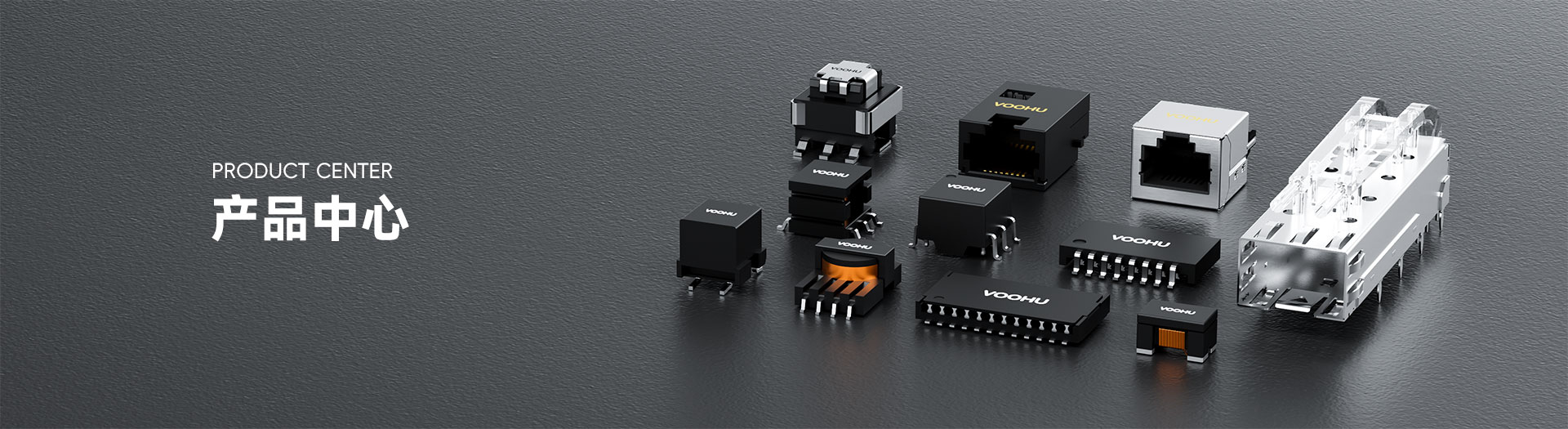
WHS16002-1PTG Single Port SMD 10/100Base-TX PIN16 PoE+ LAN Transformer


Request a Quote
Leave your details and we will send a tailored volume quote.
Our sales team will contact you within 1 business day.
Contact Sales
Reach our sales team for pricing and lead time.

Submitted
We have received your request. Our sales team will contact you within 1 business day.



For technical assistance, pleaseclick the button below to add customer service or visit the sample request pageto fill out the form. We will serve you as soon as possible.
Technical Support Email: fae.thorne@voohu.cn Phone: +86 400-1048-018
For more details, please visit theDownload Centerto get documents or click the button below to add customer service. We will serve you as soon as possible.


For purchases and small-volume orders, please contact our sales team. We support VAT general/special invoices with a convenient and efficient process.
For technical assistance or sample requests, pleaseclick the button belowto add customer service orvisit the sample request pageto fill out the form. We will serve you as soon as possible.
Customer Service Email: song.lei@voohu.cn Phone: +86 180 2130 1120
The datasheet states IEEE 802.3at compliant performance with 720 mA current capability.
802.3at is PoE+, where the PSE port tops out at 30 W. For 802.3bt Type 3 or Type 4 the WHS16002-1PTG is not the right part, and the figure cannot be extrapolated upward. When budgeting port power, tell us the per-port current you are targeting and VOOHU will confirm the applicable scope against the current controlled document. Higher-current parts sit in theGigabit range.
No — the difference is how many paths share the current: a 100M port has one pairset, a Gigabit port has two.
The WHS16002-1PTG holds two 1CT:1CT units, forming the two channels — one pairset — of a 100M port, whereGigabit partsgive each port four channels across two pairsets. For the same port power, the current in a 100M part is concentrated in fewer paths, which is why current ratings on 100M PoE parts often read higher. Before comparing current figures across data rates, confirm both are stated on the same pairset basis.
Because insertion and return loss are given as functions of frequency, and the formula covers up to 125 MHz, beyond the band a 100M link actually uses.
On the WHS16002-1PTG, insertion loss follows-0.2-0.002×f^1.4dB Max over 1–125 MHz and return loss follows-10+20×log(f/80)dB Min over 40.1–100 MHz. The form matches the masks printed in PHY datasheets, so no conversion is needed when comparing. Most non-PoE parts in the10/100 BASE-T rangeuse fixed values per band instead.