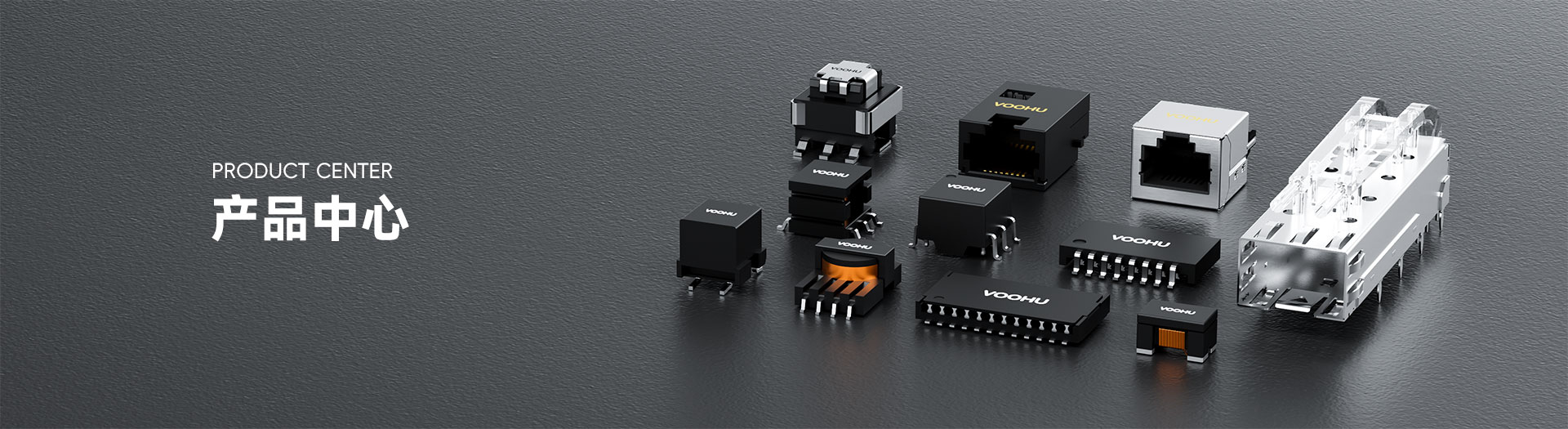
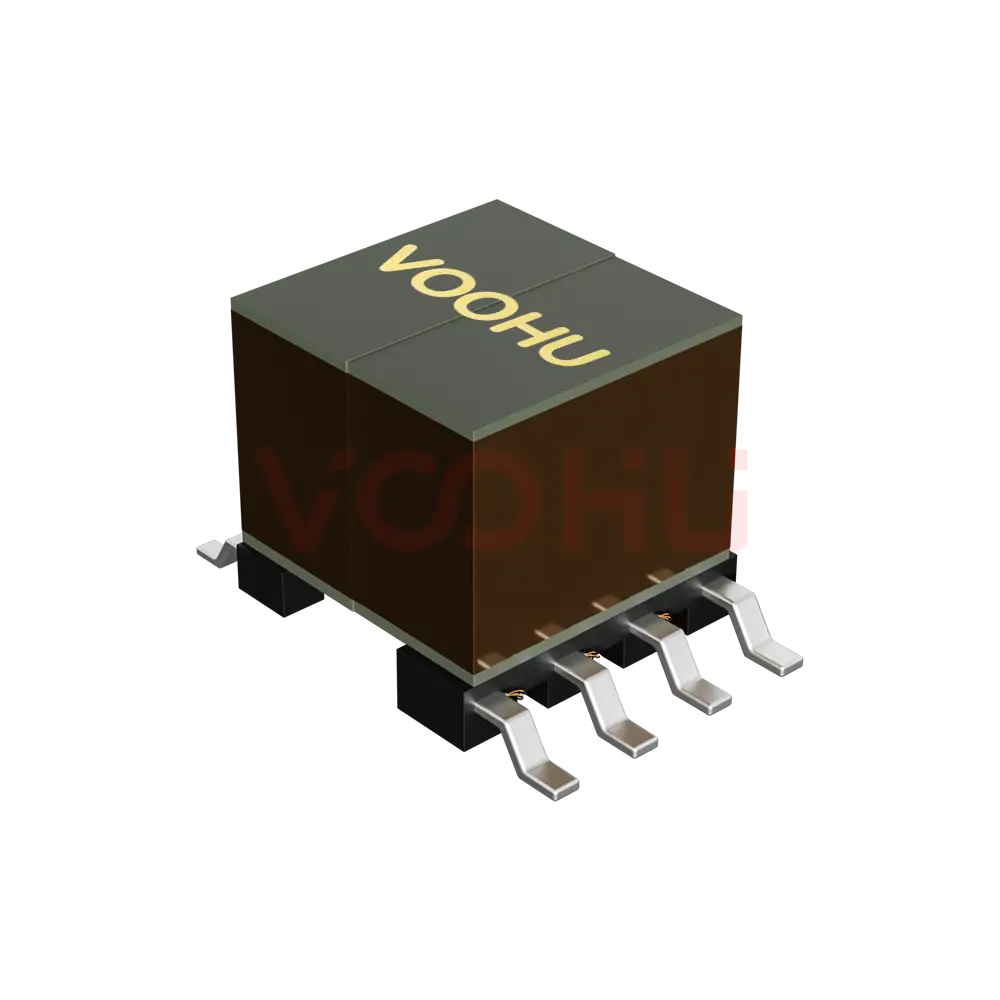
WHSQ24702G Single Port SMD 2.5G/5G PIN24 LAN Transformer


Request a Quote
Leave your details and we will send a tailored volume quote.
Our sales team will contact you within 1 business day.
Contact Sales
Reach our sales team for pricing and lead time.

Submitted
We have received your request. Our sales team will contact you within 1 business day.



For technical assistance, pleaseclick the button below to add customer service or visit the sample request pageto fill out the form. We will serve you as soon as possible.
Technical Support Email: fae.thorne@voohu.cn Phone: +86 400-1048-018
For more details, please visit theDownload Centerto get documents or click the button below to add customer service. We will serve you as soon as possible.


For purchases and small-volume orders, please contact our sales team. We support VAT general/special invoices with a convenient and efficient process.
For technical assistance or sample requests, pleaseclick the button belowto add customer service orvisit the sample request pageto fill out the form. We will serve you as soon as possible.
Customer Service Email: song.lei@voohu.cn Phone: +86 180 2130 1120
No. The datasheet of the WHSQ24702G assigns no DC balance current capability to the centre taps – there is no current item among its eleven electrical entries, so the taps cannot be used as a supply path.Terminate the centre taps as the reference design for the target PHY requires.
Where the port has to deliver power, theWHSQ24702-1PTGpublishes 720 mA per magnetic channel and theWHSQ24706-2PTGpublishes 1200 mA, both in the same footprint as the WHSQ24702G, so neither needs a board change. Both are also wide-temperature parts with a different operating range, so check the steady current and the temperature range of the target port first.
There is no published difference to choose on: the WHSQ24702G and theWHSQ24706Gshare operating and storage temperature, an OCL of 200 μH minimum with no stated DC bias, DCR, segmented insertion and return loss, crosstalk, common-mode rejection, the isolation test, body size, pad layout, reel quantity, reflow profile and MSL rating, and neither supports PoE.The decision therefore sits outside the electrical block.
Ask VOOHU what actually separates the two part numbers, and whether they are interchangeable, before treating either as a substitute for the WHSQ24702G. Until that is confirmed, do not list them as alternates in an AVL; otherwise decide on availability and on what is already in the bill of materials.
The WHSQ24702G suits indoor single-port 2.5G/5G equipment where the component temperature stays between 0 °C and +70 °C.The WHSQ24702G is a 24-pin single-port SMD 2.5G/5G BASE-T transformer without PoE, so the port is powered by the equipment itself. Typical uses are ordinary switch ports indoors, NAS and workstation network cards, and set-top or media playback devices.
Its limits are written the 2.5G/5G way, with segmented insertion and return loss and with crosstalk and common-mode rejection quoted to 250 MHz. Where the component temperature falls outside that band, or the port has to deliver power, send VOOHU the temperature range and the steady current expected in each centre-tap path. Other options are listed in the2.5G/5G BASE-T range.