
What Are the Types of Network Interfaces in Hardware, and What Sits Behind Each Port?
What Are the Types of Network Interfaces in Hardware, and What Sits Behind Each Port?
In hardware, a network interface is the port and the circuit behind it that connect a device to a network medium. The main types you can put on a board are twisted-pair Ethernet on an RJ45 jack, SFP and QSFP cages that take an optical module or a direct-attach cable, Single Pair Ethernet, and fieldbus ports such as RS-485 and CAN. Wi-Fi and Bluetooth are radios with an antenna rather than a connector. Each wired type needs its own parts behind the port: an Ethernet interface needs a PHY and a LAN transformer, or an RJ45 jack with integrated magnetics; an SFP port needs a cage and a host connector; RS-485 and CAN need a transceiver plus filtering and surge protection. VOOHU supplies the connectors, magnetics and protection parts for these ports.
What is a network interface?
The term has three common meanings. To an IT team it is a network interface card (NIC) that plugs into a computer. To an operating system it is a logical name such as eth0, and in the cloud it is a virtual interface attached to a server. To a hardware designer it is the physical network interface on the board: the connector, the components behind it and the chip that drives it. This article covers the hardware meaning, which is what you need when you choose the ports and parts for a new product.
What does a network interface do in hardware?
A wired Ethernet interface is a chain of four blocks. The MAC, usually inside the processor, FPGA or switch chip, builds and checks frames. TheEthernet PHYturns the frame data into line signals and back; seewhat an Ethernet PHY chip does. The LAN transformer isolates the cable from the board and passes the differential signal. The RJ45 jack connects the cable. A MagJack, an RJ45 jack with integrated magnetics, combines the last two blocks in one part.
Other wired interfaces follow the same pattern with different parts: a transceiver drives the line, filtering and protection parts sit next to the connector, and the connector fits the cable or module. How to design the Ethernet version of this chain is covered in ourEthernet circuit design guide.
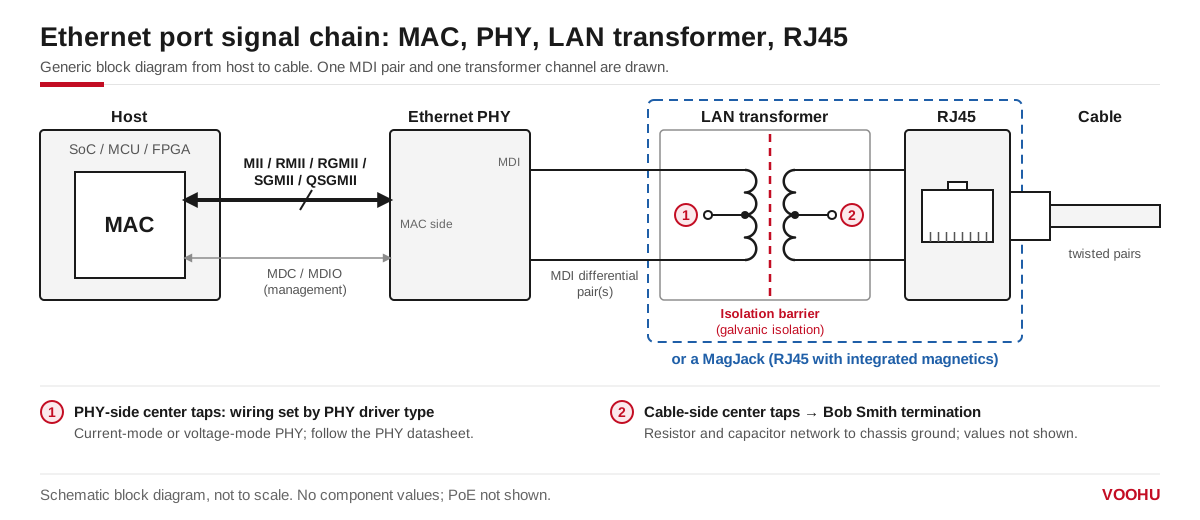
A wired Ethernet interface from host to cable: the MAC talks to the PHY, the PHY drives the LAN transformer, which isolates the cable side, and the RJ45 connects the cable. A MagJack combines the transformer and the RJ45.
What are the types of network interfaces?
The table lists the wired network interfaces you are most likely to place on a board, with the connector and the parts that sit behind it. The last column links to the matching VOOHU product category.
| Interface | Medium | Board connector | What sits behind the connector | VOOHU category |
|---|---|---|---|---|
| Twisted-pair Ethernet (10BASE-T to 10GBASE-T) | Copper twisted-pair cable, up to 100 m | RJ45 jack | PHY, LAN transformer (or a MagJack), ESD and surge protection; PoE versions of the magnetics if the port carries power | RJ45 connectors; LAN transformersin 10/100, 10/100/1000, 2.5G/5G and 10G BASE-T groups |
| SFP, SFP+, SFP28 | Fiber through an optical module, or a direct-attach copper cable | SFP cage and host connector | The host's serial interface; the module holds the laser, receiver and fiber connector | SFP connectors and cages |
| QSFP family (QSFP+, QSFP28, QSFP56, QSFP-DD, QSFP112) | Fiber module or direct-attach cable, for high-density ports | QSFP cage and connector | The host's high-speed serial lanes | QSFP series |
| Single Pair Ethernet (SPE) | One twisted pair | SPE connector | An SPE PHY and line-side filtering | SPE connectors; SPE solution |
| RS-485 | Differential twisted-pair bus | Terminal block or D-SUB | RS-485 transceiver, filtering, surge protection, and often an isolated supply | RS-485 solution |
| CAN / CAN FD | Differential twisted-pair bus | Terminal block or D-SUB | CAN transceiver, filtering and protection | CAN solution |
| Isolated SPI (battery management daisy chain) | Twisted pair between battery modules | Board-to-board or wire connector | Isolation transformer | Isolated SPI |
| Wi-Fi, Bluetooth | Radio | Antenna | Radio module | Not covered by VOOHU |
Two points often cause confusion. Fiber connectors such as LC are part of the optical module, not the board, so the board only carries the cage and the host connector. And a plain RJ45 jack does not take part in Power over Ethernet by itself; power reaches the cable through the center taps of the LAN transformer.
RJ45 vs SFP: which port should your design use?
An RJ45 interface carries Ethernet over copper twisted pair up to 100 m, and the board must provide the PHY and the magnetics. An SFP interface moves the medium-dependent part into a pluggable module, so the same board port can take a fiber module for long links or a direct-attach cable for short ones. The trade-off is board cost and flexibility: RJ45 needs no module but fixes the medium, while SFP needs a module for every port but lets the user choose the medium.
Many switches and gateways place both, or offer a combo port that uses either one. An SFP port does not accept an RJ45 plug directly; a copper SFP module with an RJ45 socket is needed for that.
Which network interfaces suit industrial and embedded devices?
Industrial and embedded products often combine an Ethernet port for the network with a fieldbus for sensors and drives. Single Pair Ethernet runs Ethernet over one pair, which saves cable and connector size in field devices. RS-485 and CAN remain common for controllers, meters and battery systems. On these lines the parts around the transceiver decide how well the port survives noise and surges, which is why VOOHU'sRS-485andCANsolution pages groupsignal-line common mode chokes, TVS and ESD devicesand isolated power transformers. Fieldbus ports often use aD-SUB connectoror a terminal block.
Which VOOHU parts go behind each network interface?
Four parts show where each category fits:
- SYT111Q066AA2A1D: a gigabit RJ45 jack with integrated magnetics and termination, for a copper Ethernet port in one part.
- WHSG24701G: a discrete gigabit LAN transformer, for designs that place the magnetics and the RJ45 separately.
- WH191R019D0S02: an SFP cage, for a port that takes an optical module or a direct-attach cable.
- WHSPE00467: a two-pin Single Pair Ethernet socket, for field devices on SPE.
To compare more part numbers, open theRJ45 selector filtered to integrated magneticsor browse theLAN transformersby data rate.
产品SYT111Q066AA2A1D
产品WHSPE00467
方案/solution-spe/
FAQ
Q1: What is a network interface called?
It depends on the context. As a plug-in board it is called a network interface card (NIC) or network adapter; inside an operating system it has a name such as eth0; on a circuit board it is usually called a port, for example an Ethernet port or an SFP port.
Q2: Is Ethernet a network interface?
Ethernet is a family of network standards, and an Ethernet port is one type of network interface. In hardware the port is usually an RJ45 jack backed by a PHY and a LAN transformer, or an SFP cage that takes an Ethernet module.
Q3: What is the difference between a network interface and a port?
In hardware the port is the physical connector, while the network interface is the whole function behind it: the connector, the line components and the PHY or transceiver. In software, a port can also mean a TCP or UDP port number, which has nothing to do with the connector.
Q4: Does an Ethernet interface need a transformer?
A twisted-pair Ethernet port that connects to a cable needs isolation between the cable and the device, and a LAN transformer, discrete or inside a MagJack, provides it. RS-485, CAN and SFP ports do not use a LAN transformer. TheEthernet circuit design guideexplains how to connect it.
Get help choosing the parts behind your ports
Defining the ports for a new product? Send us the list of interfaces, for example two gigabit RJ45 ports, one SFP port and an RS-485 bus, through oursample and support form. Our FAE team can suggest the connectors, magnetics and protection parts for each port and check them against your PHY and transceivers. Samples are available for evaluation, and selected parts are free of charge. Our FAE team will be glad to confirm the options for your project. VOOHU supplies RJ45 and SFP connectors, LAN and PoE transformers, common mode chokes and Ethernet PHY and switch chips from Suzhou, China, to more than 1,500 customers.
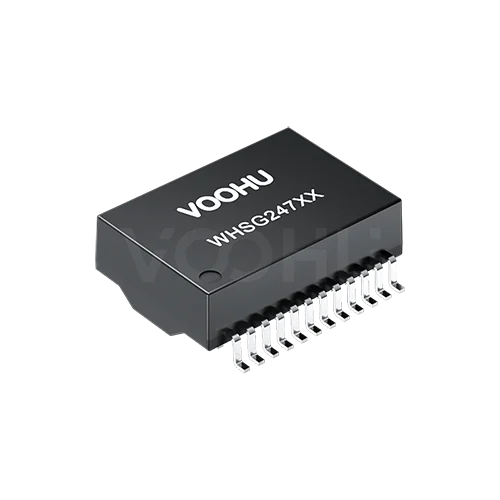 WHSG24701G Single Port SMD Gigabit Base-T PIN24 non-PoE LAN Transformer
> View Details
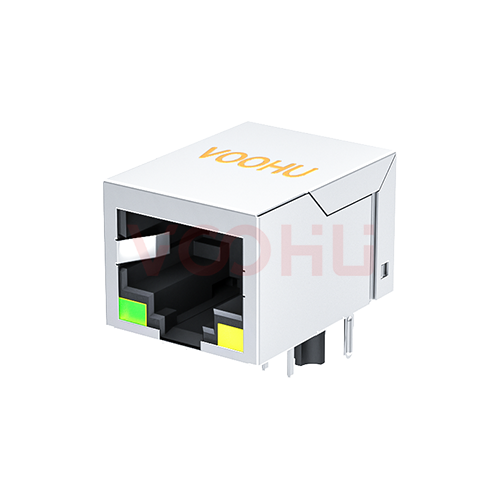 SYT111Q066AA2A1D 90° 1*1 Tab Down LED G/Y 100/1000BASE DIP RJ45
> View Details
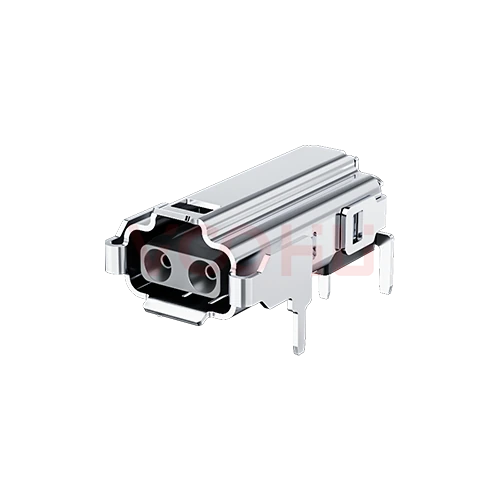 WHSPE00467 THT 2PIN Rated current 4A Rated voltage 60V Socket SPE Connector
> View Details
 WH191R019D0S02 5G 1 x 1 Ni plating 30u'' SFP Connector
> View Details