



What Is HSGMII? How It Differs from SGMII and 2500BASE-X
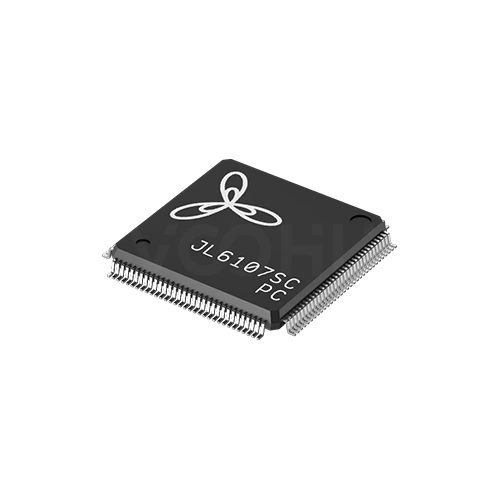
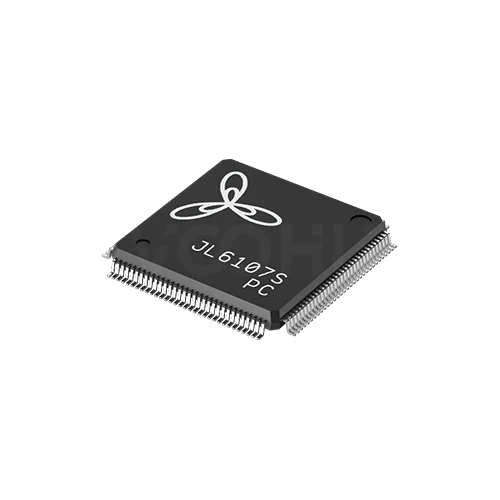
HSGMII, also written H-SGMII, is a vendor term commonly used to describe SGMII-style signalling run at 3.125 Gbaud to carry 2.5 Gb/s between a MAC or switch chip and a PHY or SFP port; it is not an IEEE 802.3 clause name. SGMII runs at 1.25 Gb/s and carries 10, 100 and 1000 Mb/s. 2500BASE-X is the name most datasheets use for 1000BASE-X run 2.5 times faster, and on the wire it is usually described the same way as HSGMII; IEEE 802.3cb calls this kind of PCS 2.5GBASE-X. The practical rule: set both ends to the same mode name and the same auto-negotiation setting, as each datasheet defines them. The JLSemi JL6107S switch IC, which VOOHU distributes, offers one H-SGMII port, and the JL6107SC up to two.
This article is about the board-level link between chips. For QSGMII and USXGMII, see what is QSGMII.
Why does SGMII stop at 1 Gb/s?
SGMII, the Serial Gigabit Media Independent Interface, carries one Ethernet port at 10, 100 or 1000 Mb/s over a 1.25 Gb/s serial lane in each direction. AMD describes QSGMII as "combining four Serial Gigabit Media Independent Interfaces (SGMII) into a single 5 Gb/s Interface" (AMD PG029), which is four links of 1.25 Gb/s. With 8b/10b coding, that lane holds exactly 1000 Mb/s of data, so a 2.5G copper PHY or a 2.5G SFP port needs a faster lane: that is where HSGMII and 2500BASE-X come in.
For SGMII speed modes and how SGMII compares with MII, RMII and RGMII, see MII vs RMII vs RGMII vs SGMII.
HSGMII vs SGMII: what is the difference?
As the term is commonly used, HSGMII keeps the SGMII form, one serial lane in each direction, and runs it 2.5 times faster, so the same 8b/10b coding carries 2.5 Gb/s instead of 1 Gb/s. Similar modes appear in some documents under other names, such as 2.5G SGMII. Whether an HSGMII port can also fall back to 10, 100 or 1000 Mb/s on the same lane depends on the device, so check the datasheet rather than assume it.
| Mode | Ethernet data rate | Lane rate | Defined by | Typical link |
|---|---|---|---|---|
| SGMII | 10/100/1000 Mb/s | 1.25 Gb/s | SGMII specification (Cisco) | MAC to gigabit PHY |
| 1000BASE-X | 1000 Mb/s | Same lane as SGMII | IEEE 802.3 | MAC to 1G fiber module |
| HSGMII (H-SGMII, 2.5G SGMII) | 2.5 Gb/s | Commonly 3.125 Gbaud | Vendor term, no IEEE clause | MAC or switch to 2.5G PHY |
| 2500BASE-X | 2.5 Gb/s | Usually described as 3.125 Gbaud | Common name; IEEE 802.3cb calls this PCS 2.5GBASE-X | MAC to 2.5G fiber module |
There is no public HSGMII specification in the way there is an SGMII specification. Each chip vendor defines its own HSGMII mode in its datasheet, including whether in-band signalling is used, so the vendor datasheet is the specification for that port.
2500BASE-X vs SGMII and HSGMII: are they the same?
2500BASE-X is the name most datasheets use for 1000BASE-X run 2.5 times faster to carry 2.5 Gb/s; 1000BASE-X is the IEEE mode used by fiber modules. IEEE Std 802.3cb-2018 (IEEE P802.3cb) standardized a 2.5 Gb/s PCS of this kind for backplanes under the name 2.5GBASE-X. The difference from SGMII at 1 Gb/s is what the in-band information means: 1000BASE-X auto-negotiation exchanges abilities such as duplex and pause between two link partners, while SGMII signalling reports the PHY's link status and speed to the MAC. At 2.5 Gb/s, HSGMII and 2500BASE-X often look the same on the wire, and devices differ on whether they use in-band negotiation at that speed at all.
So a link only comes up when both ends agree:
- The same mode: HSGMII on both sides, or 2500BASE-X on both sides, as each datasheet names it.
- The same in-band setting: auto-negotiation on at both ends, or off at both ends.
- The electrical interface each datasheet requires, such as AC coupling and termination of the serial pairs.
Why does a 2.5G HSGMII SFP not link in an SFP+ port?
An SFP+ cage fits the module, but the host SerDes behind it decides the rate. Many SFP+ host ports are set up only for 10G and 1G modes, so a module that expects a 2.5 Gb/s lane cannot link unless the port also supports a 2.5G mode. On your own board, choose a switch or SoC serial port that lists HSGMII or 2500BASE-X for any SFP port meant to take 2.5G modules.
Which JL-series switch ICs have H-SGMII ports?
VOOHU is a distributor of JLSemi switch ICs. In the JL6107 series, the JLSemi product briefs list H-SGMII among the serial modes, next to SGMII and 2500BASE-X, and both parts give two PHY-less interfaces with 10/100/1000/2500 Mb/s connectivity:
| Part | H-SGMII ports | Interface options | Fiber modules it can connect to | Package |
|---|---|---|---|---|
| JL6107S-PC | 1 | One RGMII/MII/RMII interface, and one interface that supports H-SGMII, SGMII, 2500BASE-X, 1000BASE-X or 100BASE-FX | 100BASE-FX, 1000BASE-X, 2500BASE-X | 128-pin LQFP |
| JL6107SC-PC | Up to 2 | One interface that supports H-SGMII, SGMII, 2500BASE-X, 1000BASE-X or 100BASE-FX, and one that supports RGMII/MII/RMII or the same serial modes | 100BASE-FX, 1000BASE-X, 2500BASE-X | 128-pin LQFP EPAD |
Choose the JL6107S when one 2.5G uplink plus one parallel MAC port is enough, and the JL6107SC when you need two serial ports. Compare the series in the Ethernet switch IC selector or on the JL6107 series page. When the H-SGMII port faces a MAC, PHY or SoC from another vendor, find the matching mode name in that device's datasheet, and our FAE team can check the configuration on both ends. For the SFP port itself, see the SFP connector and cage selector.
FAQ
Q1: Is HSGMII the same as 2500BASE-X?
Not by name, and not always in behavior. Both carry 2.5 Gb/s over one serial lane in each direction and are usually described as running at 3.125 Gbaud, but 2500BASE-X is the common name for the 1000BASE-X-style mode, while HSGMII is an SGMII-style vendor term, and devices differ on in-band negotiation. Set both ends to the same mode and the same negotiation setting.
Q2: Is there an HSGMII spec?
Not a public standard. HSGMII is not an IEEE 802.3 clause, and there is no published HSGMII document like the SGMII specification. The datasheet of each chip defines its HSGMII or H-SGMII mode, so read the datasheets of both devices on the link.
Q3: Is H-SGMII the same as HSGMII?
Yes, it is the same term written with a hyphen. The JLSemi product briefs for the JL6107S and JL6107SC write H-SGMII and list it as its own mode next to SGMII and 2500BASE-X. Whatever the spelling, check that the device at the other end of the link offers the same mode.
Q4: Can a CPU with an SGMII port connect to a 2.5G switch port?
Only at 1 Gb/s or below, unless the CPU's SerDes also supports HSGMII or 2500BASE-X. An SGMII-only port runs at 1.25 Gb/s, so set the switch port to SGMII for that link, or choose a processor whose serial port lists a 2.5G mode.
Have our FAE team check your 2.5G interface
Send the MAC, SoC or PHY on the other end of the link, the serial modes its datasheet lists and the ports you need through our sample and support form. Our FAE team can suggest suitable parts and help check the design, from matching the JL6107S or JL6107SC H-SGMII port to your device to the LAN transformers or SFP cages on each port. Samples are available for evaluation, and selected parts are free of charge. Our FAE team will be glad to confirm the options for your project. VOOHU supplies RJ45 and SFP connectors, LAN and PoE transformers and common mode chokes from Suzhou, China, to more than 1,500 customers. VOOHU is also a distributor of JLSemi Ethernet PHY and switch ICs.
方案/solution-ethernet/
Part of the series: Ethernet PHY interfaces and the magnetics they drive
Previous: what QSGMII is and when multi-port PHYs use it
Next: voltage-mode vs current-mode PHY center-tap wiring
All articles on this topic