
VOOHU Deep Dive: Galvanische Trennung und Gleichtakt-Rauschunterdrückung für Gigabit-Ethernet-Ports an Industrie-Gateways und SPSen
VOOHU Deep Dive: Galvanische Trennung und Gleichtakt-Rauschunterdrückung für Gigabit-Ethernet-Ports an Industrie-Gateways und SPSen
Gigabit-Ethernet-Ports an Industrie-Gateways, SPS, Remote-I/O und Motion-Controllern sind in einer weitaus härteren Umgebung einsetzbar als Büro- oder Verbrauchergeräte. Sie werden häufig im selben Schrank wie Frequenzumrichter (VFDs), Servoantriebe, Schütze und Hochleistungsschaltnetzteile montiert; Die Erdung ist chaotisch, zwischen den Geräten bestehen erhebliche Erdpotentialunterschiede und das Kabel verläuft oft mehrere Dutzend Meter durch Zonen mit hoher elektromagnetischer Strahlung. Infolgedessen befürchtet ein Industriehafen vor allem zwei Dinge: Erdschleifenströme und Gleichtaktüberspannungen, die von Einheiten verursacht werden, die nicht die gleiche „Masse“ haben, und zufälliger Paketverlust sowie EMV-Ausfälle, die durch VFD und die Einkopplung von Schaltrauschen in die Differentialpaare verursacht werden. Beide Probleme treten auf der physikalischen Ebene auf, so dass eine Software-Neuübertragung oder ein Austausch des Switches normalerweise nur das Symptom behandelt. Die eigentliche Lösung liegt in der galvanischen Trennung des LAN-Transformators und der gezielten Unterdrückung von Gleichtaktstörungen.
Im Gegensatz zu einem Verbraucherhafen, bei dem „es verbindet, versendet“ genügt, ist ein Industriehafen so konzipiert, dass er „bei starken Störungen, hohen Temperaturen und langen Kabeln stabil und zuverlässig bleibt“. Gigabit 1000BASE-T verwendet vier Paare im Vollduplex mit 125 MHz PAM-5-Signalisierung, wobei der Pegelabstand zwischen Symbolen nur wenige Millivolt beträgt – was die Messlatte für Isolationsfestigkeit, Gleichtaktunterdrückungsverhältnis (CMRR) und Impedanzkontinuität um eine Größenordnung über 100 M anhebt. Im Folgenden beginnen wir mit den drei typischsten industriellen Herausforderungen, analysieren die physikalischen Ursachen jeder einzelnen Herausforderung und geben ausgewählte Antworten auf der Grundlage vorrätiger VOOHU-Teile, damit Ingenieure von Anfang an Zuverlässigkeit entwickeln können.
Herausforderung 1: Warum Industriehäfen galvanisch isoliert sein müssen – Erdpotentialdifferenz und Erdschleifen
Auf derselben Leitung werden die SPS, das Gateway und die Remote-I/O-Module oft von unterschiedlichen Versorgungs- und Erdungssystemen gespeist, sodass ihre „Massen“ um mehrere bis mehrere zehn Volt unterschiedlich sein können – und in dem Moment, in dem ein VFD startet oder stoppt, auf Hunderte von Volt ansteigen können. Ohne zuverlässige galvanische Trennung am Port treibt diese Potenzialdifferenz einen Erdschleifenstrom entlang des Kabels und der Differentialpaare: Im besten Fall erhöht es das Grundrauschen und verringert die Bitfehlerrate, im schlimmsten Fall zerstört es den PHY. Die Hauptaufgabe eines Ethernet-LAN-Transformators besteht genau darin, eine galvanische Isolationsbarriere von 1500 Vrms oder mehr zwischen den beiden Enden aufzubauen: Das Signal überquert die Barriere durch magnetische Kopplung, während der Gleichstrom-Erdungsstrom vollständig blockiert wird. Aus diesem Grund kann kein ernsthafter Industrie-Port den LAN-Transformator oder den integrierten magnetischen RJ45 und DC-Couple direkt in den PHY einbinden.
Isolationsfestigkeit, Kriechstrom und der Hi-Pot-Test
Industriegeräte müssen in der Regel einen Hi-Pot-Test (Widerstandsfähigkeit-Spannung) und strengere Überspannungspegel bestehen, daher sollte ein isolierter LAN-Transformator nicht nur das Minimum von 1500 Vrms erfüllen; Viele Anwendungen erfordern einen Spielraum von 2.250 Veff oder sogar 4.000 Veff, zusammen mit einer angemessenen Kriechstrecke zwischen Primär- und Sekundärseite und einer geeigneten Isoliermaterialklasse. Wählen Sie anhand der Hi-Pot-Bewertung und der Isolationsstruktur aus, die im Datenblatt ausdrücklich angegeben sind, und nicht aufgrund einer vagen Behauptung von „isoliert“. Für platzbeschränkte Gateways ist ein integrierter magnetischer RJ45 attraktiv, der den Transformator, die Gleichtaktdrossel und das RJ45-Gehäuse in einem Gehäuse vereint. Bestätigen Sie jedoch, dass seine Isolationsbewertung gleichermaßen konform ist, da ein kompaktes integriertes Teil oft weniger Isolation und thermischen Spielraum lässt als eine diskrete Lösung und eine genauere Prüfung verdient.
Herausforderung 2: Woher das Gleichtaktrauschen kommt – Frequenzumrichter, Schaltnetzteile und lange Kabelkupplungen
Industriestandorte weisen eine hohe Dichte an energiereichen Gleichtaktgeräuschquellen auf. Die IGBTs in VFDs und Servoantrieben schalten mit einigen wenigen bis mehreren zehn kHz mit sehr hohem dv/dt und strahlen durch Motorkabel, die Schrankstruktur und den Boden; Schalt-/Versorgungswelligkeit und Dioden-Rückspeiserauschen koppeln über die PCB-Masseebene; Und ein mehrere Dutzend Meter langes Kabel ist selbst eine effiziente Empfangs- und Sendeantenne. Überlagert mit den Gigabit-Paaren verursachen diese Gleichtaktströme PAM-5-Slicing-Fehler, die sich makroskopisch als Ping-Verlust, einen nicht steigenden iperf-Durchsatz, stetig steigende CRC-Fehlerzahlen und einen unzureichenden Spielraum bei Strahlungsemissions- (RE) und elektrischen Schnelltransiententests (EFT) bemerkbar machen. Der LAN-Transformator verfügt über eine gewisse inhärente Gleichtaktunterdrückung, aber bei starken industriellen Störungen reicht dies oft nicht aus, sodass auf der Transformator-/Netzwerkseite eine Signalleitungs-Gleichtaktdrossel für eine „zweite Überwachung“ hinzugefügt wird.
CMRR und Auswahl der Signal-/Leitungs-Gleichtaktdrossel
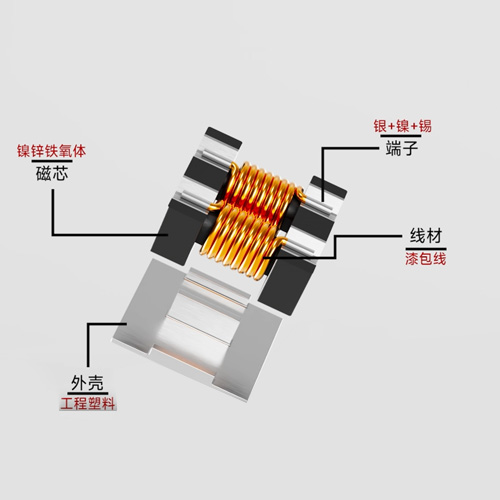
Eine Signalleitungs-Gleichtaktdrossel soll für das Differenzsignal nahezu „transparent“ sein (sehr niedrige Differenzialimpedanz) und gleichzeitig eine hohe Impedanz gegenüber Gleichtaktrauschen bieten, sodass Gleichtaktstrom von der Platine ferngehalten wird. Drei Punkte bestimmen die Auswahl: Die Gleichtaktimpedanz muss im gesamten dominanten Rauschband hoch genug sein (30–300 MHz sind in industriellen Umgebungen üblich); Die differenzielle Einfügungsdämpfung muss niedrig sein, damit die Integrität des Gigabit-Signals nicht beeinträchtigt wird. und der Nennstrom muss jegliche PoE-Vorspannung abdecken. Für ein platzbegrenztes Gateway reicht ein kleines SMD-Teil; Wenn die Interferenz besonders stark ist oder eine höhere Gleichtaktimpedanz erforderlich ist, wählen Sie einen größeren Teil mit höherer Impedanz. Eine einzige gut ausgewählte Gleichtaktdrossel reicht oft aus, um einen Port, der „3–6 dB über dem abgestrahlten Grenzwert“ liegt, wieder in den Konformitätszustand zu bringen.
Herausforderung 3: Stromeingang und PoE-Vorspannung – Strom-Leitungsrauschen und magnetische DC-Vorspannung
Die Zuverlässigkeit eines Gateways hängt nicht nur von der Signalkette, sondern auch vom Stromeingang ab. Eine 24-V- oder 48-V-Industrieversorgung oder ein isolierter Gleichstrom erzeugt beim Schalten viel Strom-/Leitungs-Gleichtaktrauschen; Wenn es nicht unterdrückt wird, verschmutzt es sowohl die lokalen Ethernet-Paare als auch die Rückleitung über die Stromleitung in andere Geräte, was zu Ausfällen durch leitungsgebundene Emissionen (CE) führt. Die Lösung ist eine Netz-Gleichtaktdrossel (höherer Nennstrom, geringerer Gleichstromwiderstand) am Eingang. Wenn andererseits das Gateway selbst eine entfernte Kamera oder einen entfernten Sensor über den Port (PoE PSE) speist, muss der Mittelabgriff des LAN-Transformators eine Gleichstromvorspannung von Hunderten von Milliampere bis 1,5 A oder mehr führen. Daher müssen Sie ein Teil auswählen, das explizit seinen PoE-Nennstrom und seine Induktivitätserhaltung unter Gleichstromvorspannung angibt – andernfalls geht der Kern allmählich in die Sättigung und Sie geraten in die „heißere, gesättigtere; gesättigtere, heißere“ thermische-Runaway-Schleife.
VOOHU-Auswahlstrategie für Industrie-Port-Isolation und Gleichtaktunterdrückung
Für die drei oben genannten Herausforderungen bietet VOOHU ein One-Stop-Sortiment mit Isolations-LAN-Transformatoren, integriertem magnetischem RJ45 und Signal- und Stromleitungs-Gleichtaktdrosseln, abgestufter ESD/TVS/GDT-Schutz und PHY, sodass Ingenieure entweder einen „diskreten“ oder einen „integrierten“ Pfad wählen und Isolierung, Gleichtaktunterdrückung und Schutz in einem Durchgang erhalten können.
Isolations-LAN-Transformatoren und integrierter magnetischer RJ45
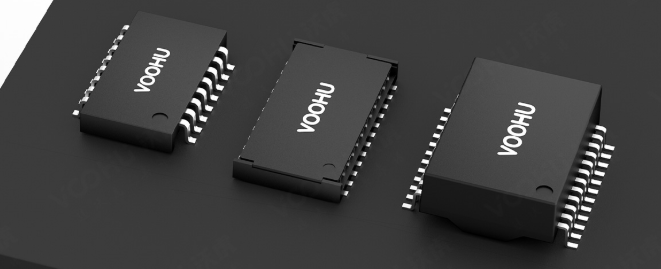
Wenn Sie die beste Signalintegrität, eine höhere Isolationsfestigkeit und mehr thermischen Spielraum wünschen, verwenden Sie ein diskretes Gigabit100/1000 BASE-T LAN-Transformator– Einzel-Port-Teile wie WHSG24301JM und WHSG24701D1, Dual-Port wie WHDG48201P1 – decken 1500–4000 Vrms Isolation und 4P PoE-Bias ab, gut geeignet für Industrie-Gateways und SPS-Karten, die Isolation und Überspannungsschutz erfordern. Wählen Sie für enge oder schalttafelmontierte Gateways einen integrierten magnetischen RJ45SYT-series integrierter RJ45(z. B. SYT811B198FA2A10DQB), das Transformator, Gleichtaktdrossel, RJ45 und LEDs in einem Teil vereint, um das Layout zu vereinfachen und die Differenzleiterbahnen zu verkürzen.
Signal-/Strom-/Leitungs-Gleichtaktdrosseln und abgestufter Schnittstellenschutz
Für Gleichtaktrauschen und EMV-Überarbeitung fügen Sie a hinzuSignal-Leitungs-Gleichtaktdrosselauf der Transformator-/Netzwerkseite – hochohmige Teile wie die Serien WHAC3225B und WHAC4532A oder die kompakte Serie WHLC2012A – zur Unterdrückung der Port-Gleichtaktstrahlung; Am Stromeingang verwenden Sie aStrom-/Leitungs-Gleichtaktdrossel(z. B. der 10A-zertifizierte WHACM15A60R701), um leitungsgebundene Emissionen einzudämmen. Verwenden Sie für den Schnittstellenschutz ein abgestuftes Schema „ESD mit niedriger Kapazität + bidirektionales TVS + GDT“: Legen Sie eine niedrige Klasse von 0,3 pF festESD-Schutzdiodeauf den Paaren, um die Integrität des Gigabit-Signals zu wahren, und lassen Sie ein bidirektionales TVS und eine Gasentladungsröhre (GDT) die große Blitzenergie Schritt für Schritt ableiten. Auf der PHY-Seite passt ein Ethernet-PHY (z. B. die Gigabit-JL2101-Serie) Impedanz und Parameter über die gesamte Verbindung an; siehe dieAnwendungslösungen für die Industrie-Steuerungfür eine Systemansicht.
Auswahl Schnell-Referenztabelle
| Industrie-/Hafendesign-Herausforderung | Physische-Schicht-Ursache | VOOHU-Auswahlantwort (P/N · Kategorie) |
|---|---|---|
| Erdpotenzialdifferenz/Erdschleife zerstört PHY | Dem Port fehlt eine zuverlässige galvanische Isolierung | 1500–4000 Vrms isoliert WHSG24301JM / WHDG48201P1 (100/1000 BASE-T) |
| VFD/Schaltgeräuschkopplung, zufälliger Verlust | Gleichtaktrauschen auf den Paaren | Signal-Leitung CMC WHAC3225B / WHLC2012A |
| Strahlungsemissionen (RE) 3–6 dB über dem Grenzwert | Ausstrahlender Port-Gleichtaktstrom | Fügen Sie den hochohmigen Signalleitungs-CMC WHAC4532A hinzu |
| Die leitungsgebundenen Emissionen (CE) liegen über dem Grenzwert | Stromnetz-Gleichtaktrauschen am Einlass | Power-line CMC WHACM15A60R701 |
| Blitzschlag zerstört den Hafen | Unzureichender abgestufter Schutz | Low-Cap-ESD + bidirektionales TVS + GDT dreistufig |
| PoE-Wärmeanstieg/Bias-Sättigung | Center-tap DC-Bias-Sättigung | PoE-zertifizierte WHSG/WHDG-Gigabit-Transformatoren |
| Enger Platz/Panel/Gateway montieren | Diskrete Teile beanspruchen zu viel Platinenfläche | Integrierte magnetische RJ45 SYT-Serie (Transformator+Drossel+LED) |
Fazit: Design in Isolation und Gleichtaktunterdrückung, und der Industrieport läuft ein Jahrzehnt lang
Die Stabilität eines Gigabit-Ports an einem Industrie-Gateway oder einer SPS beruht letztendlich auf drei Verteidigungslinien: einem konformen LAN-Isolationstransformator, der Erdpotenzialdifferenzen und Erdschleifen blockiert, einer Signalleitungs-Gleichtaktdrossel, die VFD und Schaltrauschen unterdrückt und den EMV-Spielraum aufrechterhält, und einer Stromleitungs-Gleichtaktdrossel plus abgestuftem Schutz, der den Stromeingang und Überspannungen regelt. Wenn Sie alle drei Aspekte während des Entwurfs berücksichtigen, werden die meisten Feldausfälle, Paketverluste und Zertifizierungsfehler bereits im Prototypenstadium behoben, anstatt sich nach der Massenauslieferung in wiederholte Fehlerbehebungen zu verwandeln.
Mit dem Gründungsziel „die Verbindung zuverlässiger machen“ bietet VOOHU umfassende Auswahlunterstützung und Muster von LAN-Isolationstransformatoren, integriertem magnetischem RJ45, Gleichtaktdrosseln, ESD/TVS/GDT-Schutz, PHY und Schalter-ICs. In anspruchsvollen industriellen Umgebungen ist die Wahl des richtigen Isolations- und Gleichtakt-Unterdrückungsschemas von Anfang an wichtiger als eine spätere Überarbeitung – der kürzeste Weg zu einer höheren First-Pass-Rate und langfristiger Zuverlässigkeit für den Industriehafen.