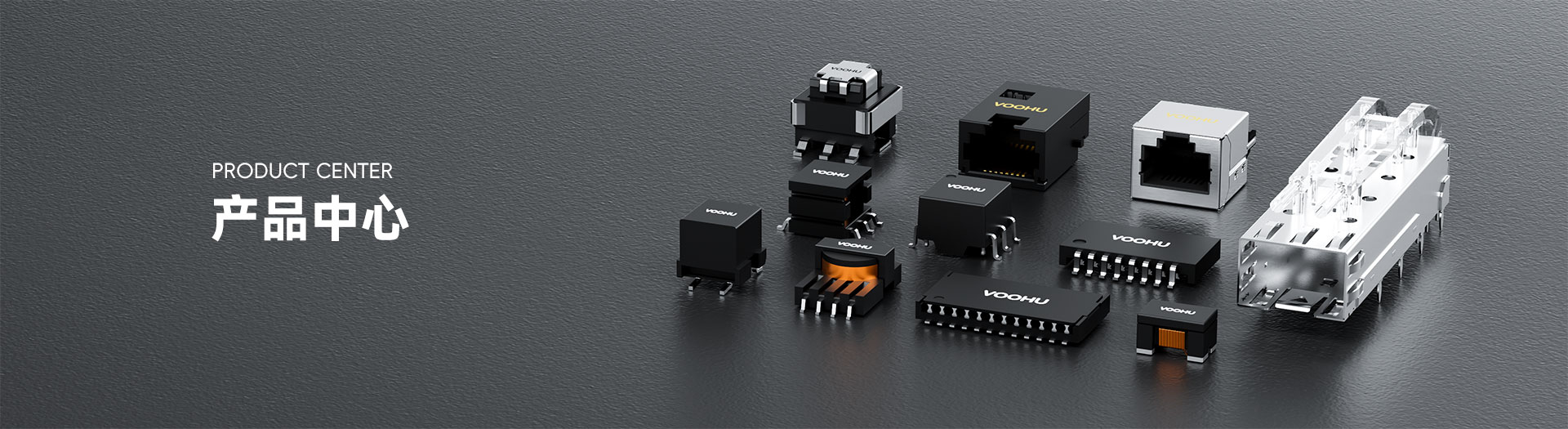
WHS16002GM Single Port SMD 10/100Base-TX PIN16 non-PoE LAN Transformer


Request a Quote
Leave your details and we will send a tailored volume quote.
Our sales team will contact you within 1 business day.
Contact Sales
Reach our sales team for pricing and lead time.

Submitted
We have received your request. Our sales team will contact you within 1 business day.



For technical assistance, pleaseclick the button below to add customer service or visit the sample request pageto fill out the form. We will serve you as soon as possible.
Technical Support Email: fae.thorne@voohu.cn Phone: +86 400-1048-018
For more details, please visit theDownload Centerto get documents or click the button below to add customer service. We will serve you as soon as possible.


For purchases and small-volume orders, please contact our sales team. We support VAT general/special invoices with a convenient and efficient process.
For technical assistance or sample requests, pleaseclick the button belowto add customer service orvisit the sample request pageto fill out the form. We will serve you as soon as possible.
Customer Service Email: song.lei@voohu.cn Phone: +86 180 2130 1120
-55 °C to +150 °C, the widest in this catalogue.
For comparison, the common wide-temperature grade in the10/100 BASE-T rangeis -40 °C to +85 °C and the automotive grade -40 °C to +125 °C. The WHS16002GM extends both ends. That grade addresses positions where ordinary wide-temperature parts do not survive — engine bays, downhole equipment, board positions beside high-temperature industrial processes. The deciding figure remains the measured temperature at the transformer's own location, not the ambient.
Inter-winding capacitance, stated on the WHS16002GM as 35 pF Max at 100 kHz and 0.1 V — the only part in this catalogue that lists it.
Inter-winding capacitance is the parasitic coupling between the chip side and the cable side. Isolation hipot governs whether the barrier withstands high voltage; inter-winding capacitance governs how much high-frequency common-mode noise crosses that barrier. The lower the figure, the less common-mode interference from the cable couples into the PHY side. Where EMC margin is tight, or radiated emissions are being estimated up front, this is a number that can be used directly.
Land pattern, outline, internal structure, cross talk and common-mode rejection are all the same; two things decide it — temperature range and stated qualification. The WHS16002GM is rated -55 °C to +150 °C and additionally states inter-winding capacitance; theWHS16002GAis rated -40 °C to +125 °C and states AEC-Q200 tested.
In short: the automotive claim points to the WHS16002GA, the more extreme temperature range to the WHS16002GM. The two cannot be had together, so tell us if a design needs both and we will confirm what is available.