
TVS Diode vs Zener Diode vs Varistor (MOV): Which One Should Protect Your Interface?
TVS Diode vs Zener Diode vs Varistor (MOV): Which One Should Protect Your Interface?
Use a TVS diode when a signal or low-voltage DC line must survive ESD and surge pulses with a tight clamping voltage. Use a varistor (MOV) on power inputs, where surge energy is large and capacitance does not matter. Use a Zener diode for steady voltage references and low-energy clamping, not as surge protection. The three look alike on a V-I curve, but their datasheets rate different things: a TVS diode is rated for peak pulse power and clamping voltage under a defined pulse such as 8/20 µs or 10/1000 µs, a MOV for surge current and energy, and a Zener diode for a regulated voltage at a test current and its steady power dissipation. VOOHU supplies TVS and ESD diodes, MOVs and GDTs, from a 2-line TVS array with 0.9 pF typical capacitance to a 1500 W bidirectional TVS, and our FAE team can help you pick parts.
Are TVS and Zener diodes the same?
No, although they are close relatives. Both are silicon junctions that conduct when the reverse voltage reaches breakdown, which is why a TVS diode is sometimes called an avalanche or Zener-type diode. The difference is what each one is built and rated to do.
A Zener diode is built to hold a precise voltage continuously. Its datasheet gives the Zener voltage at a stated test current, its tolerance and dynamic impedance, and a steady power rating. It usually does not give a clamping voltage at tens of amps, so you cannot tell how high the voltage will rise during a surge, or whether the part will survive it.
A TVS diode uses a larger junction to absorb short, high-current pulses. Its datasheet is written around the pulse: a working (stand-off) voltage below which it stays off, a breakdown voltage at 1 mA, a maximum clamping voltage at a peak pulse current, and a peak pulse power for a named waveform. For example, theWHTB058VAis a bidirectional TVS in DO-214AB with a 58 V reverse stand-off voltage, a 64.4–71.2 V breakdown voltage at 1 mA, a maximum clamping voltage of 93.6 V at 16.1 A, and 1500 W minimum peak pulse power, all on the 10/1000 µs waveform.
So the two are not interchangeable in a protection circuit: for ESD and surge tests, use a part whose datasheet states what it does under that pulse.
TVS diode vs varistor (MOV): what is the difference?
A metal oxide varistor is a zinc oxide ceramic, not a semiconductor junction. Its resistance falls steeply once the voltage passes its varistor voltage, and it behaves the same in both polarities. Compared with a TVS diode, a MOV:
- handles more surge energy for its size, which suits power inputs;
- has a softer knee, so its clamping voltage rises more as the surge current grows;
- has much higher capacitance, which keeps it off high-speed signal lines;
- ages with repeated large surges: the varistor voltage drifts and leakage rises, so it should be sized with margin.
A MOV datasheet is written around energy rather than pulse power. TheWHM0082VAhas a varistor voltage of 82 V (74–90 V) measured at 1 mA, a maximum allowable voltage of 50 VAC or 65 VDC, a maximum limiting voltage of 135 V at 50 A, a maximum energy of 27 J (10/1000 µs) and a maximum surge current of 6000 A. Its leakage is 25 µA or less at 83% of the varistor voltage.
When should you use a TVS diode?
Use a TVS diode wherever the protected pin has a low absolute maximum rating and the clamping voltage has to stay close to the working voltage: data lines, low-speed buses, control I/O and low-voltage DC rails. TVS arrays put several low-capacitance diodes in one package, so one part can cover a differential pair or a group of lines. Where the surge energy is too large for a TVS diode alone, as on a long outdoor cable or a power input, a GDT or MOV takes the first hit and a TVS diode behind it does the fine clamping.
Can you use a Zener diode or a MOV instead of a TVS diode?
Sometimes, but check what you give up. A Zener diode across a slow supply can clamp a small overvoltage, yet with no pulse rating you cannot show it will survive an IEC 61000-4-2 or 61000-4-5 test. A MOV can replace a TVS diode on a power input if its higher clamping voltage is still safe for what sits behind it, but its capacitance rules it out on data lines. Going the other way, a TVS diode alone is often too small for a mains or long-cable surge, which is why surge designs stack a GDT or MOV in front of it.
How do their V-I curves and response compare?
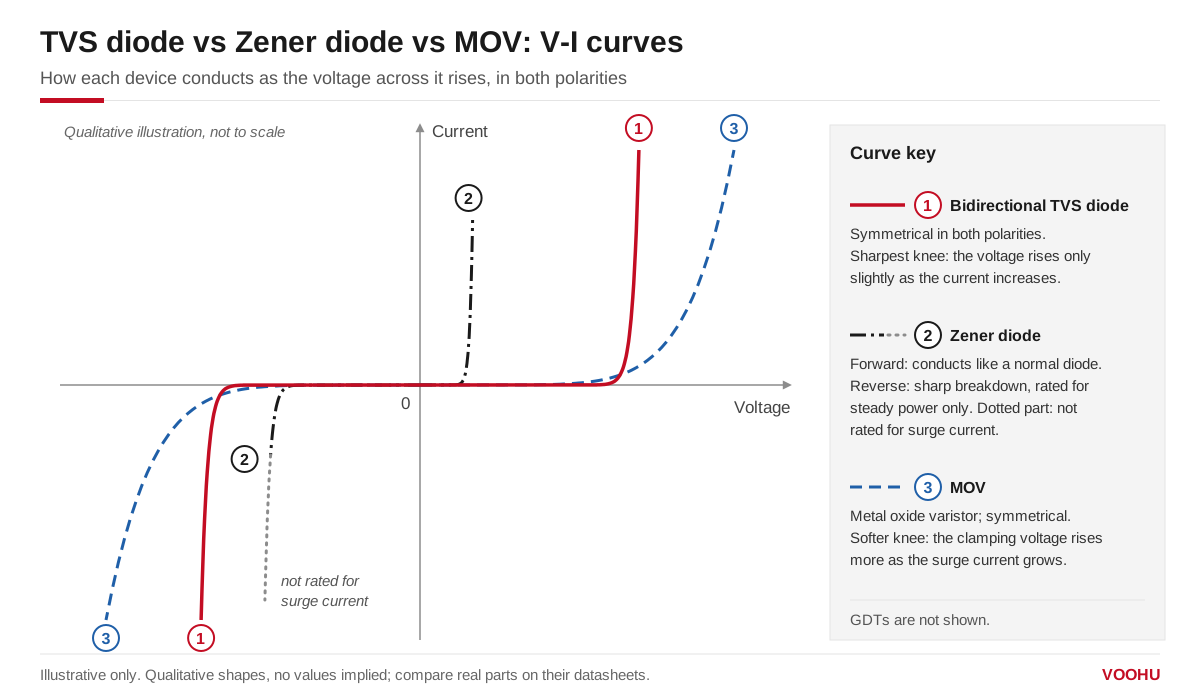
A TVS diode has the sharpest knee, a MOV a softer one, and a Zener diode is not rated for surge current. Illustration only, not to scale.
A bidirectional TVS diode and a MOV are both symmetrical; a Zener diode conducts forward like an ordinary diode and breaks down in reverse. The TVS knee is the sharpest, so its clamping voltage stays nearest its breakdown voltage as current rises; the MOV knee is softer.
On speed, silicon TVS diodes are generally regarded as the fastest of these devices, MOVs as fast enough for most surge work, and GDTs as the slowest because the gas has to ionize first. On a real board, the inductance of the leads and traces between the protector and the pin often matters more than the device itself. VOOHU TVS and ESD datasheets rate the clamping voltage at a stated pulse current and waveform rather than quoting a response time, and that clamping voltage, at the pulse current your test applies, is the number to compare against the absolute maximum rating of the pin you protect.
How can you compare a TVS diode with a varistor on the datasheet?
Each device type names its key numbers differently. The table lines them up, using the values on VOOHU datasheets for one part of each type. A Zener column is included for reference, with the parameters such datasheets usually list.
| What you need to know | TVS diode: WHTB058VA | TVS array: WHALD30E2B | MOV: WHM0082VA | GDT: WHGD090V1P0B | Zener diode (typical datasheet) |
|---|---|---|---|---|---|
| Stays off below | Reverse stand-off voltage 58 V; leakage 1 µA max at 58 V | Working voltage 30 V max | Max allowable voltage 50 VAC / 65 VDC; leakage ≤ 25 µA at 83% of V1mA | Insulation resistance 1 GΩ min | Not specified as a stand-off; it regulates at its Zener voltage |
| Starts to conduct at | Breakdown 64.4–71.2 V at 1 mA | Breakdown 31 V min at 1 mA | Varistor voltage 82 V (74–90 V) at 1 mA | DC spark-over 90 V (63–117 V) at 100 V/s | Zener voltage at a stated test current |
| Clamping or limiting voltage | 93.6 V max at 16.1 A, 10/1000 µs | 37 V typ at 1 A, 55 V typ at 8 A, 8/20 µs | 135 V max at 50 A | Impulse spark-over ≤ 600 V at 1 kV/µs | Usually not rated at surge currents |
| Surge rating | 1500 W min, 10/1000 µs | 440 W, 8 A, 8/20 µs | 6000 A; 27 J at 10/1000 µs | 2000 A, 10 times, 8/20 µs (series rating) | Steady power dissipation |
| Capacitance | Not specified | 0.9 pF typ (I/O to GND, 0 V, 1 MHz) | Not specified | ≤ 1 pF (1 MHz, 1 V) | Varies by part |
| Polarity and package | Bidirectional, DO-214AB | Bidirectional, 2 lines, SOT-23 | Bidirectional by nature, 14 mm disc series | Bidirectional, 4532 (1812) SMD | Unidirectional |
Two cautions when you compare: check that the clamping voltages are stated at a similar current and waveform before you rank parts, and treat "typical" and "maximum" values differently. The WHALD30E2B clamping values are typical; the WHTB058VA value is a maximum.
Which device fits which interface?
| Line you are protecting | First choice | Why | VOOHU example |
|---|---|---|---|
| Ethernet, USB or other high-speed pairs | Low-capacitance ESD diode or array | Capacitance has to be very low, around a picofarad, to keep the signal intact | WHTA3V30P8B: 0.8 pF typ, ±30 kV contact (IEC 61000-4-2), 25 A at 8/20 µs; seeESD diodes for Ethernet |
| Low-speed control, I/O and bus lines | Bidirectional TVS array with a working voltage above the highest line voltage | Tight clamping, one package for two lines | WHALD30E2B: 30 V working voltage, 0.9 pF typ, 8 A at 8/20 µs |
| Low-voltage DC power input | High-power TVS diode, with a MOV ahead of it for larger surges | The TVS sets the clamp; the MOV absorbs energy | WHTB058VA(1500 W, 58 V stand-off);WHM0082VA(65 VDC max) |
| AC mains input | MOV rated for the mains voltage | High energy, bidirectional | See thevaristor range; the WHM0082VA is a 50 VAC part |
| Cable ports exposed to lightning-induced surges | GDT first, TVS behind it | The GDT carries the large current with very low capacitance; the TVS limits the residual voltage | WHGD090V1P0B: 90 V DC spark-over, ≤ 1 pF; seeEthernet port surge protection |
| Voltage reference, gate clamp, slow low-energy overvoltage | Zener diode | Precise steady voltage; not surge-rated | — |
Whatever the line, choose a working voltage above the highest normal voltage on it, including tolerance and any fault condition it must ride through, then check the clamping voltage at your test current against the protected pin. For RS-485 and other bus nodes, seeRS-485 circuit design.
To start, theWHALD30E2Bcovers two signal lines below 30 V, theWHTB058VAclamps DC lines up to a 58 V stand-off, theWHM0082VAtakes surge energy on power inputs, and theWHGD090V1P0Bis the first stage on cable ports. Narrow down by type in theTVS and ESD selector, or browsevaristorsandgas discharge tubes.
FAQ
Q1: Is a TVS diode a Schottky diode?
No. A TVS diode is an avalanche p-n junction designed to conduct in reverse breakdown during a transient. A Schottky diode is a metal-semiconductor junction chosen for its low forward voltage and fast switching, and it is not rated to clamp surges in reverse.
Q2: Does a TVS diode have polarity?
A unidirectional TVS diode does: it clamps in one direction and conducts like a normal diode in the other, which suits lines that never go below ground. A bidirectional TVS diode clamps symmetrically in both directions and suits lines that swing above and below ground. The WHTB058VA and WHALD30E2B are both bidirectional.
Q3: What is the difference between a TVS diode and an ESD diode?
An ESD diode is a TVS diode optimized for electrostatic discharge on signal lines: very low capacitance and high ESD ratings, but smaller pulse current. For example, the WHTA3V30P8B has 0.8 pF typical capacitance and ±30 kV contact ESD with a 25 A peak pulse current at 8/20 µs, while the WHTB058VA is rated 1500 W at 10/1000 µs for power-line surges.
Q4: Where does a GDT fit compared with a TVS diode and a MOV?
A gas discharge tube carries very large surge currents with almost no capacitance, but it fires at a higher voltage than a TVS diode and is slower to turn on, so it is used as the first stage on cable ports with a TVS diode behind it. Against a MOV, a GDT has far lower capacitance, but on a DC supply it can keep conducting after the surge unless the circuit limits the follow current. Seegas discharge tubesfor VOOHU 2- and 3-electrode parts.
Get help choosing protection for your port
Tell us the line you are protecting, its highest normal voltage, the ESD or surge level you must pass and the IC behind it in thesample and support request form. Our FAE team can suggest a TVS, MOV or GDT combination and check the clamping voltage against the pin you need to protect. Samples are available for evaluation, and selected parts are free of charge. Our FAE team will be glad to confirm the options for your project.
VOOHU supplies RJ45 and SFP connectors, LAN and PoE transformers, common mode chokes and TVS, ESD, GDT and MOV protection devices from Suzhou, China, to more than 1,500 customers.
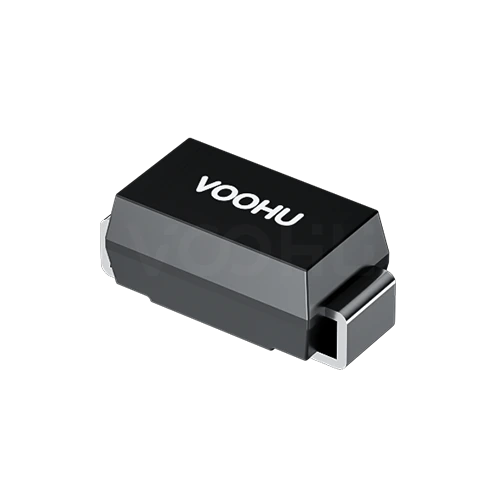 WHTB058VA Bi-Directional TVS Vrwm 58V Operating Temperature -60℃~150℃
> View Details
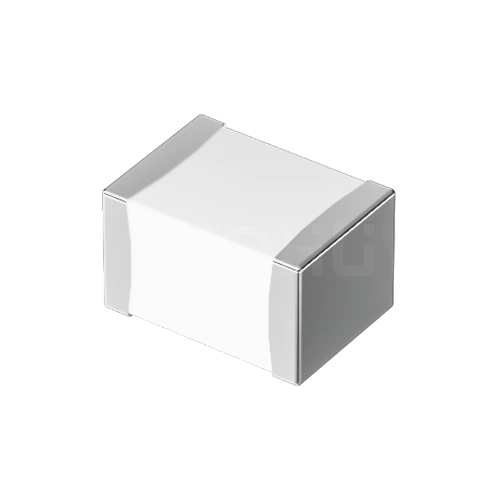 WHGD090V1P0B 2PIN Vbr 90 DC.V Spark-over Voltage 600 V
> View Details
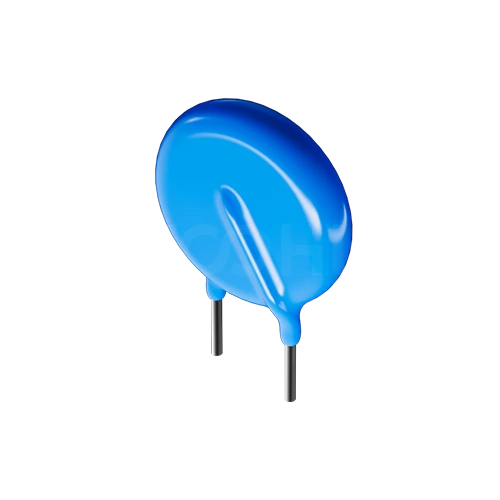 WHM0082VA Tolerance voltage 65DC.V Clamping voltage 135V Rated power 0.1W
> View Details
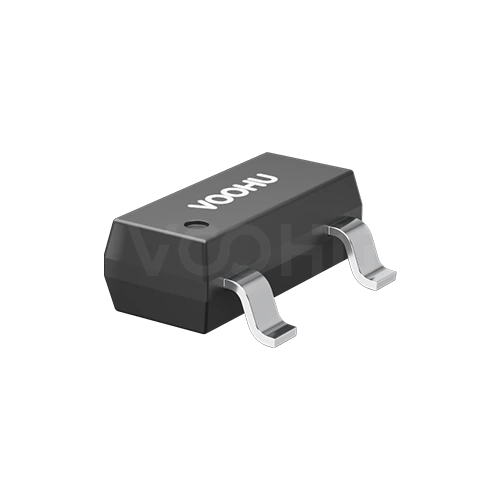 WHALD30E2B: Bidirectional ESD Protection; Withstand Voltage: 30V; Contact Discharge: ±30kV / ±30kV; PF: 0.9; Package: SOT-23.
> View Details