




Rated power
The 60 W and 71 W parts are flyback; the 90 W and 120 W parts are active-clamp forward. Power and topology move together here.
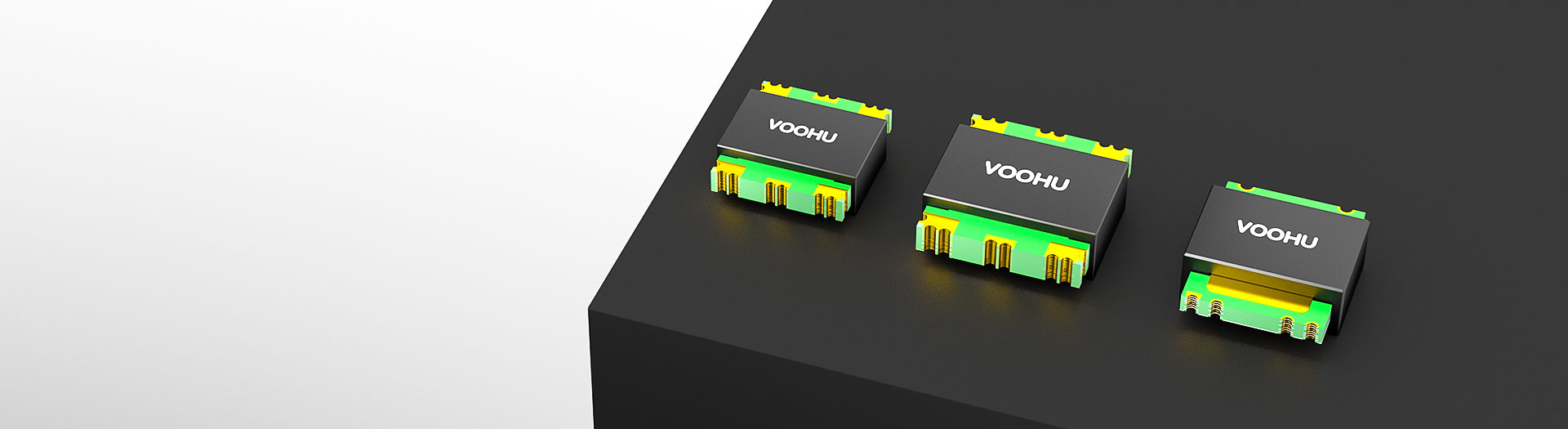
Übertragersortiment
Select multilayer-PCB-winding planar transformers for compact isolated DC-DC designs. WHPT-EQ200 includes 60 W and 71 W flyback families plus 90 W and 120 W active-clamp forward families, each with 3.3 V, 5 V, 12 V and 24 V output design options. Confirm the topology first, then compare inductance, turns ratio, output current and thermal requirements. Request samples or pricing directly for a selected part.
Für OEM- und Serienaufträge. MOQ: eine volle Rolle, ein volles Tray oder eine volle Stange pro Artikelnummer.
Artikelsuche und Produktauswahl
Die Tabelle verwendet die aktuellen Produktdatensätze der englischsprachigen Website, veröffentlichte Auswahlfelder und artikelspezifische Links zu technischen Dateien.
* Spalten „Bild“ und „Artikelnummer“ fixiert · horizontal ziehen, um alle Spezifikationen anzuzeigen
| Bild | Datenblatt | Vergleichen | Downloads |
Model
|
Power(W)
|
Inductance(μH)
|
Lk(μH Max)
|
Übersetzungsverhältnis
|
Iast(A)
|
Output(V/A)
|
Muster |
|---|
| Bild | Artikelnummer | Datenblatt | Vergleichen | Downloads | Model | Power(W) | Inductance(μH) | Lk(μH Max) | Übersetzungsverhältnis | Iast(A) | Output(V/A) | Muster |
|---|---|---|---|---|---|---|---|---|---|---|---|---|
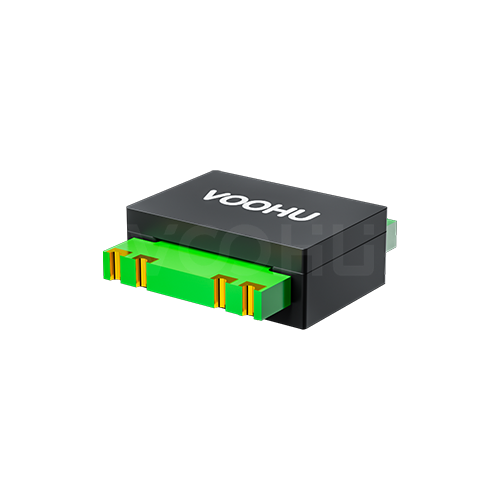 |
WHPT-EQ200-026 | SPEC | WHPT-EQ200-120W Series | 120 | 280 | 0.5 | 1:1:0.5 | TBD | 24V/5A |
|
||
|
|
WHPT-EQ200-025 | SPEC | WHPT-EQ200-120W Series | 120 | 280 | 0.5 | 1:0.5:0.5 | TBD | 12V/10A |
|
||
|
|
WHPT-EQ200-024 | SPEC | WHPT-EQ200-120W Series | 120 | 280 | 0.5 | 1:0.25:0.5 | TBD | 5V/24A |
|
||
|
|
WHPT-EQ200-023 | SPEC | WHPT-EQ200-120W Series | 120 | 280 | 0.5 | 1:0.166:0.666 | TBD | 3.3V/36A |
|
||
|
|
WHPT-EQ200-022 | SPEC | WHPT-EQ200-90W Series | 90 | 280 | 0.5 | 1:1:0.5 | TBD | 24V/3.7A |
|
||
|
|
WHPT-EQ200-021 | SPEC | WHPT-EQ200-90W Series | 90 | 280 | 0.5 | 1:0.5:0.5 | TBD | 12V/7.5A |
|
||
|
|
WHPT-EQ200-020 | SPEC | WHPT-EQ200-90W Series | 90 | 280 | 0.5 | 1:0.25:0.5 | TBD | 5V/18A |
|
||
|
|
WHPT-EQ200-019 | SPEC | WHPT-EQ200-90W Series | 90 | 280 | 0.5 | 1:0.166:0.666 | TBD | 3.3V/27A |
|
||
|
|
WHPT-EQ200-018 | SPEC | WHPT-EQ200-71W Series | 71 | 18 | 0.5 | 1:1:0.5 | 6.6 | 24V/2.9A |
|
||
|
|
WHPT-EQ200-017 | SPEC | WHPT-EQ200-71W Series | 71 | 18 | 0.5 | 1:0.5:0.5 | 6.6 | 12V/5.9A |
|
||
|
|
WHPT-EQ200-016 | SPEC | WHPT-EQ200-71W Series | 71 | 18 | 0.5 | 1:0.25:0.5 | 6.3 | 5V/14A |
|
||
|
|
WHPT-EQ200-015 | SPEC | WHPT-EQ200-71W Series | 71 | 18 | 0.5 | 1:0.166:0.666 | 6.3 | 3.3V/21A |
|
||
|
|
WHPT-EQ200-014 | SPEC | WHPT-EQ200-60W Series | 60 | 21 | 0.5 | 1:1:0.5 | 6 | 24V/2.4A |
|
||
|
|
WHPT-EQ200-013 | SPEC | WHPT-EQ200-60W Series | 60 | 21 | 0.5 | 1:0.5:0.5 | 6 | 12V/5A |
|
||
|
|
WHPT-EQ200-012 | SPEC | WHPT-EQ200-60W Series | 60 | 21 | 0.5 | 1:0.25:0.5 | 5.4 | 5V/12A |
|
||
|
|
WHPT-EQ200-011 | SPEC | WHPT-EQ200-60W Series | 60 | 21 | 0.5 | 1:0.166:0.666 | 5.4 | 3.3V/18A |
|
Erweitern Sie die ausgewählten Filter oder löschen Sie die aktuelle Suche.
Schnellzugriff auf Produktfamilien
Die angegebenen Anzahlen basieren auf den aktuell veröffentlichten Produktdaten.
So wählen Sie aus
Grenzen Sie die veröffentlichten Merkmale schrittweise ein, vergleichen Sie die verbleibenden Kandidaten und prüfen Sie vor dem Design-in die Unterlagen der jeweiligen Teilenummer.
Distinguish flyback, active-clamp forward and other topologies. Include the controller or reference circuit.
Provide input range, output voltage/current, switching frequency, duty cycle and startup conditions.
Compare inductance definitions, leakage, ratio, DCR and winding current. Check temperature rise, flux and cooling.
Check pins, polarity, pads, insulation and assembly documents. Validate full-load and worst-case operation in the target circuit.
Wichtige Auswahlparameter
The 60 W and 71 W parts are flyback; the 90 W and 120 W parts are active-clamp forward. Power and topology move together here.
Primary magnetising inductance. Read it with switching frequency and input voltage, which together set the flux swing.
Quoted as a maximum. Leakage does not reach the secondary; it drives the spike your clamp or snubber has to absorb.
Stated per winding set. With the input range and the topology it produces the listed output voltage, before regulation.
The voltage and current the part was designed around inside a converter. It is not an output you can load directly.
Vergleich der Produktfamilien
Nutzen Sie diese Übersicht zur Vorauswahl und prüfen Sie anschließend jeden benötigten Wert in der Zeile der konkreten Teilenummer sowie in den verknüpften technischen Unterlagen.
Zur Produktauswahl zurückkehren ↑| Model | Artikelnummern | Power(W) | Inductance(μH) | Lk(μH Max) | Übersetzungsverhältnis | Iast(A) | Output(V/A) | Aktion |
|---|---|---|---|---|---|---|---|---|
| WHPT-EQ200-60W Series | 4 | 60 | 21 | 0.5 | 1:0.166:0.666, 1:0.25:0.5, 1:0.5:0.5, 1:1:0.5 | 5.4, 6 | 3.3V/18A, 5V/12A, 12V/5A, 24V/2.4A | Filtern → |
| WHPT-EQ200-71W Series | 4 | 71 | 18 | 0.5 | 1:0.166:0.666, 1:0.25:0.5, 1:0.5:0.5, 1:1:0.5 | 6.3, 6.6 | 3.3V/21A, 5V/14A, 12V/5.9A, 24V/2.9A | Filtern → |
| WHPT-EQ200-90W Series | 4 | 90 | 280 | 0.5 | 1:0.166:0.666, 1:0.25:0.5, 1:0.5:0.5, 1:1:0.5 | TBD | 3.3V/27A, 5V/18A, 12V/7.5A, 24V/3.7A | Filtern → |
| WHPT-EQ200-120W Series | 4 | 120 | 280 | 0.5 | 1:0.166:0.666, 1:0.25:0.5, 1:0.5:0.5, 1:1:0.5 | TBD | 3.3V/36A, 5V/24A, 12V/10A, 24V/5A | Filtern → |
Technische Leistung und Anwendungseignung
Die Anwendungseignung ist artikelspezifisch. Verwenden Sie die Katalogfelder für eine Vorauswahl und gleichen Sie das Design anschließend mit den verknüpften technischen Dateien ab.
Downloads und technische Ressourcen
Suchen Sie nach einer vollständigen oder teilweisen Artikelnummer und öffnen Sie anschließend das Datenblatt, das 3D-Modell oder den PCB-Footprint, ohne zur Produkttabelle zurückzukehren.
Es werden repräsentative verfügbare Dateisätze angezeigt. Suchen Sie nach einer bestimmten Artikelnummer.
Die veröffentlichten Produktinhalte von VOOHU werden vom technischen Team geprüft. Spezifikationen, Downloads und Informationen zum technischen Support sind bestimmten Artikelnummern zugeordnet, sodass Sie sie vor einer Muster- oder Angebotsanfrage prüfen können.
Kategorieübersicht
The construction buys repeatability and height. It does not turn the part into a finished power supply.
Instead of wire on a bobbin, the windings are copper layers in a multilayer board sandwiched between low-profile core halves. That gives a very repeatable build, low height and good thermal contact with the board. It also fixes the turns count in the layout, which is why the range is organised by design point.
The range splits into flyback families and active-clamp forward families. These store and transfer energy differently, so a transformer designed for one will not behave correctly in the other even at the same output power. Confirm your converter topology first; power and output voltage narrow it afterwards.
An entry such as 12 V at 10 A describes the operating point the transformer was designed around inside a complete converter, not a supply you can connect a load to. The controller, switching devices, rectification and output filtering are all yours. Leakage and thermal behaviour still need verifying on the real board.
FAQ und weiterführende Leitfäden
Diese Antworten unterstützen den Ablauf auf der Seite. Artikelspezifische technische Grenzwerte ergeben sich weiterhin aus den verknüpften technischen Dateien.
A planar design uses a flat winding arrangement; this family specifically uses multilayer PCB windings. It offers a low-profile construction option, but losses, leakage, parasitic capacitance and cost remain design-specific. Not every planar transformer is inherently more efficient than a conventional design.
Start with topology: 60/71 W are flyback families, while 90/120 W are active-clamp forward. Then select the specific part for the required output voltage and current. The power label does not replace input-range, frequency, thermal or insulation validation; every voltage/current pair need not multiply to exactly the family label.
No. A transformer is a magnetic component within a converter, not a regulated DC-DC module. The output depends on topology, controller, switching frequency, ratio, rectification and feedback. Provide input range, output requirements and the controller so the complete circuit can be assessed.
Leakage and inductance are different parameters with different measurement arrangements. The 60 W table lists 21 μH±10%, the 71 W table lists 18 μH±10%, and 90/120 W list 280 μH minimum. Leakage is 0.5 μH maximum. Do not relabel 280 μH as a universal typical value or treat leakage as the working inductance.
No blanket compatibility should be assumed. The documents specify flyback or active-clamp forward, not LLC merely because the construction is planar. The 60/71 W documents mention PoE applications, but the overall PoE power budget, PD controller, losses and compliance still need system review. Transformer power alone is insufficient.
Not necessarily. Review input voltage, frequency, flux, winding RMS current, copper and core losses, and cooling. A higher-power family may also change topology and inductance, so it is not a direct replacement. Share operating conditions and thermal measurements for FAE assessment.
Dimensions alone are insufficient. Compare topology, ratio, primary inductance, leakage, winding resistance, insulation, polarity and pads. FAE can identify candidates and explain differences, followed by electrical and thermal validation.
For a known part, request pricing with the quantity and destination. For a new project, start with topology, input range, output voltage/current and height limits; attach the current datasheet for replacement review. Custom electrical design, mechanics, tooling and timing are evaluated per project.
Technischer Support
Senden Sie die Artikelnummer des Kandidaten und die zu prüfende Bedingung. Muster können nach Abschluss der Auswahl angefragt werden; kaufmännische Fragen lassen sich im selben technischen Austausch klären.
Dokumentrevision angeben
Temperatur, Isolationsspannung und Bezugsgrundlage für den PoE-Strom
Pinzahl, Rastermaß und Abstand zwischen den Pinreihen
Zur Priorisierung von Mustern und Evaluierung
Zeitpunkt, zu dem Sie Kandidaten und einen Vergleich der Unterschiede benötigen
Die technische Prüfung ermittelt geeignete Kandidaten und erläutert die Unterschiede.
Aus der Produktauswahl oder technischen Prüfung
Prototyp / Pilotserie / Serienfertigung
Zeitplan für Muster und Serie getrennt angeben
Konformitätsnachweise, Materialdeklarationen oder Berichte Dritter
Muster sind zur Evaluierung erhältlich, ausgewählte Typen kostenlos. Unser FAE-Team bestätigt Ihnen gern die Optionen für Ihr Projekt. Der Vertrieb antwortet an Werktagen.