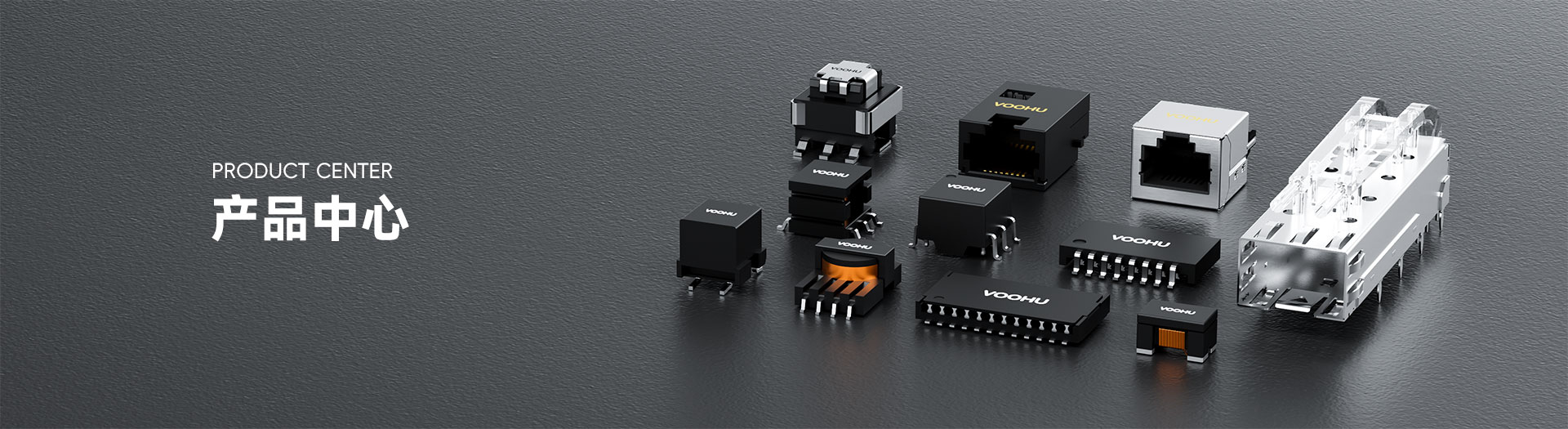
WHD72302G Five Ports DIP 10/100Base-TX PIN72 non-PoE LAN Transformer


Request a Quote
Leave your details and we will send a tailored volume quote.
Our sales team will contact you within 1 business day.
Contact Sales
Reach our sales team for pricing and lead time.

Submitted
We have received your request. Our sales team will contact you within 1 business day.



For technical assistance, pleaseclick the button below to add customer service or visit the sample request pageto fill out the form. We will serve you as soon as possible.
Technical Support Email: fae.thorne@voohu.cn Phone: +86 400-1048-018
For more details, please visit theDownload Centerto get documents or click the button below to add customer service. We will serve you as soon as possible.


For purchases and small-volume orders, please contact our sales team. We support VAT general/special invoices with a convenient and efficient process.
For technical assistance or sample requests, pleaseclick the button belowto add customer service orvisit the sample request pageto fill out the form. We will serve you as soon as possible.
Customer Service Email: song.lei@voohu.cn Phone: +86 180 2130 1120
The two match on electrical ratings and hole pattern, so choose purely by which side the common-mode choke should land on: the WHD72302G puts it on the cable side, theWHD72301Gon the chip side.
The deciding factor is the element order in the PHY reference design and the EMC result on the finished unit, not a better or worse number. A five-port device carries five ports through EMC at once, so re-testing after a change costs far more than on a single-port part: test both orders at the prototype stage and stay with the choice.
One five-port device saves board area and part numbers, but ties all five ports together.
The WHD72302G body is 65.70 × 6.50 mm against five16-pin single-port partsat 20.30 × 9.80 mm each — a large difference in area, and four fewer line items on the BOM. The cost is layout freedom: the five RJ45s have to sit along one line, and a fault on any port means replacing the whole device. Equipment with scattered port positions, or serviced port by port, is better suited by single-port parts.
A 65.70 × 6.50 mm body, 12.00 mm Max high; the leads span 58.74 mm and the two hole rows sit 3.30 mm apart.
Pitch is 1.78 mm and the recommended hole ø0.90 mm. The WHD72302G therefore needs a straight run close to 66 mm long but only 6.5 mm wide. With only 3.30 mm between the rows there is essentially no routing space in the middle, so each port's pairs have to leave from the two sides. The 12 mm clearance also needs checking; it is on the tall side among through-hole multi-port parts in the10/100 BASE-T range.