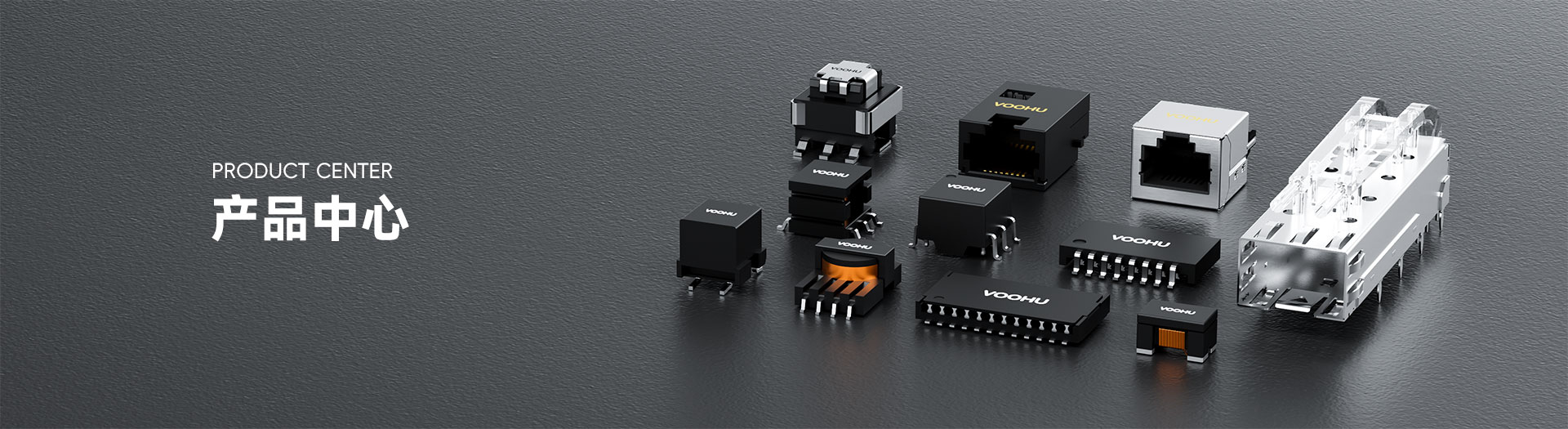
WHSQ48002-1PG Dual Ports SMD 2.5G/5G PIN48 4PPoE LAN Transformer


Request a Quote
Leave your details and we will send a tailored volume quote.
Our sales team will contact you within 1 business day.
Contact Sales
Reach our sales team for pricing and lead time.

Submitted
We have received your request. Our sales team will contact you within 1 business day.


For technical assistance, pleaseclick the button below to add customer service or visit the sample request pageto fill out the form. We will serve you as soon as possible.
Technical Support Email: fae.thorne@voohu.cn Phone: +86 400-1048-018
For more details, please visit theDownload Centerto get documents or click the button below to add customer service. We will serve you as soon as possible.


For purchases and small-volume orders, please contact our sales team. We support VAT general/special invoices with a convenient and efficient process.
For technical assistance or sample requests, pleaseclick the button belowto add customer service orvisit the sample request pageto fill out the form. We will serve you as soon as possible.
Customer Service Email: song.lei@voohu.cn Phone: +86 180 2130 1120
Each magnetic channel of the WHSQ48002-1PG carries 1000 mA of DC balance current, at a stated PoE Support 50W.Route the eight centre-tap paths as eight balanced paths sized for that current, taking the width from your actual copper thickness and permitted rise.
No total for a single Ethernet port or for the whole device is published, so the per-channel figure must not be multiplied by eight, and no wattage available at the PD can be derived from it – 50 W is the device-side rating. No IEEE 802.3 clause is quoted for the WHSQ48002-1PG, so do not check it against 802.3at or 802.3bt class names. Other options are listed in the2.5G/5G BASE-T range.
The centre taps of the WHSQ48002-1PG sit on both sides of the package: TCT1 to TCT8 on the chip side at pins 1, 4, 7, 10, 13, 16, 19 and 22, and CMT1 to CMT8 on the cable side at pins 48, 45, 42, 39, 36, 33, 30 and 27.Each run of three consecutive pins forms one magnetic channel – a centre tap plus a differential pair, TD1± to TD8± on the chip side and TX1± to TX8± on the cable side.
The drawing labels both sides, so wire from the side labels and pin numbers as drawn. The datasheet does not assign the four channels of the WHSQ48002-1PG to named Ethernet ports; that grouping follows the wiring on the PHY side.
Choose on the current the port has to deliver: the WHSQ48002-1PG carries 1000 mA per magnetic channel at a stated PoE Support 50W, and theWHSQ48004-1PGcarries 720 mA per channel at a stated PoE Support 30W.Nothing else separates them: body size and pad layout, pin names and order, OCL with its 14 mA bias condition, DCR, insertion and return loss, crosstalk, common-mode rejection, the isolation test, the 0 °C to +70 °C operating range and the reel quantity are identical on the WHSQ48002-1PG and the WHSQ48004-1PG.
Switching between the two therefore needs no new signal-integrity work – only a recheck of the centre-tap copper against the new current.