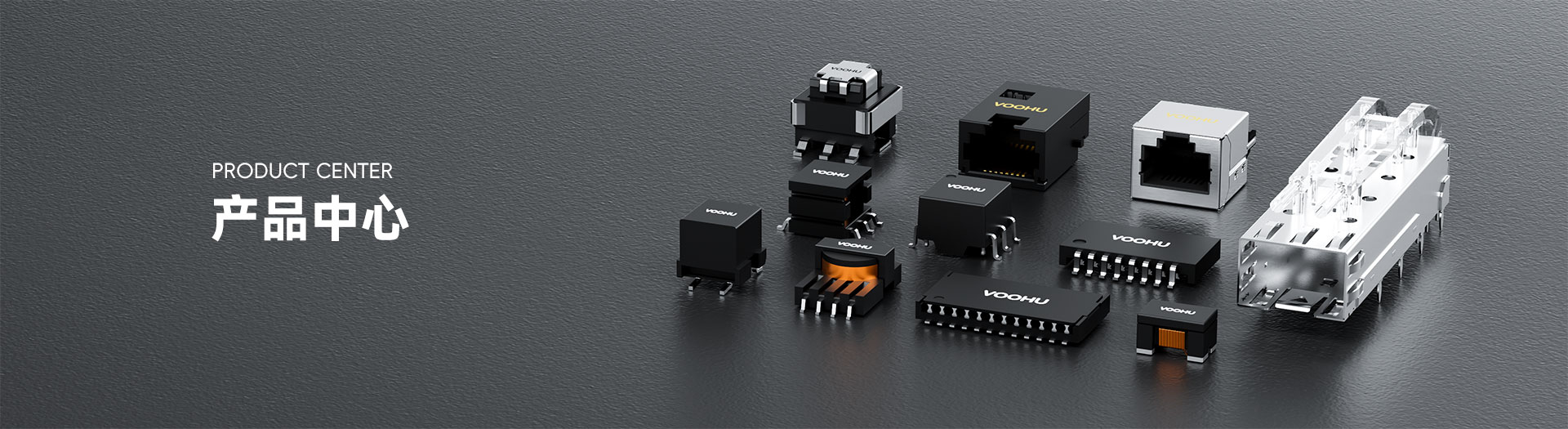
WHSQ24015P1 Single Port SMD 2.5G/5G PIN24 PoE+ LAN Transformer


Request a Quote
Leave your details and we will send a tailored volume quote.
Our sales team will contact you within 1 business day.
Contact Sales
Reach our sales team for pricing and lead time.

Submitted
We have received your request. Our sales team will contact you within 1 business day.



For technical assistance, pleaseclick the button below to add customer service or visit the sample request pageto fill out the form. We will serve you as soon as possible.
Technical Support Email: fae.thorne@voohu.cn Phone: +86 400-1048-018
For more details, please visit theDownload Centerto get documents or click the button below to add customer service. We will serve you as soon as possible.


For purchases and small-volume orders, please contact our sales team. We support VAT general/special invoices with a convenient and efficient process.
For technical assistance or sample requests, pleaseclick the button belowto add customer service orvisit the sample request pageto fill out the form. We will serve you as soon as possible.
Customer Service Email: song.lei@voohu.cn Phone: +86 180 2130 1120
The datasheet states PoE support of 30 W with each channel carrying 720 mA of DC balance current. 30 W corresponds to IEEE 802.3at — PoE+.
For 802.3bt Type 3 or Type 4 the WHSQ24015P1 is not the right part, and the 30 W figure cannot be extrapolated upward. The current is quoted per channel, so read it as written when budgeting port power rather than multiplying it out to a port total. Tell us the per-port current you are targeting and VOOHU will confirm the applicable scope. Other options sit in the2.5G/5G BASE-T range.
The clause makes +85 °C the WHSQ24015P1's own temperature boundary rather than an allowable ambient, so self-heating must not be added on top of it.
The datasheet appends "Included The Temperature Rise" to the -40 °C to +85 °C operating range. Parts without that clause should have their figures read as a component operating range, and the two styles cannot be compared directly. No derating curve is published, so measure the component surface temperature in the finished product under the worst airflow case and confirm it stays below the limit. Temperature grades are listed per part in the2.5G/5G BASE-T range.
No. Typ is a typical value and Min is a guaranteed floor; the two are not comparable and a Typ figure should not go into a worst-case budget as if it were guaranteed.
The WHSQ24015P1 states cross talk and common-mode rejection both at -30 dB Typ from 1 to 250 MHz, where most 100M and Gigabit parts state -30 dB Min from 1 to 100 MHz. Both differences matter: the qualifier changes from Min to Typ, and the band widens — reflecting the higher data rate rather than a relaxed specification. Where a project needs a guaranteed limit at a specific frequency, tell us the band and the criterion. Other parts sit in the2.5G/5G BASE-T range.