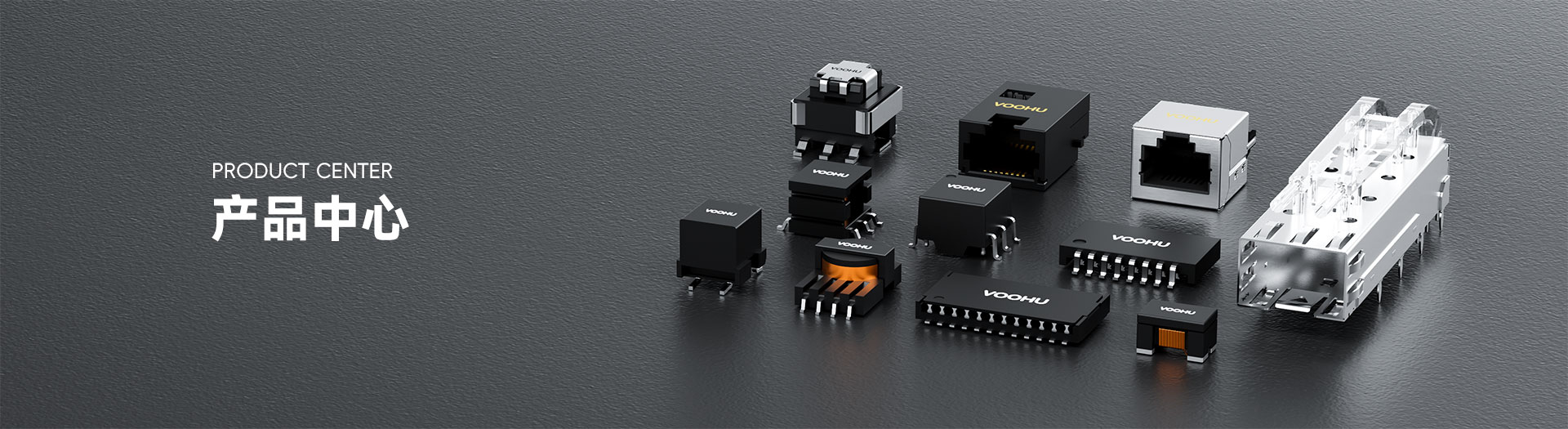
WHD72301G Five Ports DIP 10/100Base-TX PIN72 non-PoE LAN Transformer


Request a Quote
Leave your details and we will send a tailored volume quote.
Our sales team will contact you within 1 business day.
Contact Sales
Reach our sales team for pricing and lead time.

Submitted
We have received your request. Our sales team will contact you within 1 business day.



For technical assistance, pleaseclick the button below to add customer service or visit the sample request pageto fill out the form. We will serve you as soon as possible.
Technical Support Email: fae.thorne@voohu.cn Phone: +86 400-1048-018
For more details, please visit theDownload Centerto get documents or click the button below to add customer service. We will serve you as soon as possible.


For purchases and small-volume orders, please contact our sales team. We support VAT general/special invoices with a convenient and efficient process.
For technical assistance or sample requests, pleaseclick the button belowto add customer service orvisit the sample request pageto fill out the form. We will serve you as soon as possible.
Customer Service Email: song.lei@voohu.cn Phone: +86 180 2130 1120
The WHD72301G holds ten 1CT:1CT units, split across five ports at two channels — one pairset — each.
The drawing groups them as TD1/RD1 through TD5/RD5, each pairing with a TX/RX group on the cable side to form one complete 100M port. Five ports in one device means a 65.70 mm body: the layout has to reserve that whole straight run, and routing between ports has to be planned in one go, unlike discrete single-port parts in the10/100 BASE-T rangethat can be spread around the board.
Yes. The five groups inside the WHD72301G are independent, so unused ports can be left unconnected and the termination network built only for the ports actually in use.
The trade-off is clear: what is saved is part numbers and purchasing overhead, what is spent is board area — the device still occupies its full 65.70 mm regardless of how many ports are wired. Where only three ports are ever needed, aquad-port deviceor three single-port parts is usually the better buy; fitting a five-port part and wiring selectively makes sense mainly when models with different port counts share one board.
Outline, hole pattern, port count and internal unit count are identical; the element order differs — the WHD72301G puts the common-mode choke on the chip side, theWHD72302Gon the cable side.
Both bodies are 65.70 × 6.50 mm and 12.00 mm Max high, on 1.78 mm pitch with a 58.74 mm span and 3.30 mm row spacing, and both hold ten 1CT:1CT units across five ports. The footprint being the same, changing between them needs no PCB work; but the common-mode path has changed, so EMC has to be re-verified.