

Voohu Industrial-Grade RJ45 Vibration-Resistant Solution: Solving Network Connectivity Challenges in Harsh Environments
In modern industrial automation, intelligent manufacturing, rail transportation, and outdoor IoT devices, the physical layer reliability of network connections directly affects the stable operation and data security of the entire system. These environments commonly experience continuous vibration, impact, frequent mechanical insertion and removal, and extreme temperature and humidity changes, posing a severe challenge to traditional consumer-grade RJ45 connectors. Network connection interruptions, sudden changes in contact resistance, and even physical loosening caused by vibration have become a significant cause of network failures in industrial environments.
I. Three Failure Modes Under Vibration Environments
The failure of industrial RJ45 connectors under vibration is not a single event, but a gradual process involving the coupling of mechanical, electrical, and material factors. According to the analysis of the VOOHU Electronics Technology team, the main failure modes can be categorized into the following three types:
1. Connection Loosening and Dislodgement
Continuous vibration subjects the locking mechanism (usually a plastic clip) between the connector and the socket to repeated impacts, leading to fatigue or failure. Case studies show that the detachment rate of ordinary clips can significantly increase in a short period under specific vibration conditions, directly causing network interruptions.
2. Transient Interruption
When an external impact lasts for an extremely short time (e.g., less than 2 milliseconds), the metal contacts inside the connector may momentarily detach due to inertia, causing a transient interruption of the signal. This poses a fatal threat to real-time control systems.
3. Structural Physical Damage
Long-term vibration stress can cause plastic deformation, bending, or fracture of internal precision components (such as spring contacts and pins). The outer housing may also crack, ultimately leading to permanent connector failure.
II. VOOHU Vibration Resistance Solution: A Systematic Reconstruction Starting with "Tight Fit"
To address the core pain points caused by vibration—mechanical loosening, terminal micro-movement, and structural resonance—VOOHU Electronics has launched a precision mold solution focusing on "opening surface size reduction." This solution is not simply a reinforcement of existing products, but rather the result of a systematic reconstruction based on a deep understanding of industrial application scenarios, encompassing multiple dimensions such as mold structure innovation, precision dimensional control, application, and testing verification systems.
Its core objective is to create a dimensionally stable and structurally robust connector "skeleton," providing reliable mechanical protection for the internal contact system in vibration environments, and ensuring absolute stability, long-term reliability, and signal integrity of the Ethernet physical connection under severe dynamic stress environments.
Core Technology Path
New Mold Design → Opening Surface Size Reduction Technology → Reliability Testing and Verification
1. New Mold Design for Precision Structure
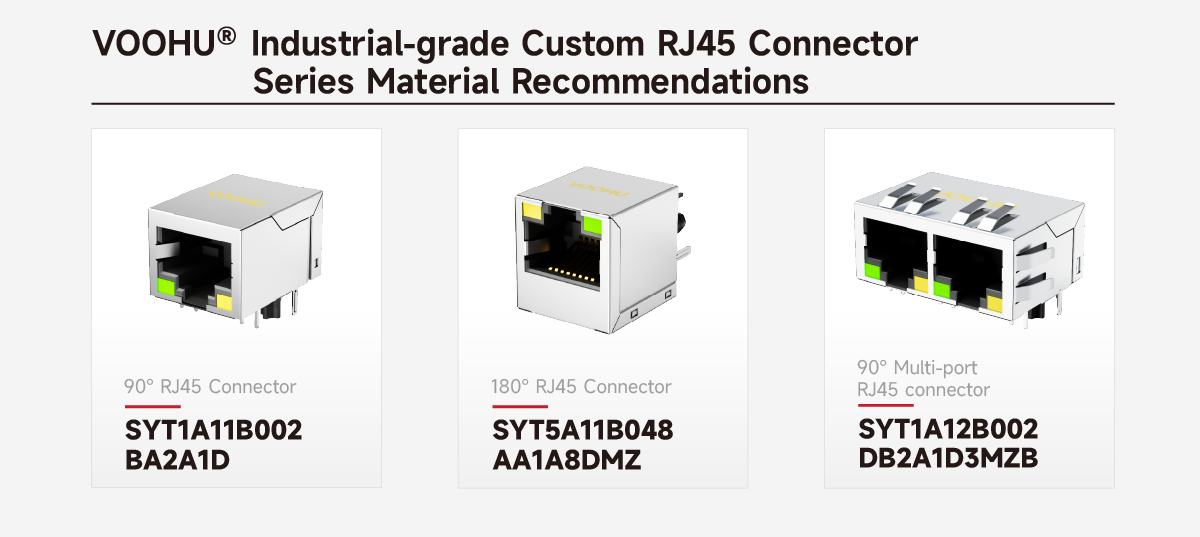
The core carrier of the solution is a new mold developed by VOOHU specifically for vibration resistance requirements. For different installation scenarios, we have simultaneously launched three dedicated molds:
Single-port horizontal: SYT1A11B002BA2A1D
1×2 horizontal: SYT1A12B002DB2A1D3MZB
1×2 vertical: SYT5A11B048AA1A8DMZ
The innovative design of these molds focuses on window panel size tightening technology, that is, precisely controlling the opening size of the RJ45 socket panel and the tolerances of its related structures, reducing the mating clearance between the connector and the matching plug to an extremely low level. Traditional loose tolerance designs are prone to slight wobble under vibration, accumulating stress; while VOOHU's "tight fit" design fundamentally suppresses this problem.
-
2. Precise Pre-Compensation for Material Shrinkage
Industrial RJ45 connector housings are typically made of high-strength engineering plastics (such as glass fiber reinforced PA66 and PBT) through insert injection molding. VOOHU incorporates a precision compensation mechanism into its mold design:
Segmented Compensation: For complex open-face areas (such as the inner frame of the port), the shrinkage rate varies in different parts due to differences in wall thickness and structure. The design employs segmented differential compensation for the sides and center, for example, making the compensation value on the sides of the port 0.2%~0.3% higher than that in the center, to offset potential warping after molding.
Material Matching: The matching of the coefficient of thermal expansion (CTE) between the metal inserts (shielding shell, terminals) and the plastic shell is comprehensively considered. If the CTE difference between the two is too large (>15ppm/℃), internal stress will be generated during high and low temperature cycling, leading to deformation or cracking of the open face, directly affecting the sealing and locking function under vibration. VOOHU ensures the reliability of material matching through precise material selection and simulation optimization.
3. Multiple Advantages of the "Tight Fit" Design
This "tight fit" design offers multiple benefits:
It significantly improves the overall structural rigidity and integrity of the connector, acting like a "suit of armor" to firmly lock in the internal components;
It effectively suppresses resonance amplification caused by vibration energy transmission, reducing the risk of structural fatigue;
It provides a more stable support environment for the internal contacts, reducing contact pressure fluctuations caused by shell deformation.
III. Rigorous Testing and Verification for Long-Term Reliability
To ensure that VOOHU industrial-grade RJ45 connectors can withstand the expected vibration environment, we have established a systematic testing standard with a severity level far exceeding that of commercial environments.
Vibration Testing
Using an HX/T1-600HZ vibration test bench, a fixed-amplitude sinusoidal sweep vibration test was performed:
Vibration Frequency: Variation between 10 and 55 Hz
Amplitude: 1.52 mm
Cycles: 10-55-10 Hz per cycle, 1 minute per cycle
Test Duration: 90 minutes each along three mutually perpendicular axes, totaling 270 minutes
Test Results:
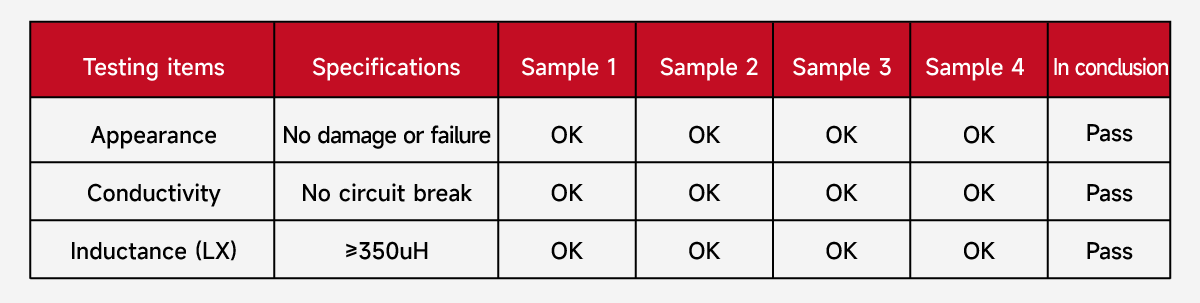
After the vibration test, all samples remained in good condition. No cracks in the plastic shell, terminal misalignment, pin deformation, or any visible structural damage were found. This demonstrates that the structural design, material selection, and assembly process of the VOOHU industrial-grade RJ45 effectively resist vibration stress of a given magnitude.
IV. Core Value Created for Customers
Through the integration of the above technical approaches, VOOHU's industrial-grade RJ45 female connector vibration-resistant solution brings the following uncompromising values to customers:
1. Qualitative Improvement in Connection Reliability
Enables network connections to stably withstand sinusoidal vibration and shock tests conforming to international standards, significantly reducing the probability of network packet loss and outages caused by vibration.
2. Significantly Extended Service Life
By suppressing fretting wear, the effective service life of the connector is extended, reducing total lifecycle maintenance costs.
3. Guaranteed Signal Integrity
Stable mechanical connections maintain good electrical performance, ensuring signal transmission quality in harsh environments and meeting high-standard industrial communication requirements.
Frequently Asked Questions
Q1: Why do ordinary RJ45 connectors fail under vibration?
A1: Ordinary RJ45 connectors use a loose tolerance design. Under continuous vibration, the plastic clips are prone to fatigue and loosening, and the internal springs may momentarily detach (break). Long-term stress may also cause pin deformation or shell cracking. VOOHU's industrial-grade solution uses a "tight fit" design and precise compensation for material shrinkage to structurally suppress these failures.
Q2: What is the core technology of VOOHU's vibration-resistant RJ45?
A2: The core technology is the tightening technology for the open face size. Through the development of a new mold, the opening size and tolerance of the socket panel are precisely controlled, reducing the mating gap between the connector and the plug to an extremely low level. Simultaneously, segmented compensation is used to control plastic shrinkage and optimize the matching of the thermal expansion coefficients of metal and plastic, ensuring a stable and reliable connection under a wide temperature range of -40℃ to 85℃ and continuous vibration.
Q3: What rigorous tests has this solution undergone?
A3: The VOOHU industrial-grade RJ45 was subjected to sinusoidal sweep vibration testing according to international standards: frequency 10-55Hz, amplitude 1.52mm, 90 minutes for each of the three axes (total 270 minutes). After the test, there were no cracks in the appearance, no deformation of the terminals, and the conductivity and inductance were qualified, verifying its long-term reliability under harsh vibration environment.
Conclusion
In the wave of Industry 4.0 and smart manufacturing, every stable connection relies on the reliable support of underlying components. From mold design to material control, from structural innovation to rigorous testing, VOOHU Electronics comprehensively reshapes the vibration resistance of industrial RJ45 connectors. Choose VOOHU, and let your equipment remain rock-solid even under vibration.
Newsletter subscription
Subscribe to our newsletter and stay updated on the latest information of our company and product.
Name
|
I agree that the information that I provide will be used in accordance with the terms of Voohu International Inc. Privacy & Cookies Policy