



Channel
A single channel BMS transformer isolates one communication link; a dual channel BMS transformer carries two links in one body, for example the upstream and downstream ports of one daisy chain node.
Transformer products
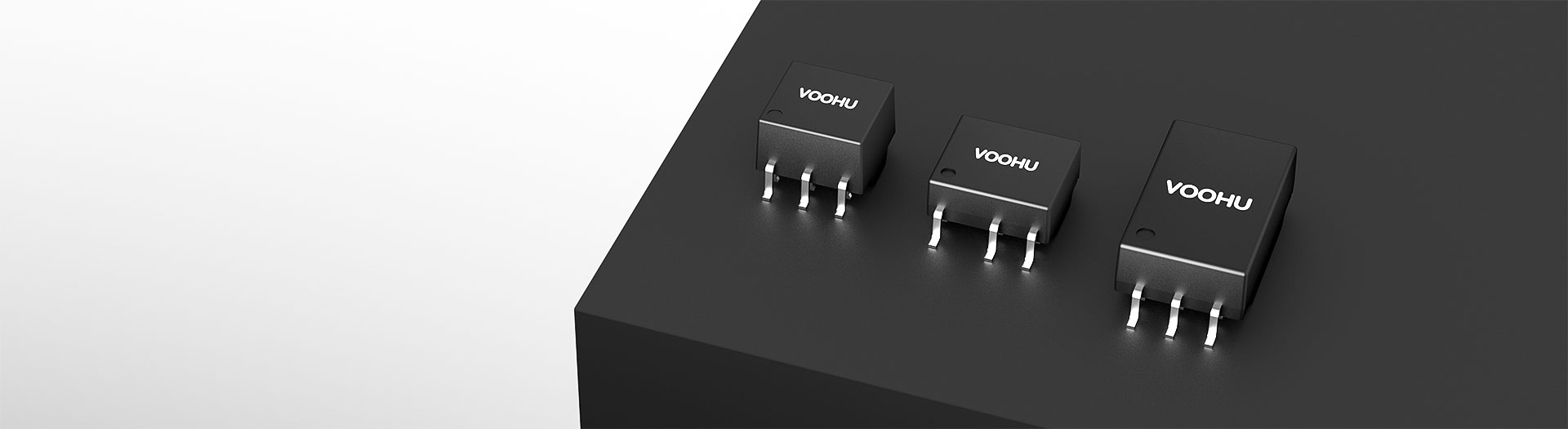
Select communication isolation magnetics for battery management systems. VOOHU offers single- and dual-channel BMS transformer options, with or without common mode chokes. Start with the BMS IC and communication link, then review working voltage, isolation test conditions and board space. If your part number is known, request samples or pricing directly.
Part number search & selector
The table uses the current English-site product records, published selection fields and part-specific technical-file links.
* Frozen Image and Part Number columns · drag horizontally to review all specifications
| Image | Datasheet | Compare | Downloads |
Channel
|
Working Voltage (VDC)
|
Isolation
|
CMC
|
Sample |
|---|
| Image | Part number | Datasheet | Compare | Downloads | Channel | Working Voltage (VDC) | Isolation | CMC | Sample |
|---|---|---|---|---|---|---|---|---|---|
 |
WHS06709BA | SPEC | Single | 1000 | 4300VDC | Yes |
|
||
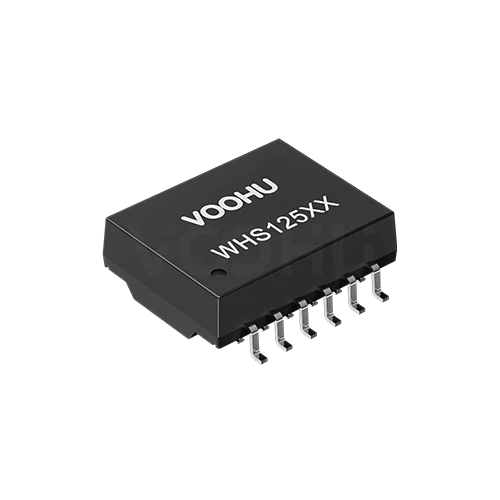 |
WHS12503A0 | SPEC | Dual | 1500 | 4300VDC | Yes |
|
||
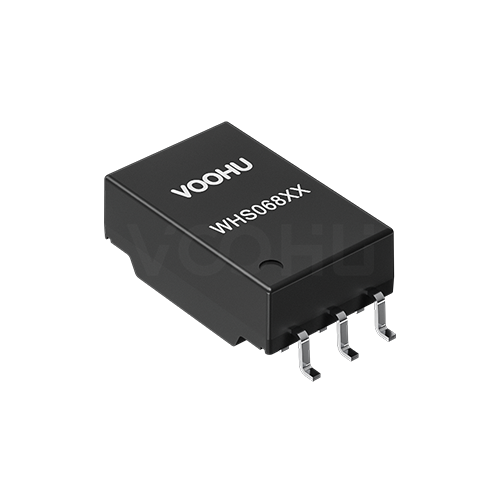 |
WHS06808A0 | SPEC | Single | 1000 | 4300VDC | No |
|
||
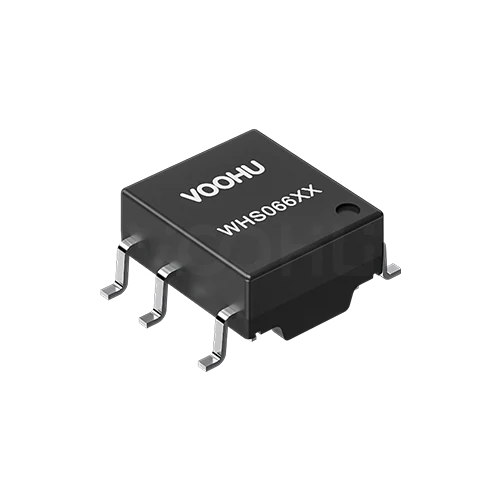 |
WHS06602A0 | SPEC | Single | 600 | 3100VAC | Yes |
|
||
|
|
WHS06601A0 | SPEC | Single | 1000 | 3700VAC | Yes |
|
||
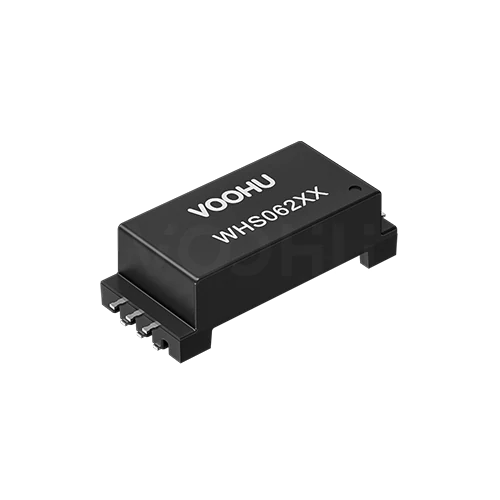 |
WHS06204A0 | SPEC | Single | 1500 | 6000VDC | No |
|
||
|
|
WHST06202E0 | SPEC | Single | 1500 | 8000VAC | Yes |
|
||
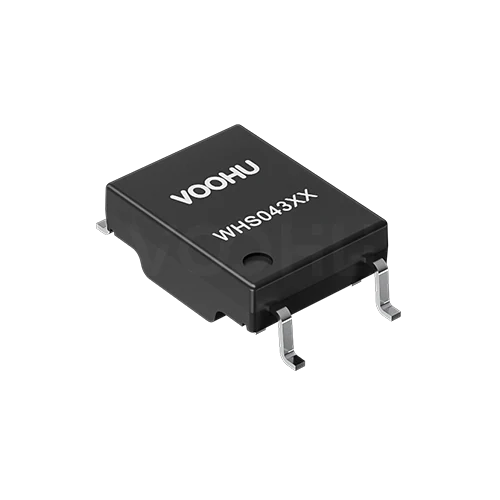 |
WHS04313A0 | SPEC | Single | 100 | 3000VAC | No |
|
||
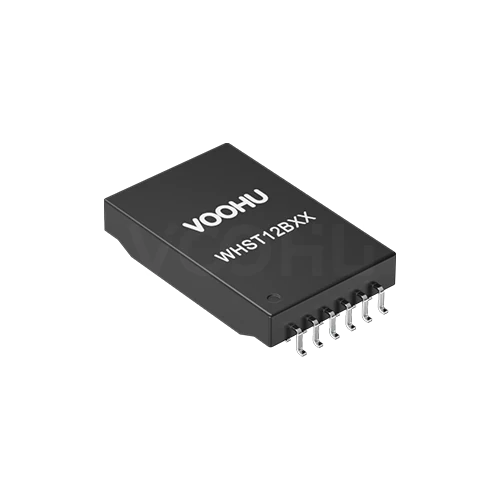 |
WHST12B03A0 | SPEC | Dual | 1500 | 6300VDC | Yes |
|
||
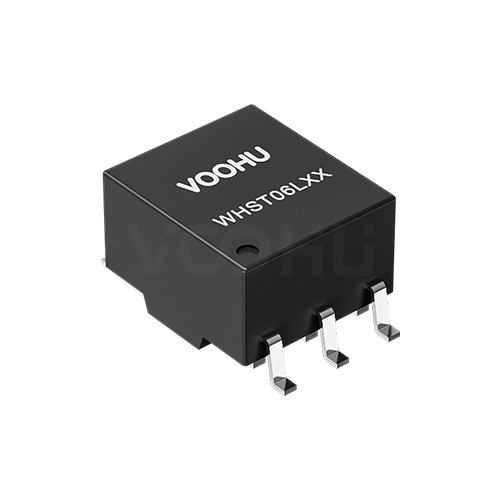 |
WHST06L15A0 | SPEC | Single | 1000 | 5000VDC | Yes |
|
||
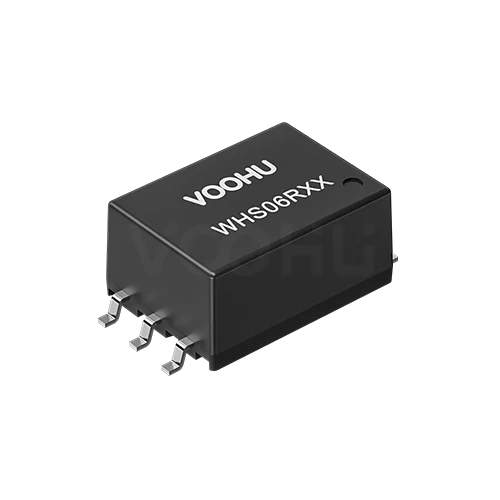 |
WHS06R03A0 | SPEC | Single | 1000 | 4000VAC | No |
|
||
 |
WHS06B07A0 | SPEC | Single | 1000 | 3500VAC | No |
|
||
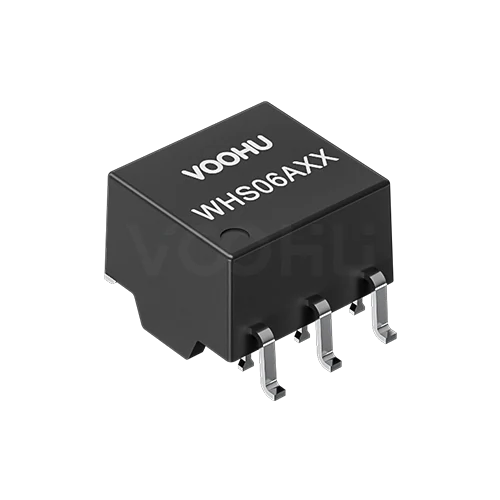 |
WHS06A01A0 | SPEC | Single | 1000 | 4300VDC | Yes |
|
||
 |
WHST06Y01A0 | SPEC | Single | 1000 | 4300VDC | Yes |
|
||
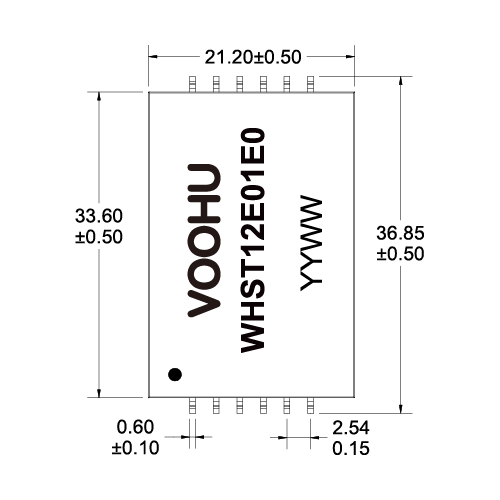 |
WHST12E01E0 | SPEC | Dual | 1600 | 4300VDC | Yes |
|
||
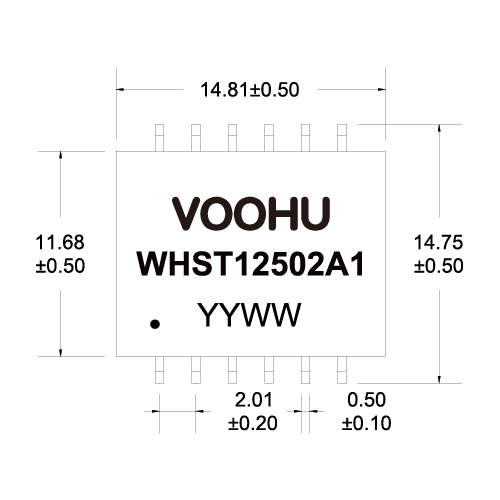 |
WHST12502A1 | SPEC | Dual | 1500 | 4300VDC | Yes |
|
Broaden the selected filters or clear the current search.
Is this another brand's part number? Find the VOOHU replacement →
Product family quick links
Counts reflect the current published product data.
How to select
Begin with the battery monitor IC and the voltage that can appear across each link, then let channel count, CMC and insulation data narrow the parts.
Note the cell monitor or AFE IC, its reference circuit, cable lengths and the highest voltage that can appear across each link, including charging and fault conditions.
Decide whether each node needs one link or two, and whether the common mode choke sits inside the transformer or on the board. Review turns ratio, center taps and primary inductance.
Read working voltage, hipot voltage and duration, creepage and clearance from the same part's datasheet, and confirm whether basic or reinforced insulation is required.
Keep the isolation gap clear under the part, route the pair symmetrically, then test communication errors and EMC on the real harness before release.
Key selection parameters
The table has four columns. Each one rules parts in or out, and each needs the datasheet condition behind it before a final choice.
A single channel BMS transformer isolates one communication link; a dual channel BMS transformer carries two links in one body, for example the upstream and downstream ports of one daisy chain node.
The continuous DC voltage the insulation is specified for, from 100 V to 1600 V in the table. Compare it with the highest voltage across the link, not with the nominal battery pack voltage.
The hipot test voltage, listed as AC or DC, for example 3000 VAC or 4300 VDC. The barrier only has to survive it for a brief test, so it does not replace a working-voltage or insulation-class check.
Yes means a common mode choke is built in; No leaves filtering to the board. A built-in CMC saves area and supports common mode rejection, but compare it with the IC reference design first.
Product family comparison
Rows split the range into single and dual channel parts and show the working voltage, isolation and CMC values found in each group. Treat it as a map of the range; the exact part row decides.
Return to the selector ↑Technical performance & application fit
Battery packs differ in stack voltage, cabling and qualification needs. Use the cards as a checklist for each pack type; none of them means a listed part is already approved for your system.
Downloads & technical resources
Look up any part number, whole or partial, to reach its BMS transformer datasheet plus STEP and footprint files. Take pin numbering and any isolation keep-out from the drawing.
Showing representative available file sets. Search to find a specific SKU.
VOOHU’s published product content is reviewed by its engineering team. Specifications, downloads and technical support information are tied to specific part numbers, so you can verify them before requesting samples or a quotation.
Category overview
A battery management system transformer carries communication across a voltage gap that would otherwise be dangerous or would corrupt the data.
A battery stack puts cell groups at very different potentials, so the cell monitor IC on one module cannot share a ground with the next. A BMS pulse transformer carries the data pulses magnetically across that gap, which is why the part is also called a BMS communication transformer or battery isolation transformer.
The link is often an isolated SPI scheme such as isoSPI, so a search for an isoSPI transformer or isolated SPI transformer leads to the same parts. The isolation rating is a safety parameter, not a signal parameter.
In a daisy chain each module passes data to the next, and every hop needs its own isolation. A daisy chain transformer is a signal part: the winding is designed for the pulse waveform and the insulation, not for delivering current to a load, so a power transformer of similar size will not work in its place.
Ring wiring, which closes the chain to give a second communication path, adds links but does not change the type of part each link needs.
A single channel part isolates one link. A dual channel part isolates two in one body, which saves board area when a node has a port toward each neighbour. A dual channel part does not provide redundancy on its own; whether the two channels are independent depends on the circuit, not the transformer.
When choosing a transformer for battery stack wiring, also decide whether a BMS transformer with CMC or a separate choke on the board suits your EMC plan.
FAQ & related guides
Answers on channels, insulation ratings, chokes, qualification and samples. Values for a given part number are set by its own datasheet.
It is chosen for signal coupling and isolation, not power output. For an isolated supply or active balancing, start from topology, power and controller instead and select power or balancing magnetics. The BMS label on a part does not make it suitable for either job.
Count the links in the communication schematic. A node with one port needs a single channel part; a node with ports toward both neighbours can use one dual channel part or two single parts. Check pinout, footprint and insulation for either option, and remember that dual channel does not by itself mean redundancy.
Working voltage is the continuous voltage the insulation is designed for, for example 1000 VDC or 1500 VDC. The isolation test voltage, such as 4300 VDC, is applied briefly between stated pins to prove the barrier. Do not infer one from the other, and do not combine ratings from different parts.
The name follows the interface. For isoSPI or any other isolated daisy-chain link, check turns ratio, primary inductance, center taps, leakage inductance and isolation against the IC vendor's reference design, then validate communication and EMC. Compatibility cannot be assumed for the whole catalog, so share the IC model for candidate matching.
Not by matching ratio or pin count. A built-in choke changes the link's common mode behaviour, and external filtering, termination and protection have to be reviewed with it. Share the IC, current part and schematic for FAE assessment; an integrated CMC is not automatically the better choice.
That depends on the voltage across the link, the safety standard and whether the barrier protects people or only equipment. Reinforced insulation needs larger creepage and clearance and a higher test voltage than basic insulation. Confirm the class your system needs, then check the BMS transformer datasheet for matching values.
The cell monitor IC and interface, the working voltage across each boundary, temperature range, cable length and PCB limits, plus any qualification requirement such as AEC-Q200. Pack voltage alone is not enough. For automotive programs, ask for part-specific qualification documents.
Send the part number, quantity, project stage and destination. Samples are available for evaluation and selected parts are free of charge; our FAE team confirms the options. Without a part number, start with the IC and link conditions. VOOHU winds these magnetics in its own Mianyang factory, and pricing and lead time are confirmed per part.
Engineer support
Send the candidate part number and the condition you need reviewed. Sample support can be added after the selection is clear; commercial questions may be discussed in the same engineering conversation.
Include the document revision
Temperature, isolation voltage and PoE current basis
Pin count, pitch and spacing between pin rows
To help prioritize samples and evaluation
When you need candidates and a comparison of differences
Engineering review identifies candidate parts and explains the differences.
From the selector or engineering review
Prototyping / pilot build / production
Specify sample and production timing separately
Compliance documents, material declarations or third-party reports
Samples are available for evaluation, and selected parts are free of charge. Our FAE team will be glad to confirm the options for your project. Sales will respond on business days.