
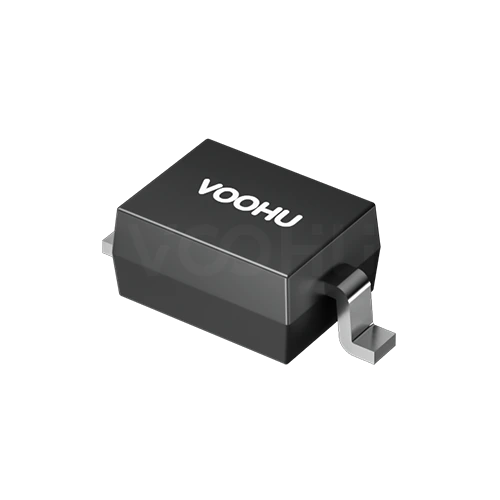
VOOHU Unidirectional TVS Diodes products

Protective Component products

Unidirectional TVS Diodes

A unidirectional TVS conducts hard in one direction and blocks in the other, which suits DC rails that never go negative. Set the standoff voltage above the worst-case rail including ripple, then confirm the clamping figure at your surge current.

Part number search & selector

Find Unidirectional TVS Diodes part numbers

The table uses the current English-site product records, published selection fields and part-specific technical-file links.

* Frozen Image and Part Number columns · drag horizontally to review all specifications

Unidirectional TVS Diodes product selection results
Image Part number Datasheet Compare Downloads PolarityVrwm/VVesd Air/Vesd ContactCj/pfPackageOperating Temperature Sample
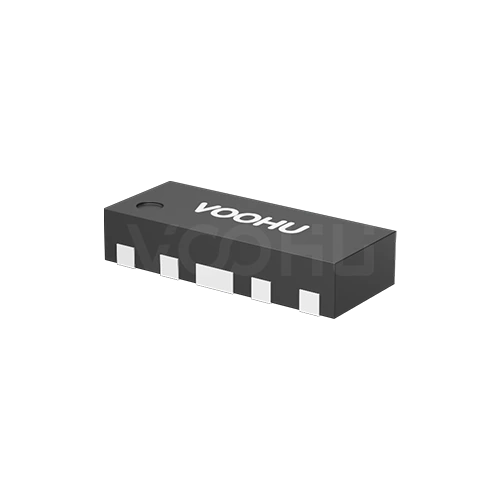
VOOHU WHALD03G4U Unidirectional TVS Diodes WHALD03G4U SPEC ESD3.3±15KV/±12KV0.3DFN2510-10L-40 °C to 125 °C
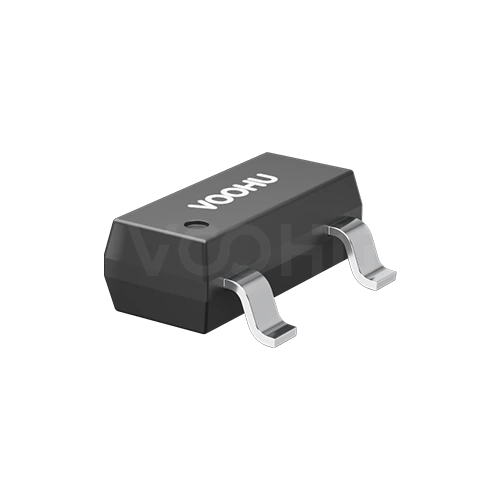
VOOHU WHALD30E2B Unidirectional TVS Diodes WHALD30E2B SPEC Bi-Directional ESD30±30KV/±30KV0.9SOT-23-40 °C to 125 °C
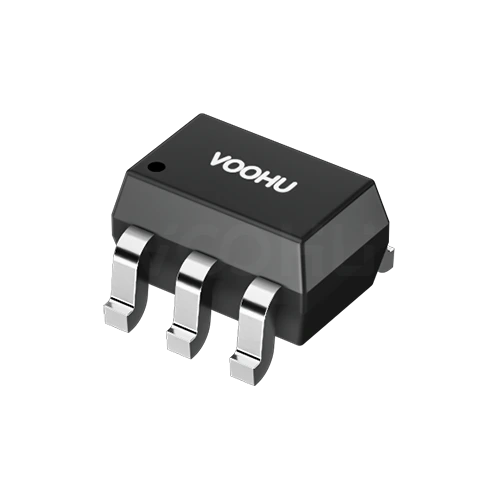
VOOHU WHTA5V01P2C Unidirectional TVS Diodes WHTA5V01P2C SPEC ESD5±20KV/±20KV1.2SOT-363-40 °C to 125 °C
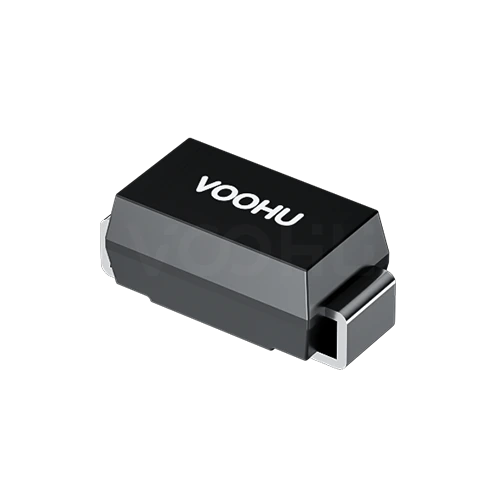
VOOHU WHTB058VA Unidirectional TVS Diodes WHTB058VA SPEC Bi-Directional TVS58--DO-214AB-60 °C to 150 °C
VOOHU WHTA3V30P8B Unidirectional TVS Diodes WHTA3V30P8B SPEC ESD3.3±30KV/±30KV0.8SOD323-40 °C to 125 °C

By polarity

Unidirectional and bidirectional devices

Polarity follows the signal: unidirectional for DC rails, bidirectional for AC and differential lines.

How to select

Selection guide for TVS Diodes and ESD Protection Devices

Selection steps, parameter explanations and the series comparison for TVS Diodes and ESD Protection Devices are on one page. Confirm the series there, then use this list for part numbers, files and samples.

Open the TVS Diodes and ESD Protection Devices selection guide →

Documents

TVS and ESD datasheets

Datasheets carry the clamping curve, pulse waveform conditions and capacitance.

0
PDF datasheets listed
0
3D file sets listed
0
PCB footprints listed

VOOHU’s published product content is reviewed by its engineering team. Specifications, downloads and technical support information are tied to specific part numbers, so you can verify them before requesting samples or a quotation.

FAQ

TVS and ESD questions engineers ask

Answers cover TVS against ESD, polarity choice, capacitance and placement.

When should I use a unidirectional TVS?

On a single polarity DC line that never goes negative in normal operation, such as a supply rail or a DC control input. The device blocks in the reverse direction and clamps in the forward direction, which gives tighter protection than a bidirectional part of the same voltage class.

What happens if I fit one to a bidirectional signal?

It conducts on the negative half and corrupts the signal, because a unidirectional part looks like a forward biased diode in that direction. On an AC line, a differential pair or a bus that swings both sides of ground, a bidirectional device is required rather than optional.

Does polarity matter when I place it?

Yes. A unidirectional device has a defined cathode and anode, marked on the package and defined in the datasheet. Fitting it the wrong way round leaves the line effectively unprotected in the direction that matters and forward biased in normal operation.

How do I set the standoff voltage?

Above the highest voltage the rail reaches in normal service, including ripple, tolerance and start-up transients that are not faults. Too low and the device leaks or conducts during operation. Then confirm the clamping voltage at your surge level stays below the protected device's rating.

How do I request samples or a quote?

With a complete part number, send the part number, quantity, delivery region and the date you need it. If you are still selecting, send the rail voltage, the surge standard you must meet and the withstand rating of the device being protected.

Engineer support

Continue after product selection

Send the candidate part number and the condition you need reviewed. Sample support can be added after the selection is clear; commercial questions may be discussed in the same engineering conversation.

  1. 1Selected part numbers
  2. 2Engineering review
  3. 3Sample request
  4. 4Commercial discussion

For a replacement review

  • Original part and datasheet

    Include the document revision

  • Operating conditions

    Temperature, isolation voltage and PoE current basis

  • Package constraints

    Pin count, pitch and spacing between pin rows

  • Project stage and annual volume

    To help prioritize samples and evaluation

  • Target review date

    When you need candidates and a comparison of differences

Engineering review identifies candidate parts and explains the differences.

For samples and a quotation

  • Candidate part numbers

    From the selector or engineering review

  • Quantity and project stage

    Prototyping / pilot build / production

  • Required delivery date

    Specify sample and production timing separately

  • Required documentation

    Compliance documents, material declarations or third-party reports

Samples are free of charge. Sample quantity and lead time depend on the part number and project stage. Sales will respond on business days.

Your information will be used only to respond to this support request.

Parameter comparison

Compare selected part numbers

Differences are presented for review; confirm final values and file revisions in each part-specific datasheet.