



Overvoltage Protection Components
Overvoltage protection on an Ethernet port or power input is usually a coordinated set of parts rather than one device. VOOHU supplies TVS diodes and ESD protection devices, gas discharge tubes (GDT) and metal oxide varistors (MOV) for surge and electrostatic protection, and our FAE team can check them together with the LAN transformer and RJ45 on the same port. Choose a family below to compare part numbers and datasheets, or send the port and test level you need to pass.
Overvoltage Protection Component Families
Each family is one circuit protection component technology for overvoltage protection. Choose by the threat (surge energy or ESD), the working voltage and the signal speed, then open the family to compare part numbers and datasheets.
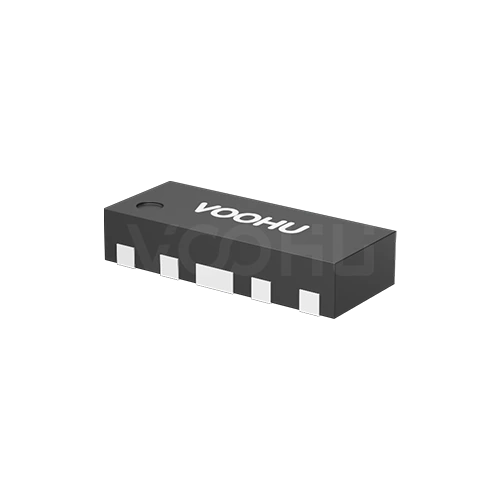
TVS Diodes and ESD Protection Devices
A TVS diode, or transient voltage suppressor, absorbs surge energy and is rated in peak pulse power at a stated waveform; an ESD protection diode clamps fast, low-energy static discharge with very low capacitance. Check polarity, standoff voltage, clamping voltage and capacitance.
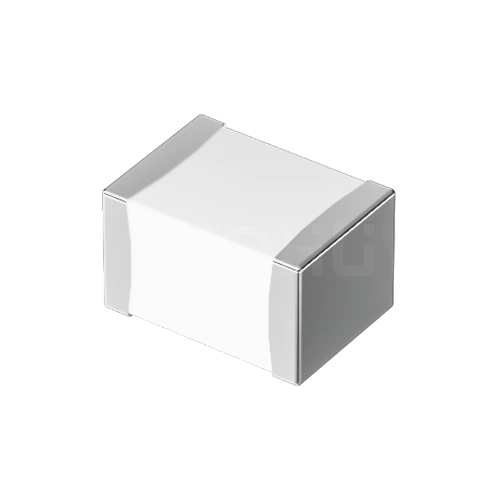
Gas Discharge Tubes (GDT)
Gas discharge tubes that divert high-energy surges to ground and reset once the surge passes, in two- and three-electrode versions. Capacitance is typically around one picofarad, so a GDT can sit on high-speed lines. Check DC and impulse breakdown voltage, surge current rating and the downstream clamp.
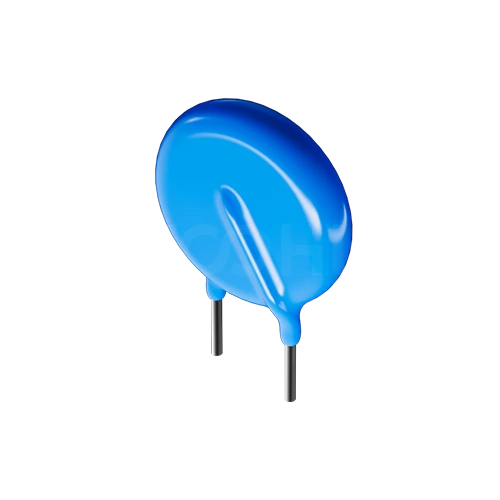
Metal Oxide Varistors (MOV)
Metal oxide varistors that absorb surge energy as their resistance drops sharply above the varistor voltage. Check maximum continuous voltage, clamping voltage at your surge current, energy rating and disc size, and pair the part with a fuse or thermal cut-out because varistors age with every surge.
Which Overvoltage Protection Does Your Port Need?
Need help identifying the right family? Contact our team →TVS and ESD devices sit in parallel with the protected line. When a surge or electrostatic discharge arrives, they conduct and clamp the voltage within a safe range. Set the standoff voltage above the highest working voltage, then confirm that the clamping voltage at your surge current stays below what the protected IC survives; the breakdown voltage sits between the two. On high-speed data ports capacitance decides whether a part is usable, which is why a low-capacitance ESD diode is a separate category from a surge-rated TVS.
Polarity follows the signal. A unidirectional TVS diode suits a DC rail that never goes negative in normal operation. A bidirectional TVS diode is symmetric, which AC lines, differential pairs and buses that swing both sides of ground require. A unidirectional part on such a line conducts on the negative half and corrupts the signal.
Gas discharge tubes and varistors handle the energy. A GDT ionises and diverts high-energy surges with very low capacitance, but it fires slowly, so its impulse breakdown voltage is what the downstream circuit sees. A metal oxide varistor limits voltage through its non-linear V–I characteristic and degrades a little with every surge, so its leakage current rises over its life. Either one is a front-end surge protection component and must be coordinated with a faster clamp such as a TVS diode, usually with series impedance between them.
Ethernet port protection is a chain, not a single overvoltage protection part. A common Ethernet surge protection scheme combines an energy-handling stage on the cable side, the isolation of the LAN transformer and a low-capacitance clamp for the residual, and outdoor or PoE ports need extra margin for lightning protection. For an RJ45 port, place the clamp as close to the connector as the layout allows, with a short, wide path to ground.
The right overvoltage protection combination depends on the port type, the working voltage and the test the product must pass, for example ESD to IEC 61000-4-2 or surge to IEC 61000-4-5, where surge current ratings are compared at a stated waveform such as 8/20 µs. Protection performance also depends on layout and grounding, so confirm it on the finished board.
- Polarity: unidirectional or bidirectional
- Standoff voltage above the working voltage
- Clamping voltage at the stated peak current
- ESD rating (contact / air discharge)
- Capacitance for the line speed
- Package and placement near the connector
- DC breakdown voltage or maximum continuous voltage
- Impulse breakdown voltage or clamping voltage
- Surge current at the stated waveform
- Energy rating and disc size (MOV)
- Coordination with downstream protection
- Fuse or thermal protection for varistors
Overvoltage Protection Datasheets, Samples and Selection Help
How to read surge and clamp ratings, what to send for a port protection review, and how samples are arranged.
Contact our team →What is the difference between a TVS diode and an ESD diode?
How should I plan overvoltage protection for an Ethernet port?
Is a GDT the same as a surge arrester?
Is a varistor a complete surge protection device?
Which ESD protection works for USB and other high-speed ports?
How do I request samples or an overvoltage protection review?
Send Your Overvoltage Protection Requirements
List the port type, working voltage, signal speed and the ESD or surge level the product must pass, and any part number you use today. A sales engineer can involve the FAE team to suggest a coordinated protection set; first reply within 1 business day.
Please include your requirements or part number. For samples or a quote, add the quantity and destination country.