
< img height="1" width="1" style="display:none" src="https://www.facebook.com/tr?id=778179321215791&ev=PageView&noscript=1" />
Products

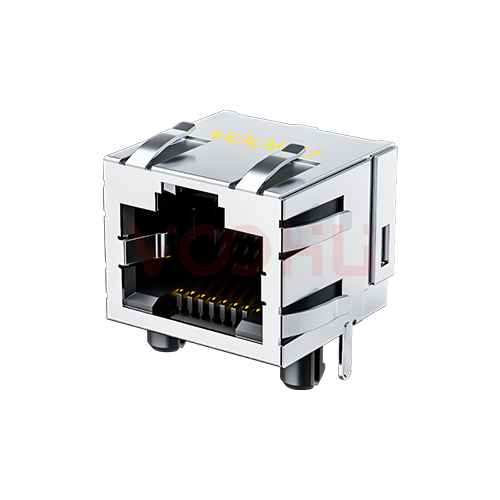
SYT561188HWA1DB4 90° side insertion 1X1 Tab Up RJ45 straight through 56 without light with shield

Homepage   /   Products

SYT561188HWA1DB4 90° side insertion 1X1 Tab Up RJ45 straight through 56 without light with shield

category: RJ45
SYT561188HWA1DB4  90° side insertion 1X1 Tab Up RJ45 straight through 56 without light with shield
Left click: Rotate | Right click: Pan | Scroll: Zoom
Product Parameters
Type RJ45
Connectory Type 90°
Ports 1*1
Tab Up
Integrated Connector Modules NO
Transmission rate ALL
PoE ALL
LED NO
Mount DIP
Shield Tabs YES
EMI / Gasket YES
Operating Temperature -40~+85°C
Solution
Ethernet
Ethernet
SPE
SPE
CAN
CAN
RS485
RS485
LVDS
LVDS
lsolated SPl
lsolated SPl
PoE
PoE
Push-Pull converter
Push-Pull converter
Technical Resources and Design Support
We also provide professional technical support and document download services, including: package library download, datasheet download, reference circuit design materials, 3D model download, etc.
For technical assistance, please click the button below to add customer service or visit the sample request page to fill out the form. We will serve you as soon as possible.
Technical Support Email: wohu03@wohu-tek.com    Phone: 400-1048-018
Quality Certifications
We strictly control product quality, including strict control of manufacturer qualifications, quality control processes and production process standards, and compliance with various certifications and safety standards. Currently, our products comply with industry standards and mainstream quality certifications, such as ISO 9001, ISO 14001, CE, RoHS, REACH, UL, etc.
For more details, please visit the Download Center to get documents or click the button below to add customer service. We will serve you as soon as possible.
ISO9001 ISO14001 RoHS REACH CE
Get a Quote or Samples
Whether you need sample testing, bulk purchasing or customized solutions, our sales team will respond quickly.
For small-volume orders, you can place orders directly on VOOHU Shop. We support VAT general/special invoices with a convenient and efficient process.
For technical assistance or sample requests, please click the button below to add customer service or visit the sample request page to fill out the form. We will serve you as soon as possible.
Customer Service Email: wohu09@wohu-tek.com    Phone: +86 180 2130 1120
VOOHU RJ45 CONNECTOR FAQ
Q
What certifications does VOOHU Electronics have?
A

VOOHU Electronics holds ISO 9001:2015 international quality management system certification, ISO 14001:2015 environmental certification, RoHS environmental certification, REACH certification, and CE certification.

Q
How can I quickly find products that suit my project?
A

On the VOOHU official website, you can quickly select products online through product categories or parameter filters (such as data rate, package type, operating temperature, current, etc.). You can also visit the "Solution" page to view recommended solutions that match your needs. For further support, you can directly contact the technical support team and provide your application scenario — we will accurately recommend the optimal solution for you.

Q
How does gold-plating thickness affect the performance of an RJ45 connector?
A

Gold-plating thickness directly affects contact resistance and service life. Commercial-grade RJ45 plating is typically 3-6 μin, suitable for general office environments; industrial grade is recommended to be ≥15 μin, effectively resisting oxidation and fretting corrosion. Plating that is too thin causes contact resistance to rise and the signal bit-error rate to increase after long-term use. VOOHU's standard RJ45 series has a contact gold-plating thickness of ≥15 μin and a mating life of ≥750 cycles.

Q
How can you quickly judge the quality of an RJ45 connector?
A

It can be judged simply from three aspects: First, visually inspect that the housing has no cracks or burrs, the gold pins are evenly plated with no oxidation/discoloration, and the shielding shell is ≥0.2 mm thick. Second, use a multimeter to check that contact resistance between contacts is on the order of tens of mΩ and insulation resistance is ≥1000 MΩ. Third, there should be a clear "click" locking sound during mating, and no looseness when wiggled after insertion. In industrial environments, an additional withstand-voltage test is recommended: no breakdown at 1000 VAC/60s between adjacent terminals.

Q
How do you choose between shielded RJ45 and unshielded RJ45?
A

It mainly depends on the electromagnetic interference intensity of the application environment. Unshielded RJ45 is suitable for office networks and ordinary indoor equipment—low cost and flexible to wire. Shielded RJ45 is suitable for strong EMI/RFI environments such as industrial workshops, medical equipment, and outdoor cabinets; it requires shielded cabling and proper grounding to be effective. Note that shielding must be consistent across the entire link—the connector, cable, and equipment end must all be grounded, otherwise the shield layer instead becomes an antenna.

Q
How can you quickly determine whether the internal transformer of an integrated-magnetics RJ45 is damaged?
A

Use a multimeter to measure the DC resistance between each wire pair on the primary side (RJ45 pin side); normally it should be within a few ohms and the four pairs should be roughly symmetrical in resistance. If open or short, the transformer is damaged. The secondary side (PHY side) resistance is typically tens to hundreds of ohms. You can also use an oscilloscope to observe the differential signal amplitude, which should normally be around ±1 V; if the amplitude is severely attenuated, the internal transformer may have core saturation or a turn-to-turn short.

Q
Where are the signal-integrity bottlenecks of CAT6/CAT6A RJ45 at 500 MHz? How can PCB routing compensate?
A

The bottlenecks lie mainly in three areas:

1. Pin-to-pin crosstalk inside the connector (NEXT/FEXT). The 8 contacts of a traditional RJ45 are closely arranged, and the coupling between the edge pin pairs (1-2, 7-8) and the middle pairs (3-6, 4-5) deteriorates sharply at high frequencies.

2. Intra-pair skew. The unequal lengths of the RJ45 internal pins cause the two signal paths within a differential pair to have inconsistent delays.

3. Impedance discontinuities—the transition region from the connector pins into the PCB pads is where impedance changes most abruptly.

PCB compensation measures: keep the intra-pair length error within 5 mil, and compensate in reverse on the PCB for the skew caused by unequal connector pin lengths; make a tapered impedance transition where the pads enter the differential traces, controlling the 100Ω differential impedance within ±10%; and use reference-plane cutouts or slotting in the PCB stack-up beneath the connector to reduce crosstalk between adjacent ports. VOOHU's CAT6A RJ45 incorporates inter-pin isolation shielding internally, keeping NEXT below -40 dB at 500 MHz.

Q
How does an RJ45 achieve LED color switching?
A

The LED color-switching function of an RJ45 interface is achieved primarily through the electronic-switch commutation function of the PHY chip (physical-layer chip). The logic is as follows: as the core that processes network signals, the PHY chip usually has a built-in control circuit and electronic-switch module for the LED indicators. When the LED color needs to be switched (e.g., switching among red/green/yellow based on network speed or link status), the PHY chip outputs different control signals to drive the internal electronic switches and change the LED current path—for example, switching the supply loop of different-colored LED beads, or adjusting the current direction of a single bead (such as a bi-color LED)—thereby achieving automatic or on-demand LED color switching without adding complex external mechanical switches or control circuits.