
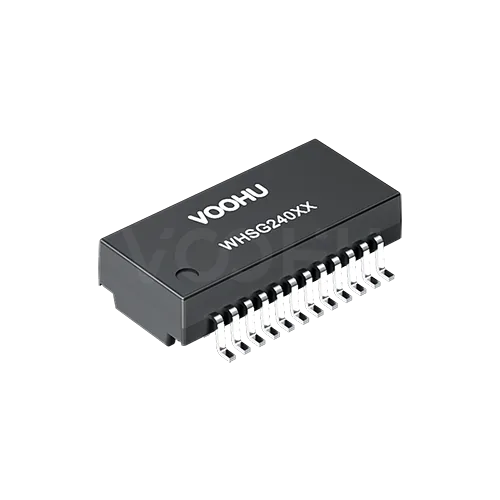
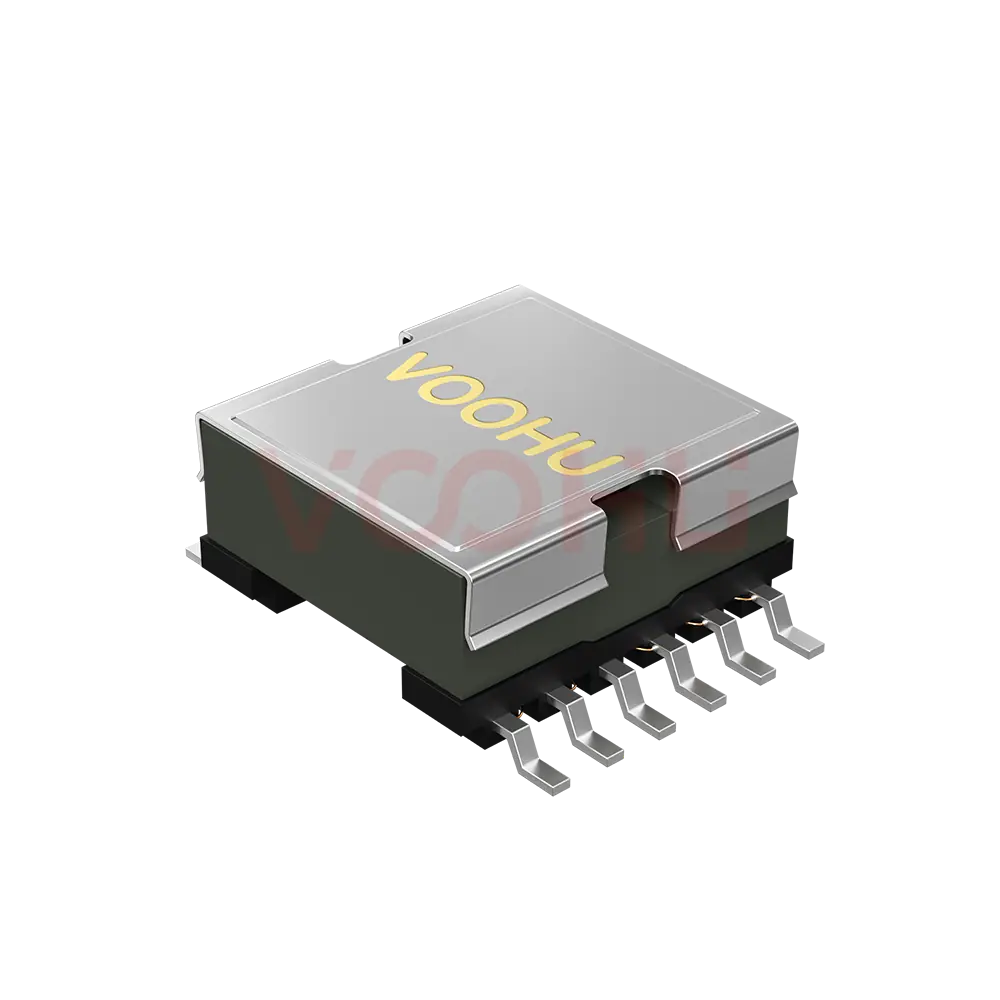
WHSG24002G Single Port SMD Gigabit Base-T PIN24 non-PoE LAN Transformer





Request a Quote
Leave your details and we will send a tailored volume quote.
Our sales team will contact you within 1 business day.
Contact Sales
Reach our sales team for pricing and lead time.

Submitted
We have received your request. Our sales team will contact you within 1 business day.


For technical assistance, please click the button below to add customer service or visit the sample request page to fill out the form. We will serve you as soon as possible.
Technical Support Email: fae.thorne@voohu.cn Phone: +86 400-1048-018
For more details, please visit the Download Center to get documents or click the button below to add customer service. We will serve you as soon as possible.





For small-volume orders, you can place orders directly on VOOHU Shop. We support VAT general/special invoices with a convenient and efficient process.
For technical assistance or sample requests, please click the button below to add customer service or visit the sample request page to fill out the form. We will serve you as soon as possible.
Customer Service Email: song.lei@voohu.cn Phone: +86 180 2130 1120
The WHSG24002G suits indoor Gigabit ports where the component temperature stays between 0 °C and +70 °C. Typical uses are desktop switches, the LAN ports of set-top boxes and routers, office IP cameras and Gigabit management ports inside a rack. The WHSG24002G is a single-port, non-PoE 100/1000 BASE-T transformer, so the port has to be powered locally.
Where the equipment must power up below 0 °C or sit in an outdoor enclosure, move to the wide-temperature part in the same package, which keeps the same land pattern and pin assignment. Other options are listed in the 100/1000 BASE-T range.
No. The datasheet assigns no DC balance current capability to the centre taps of the WHSG24002G, so they cannot be used as a supply path. There is no current item among its eleven electrical entries. Terminate the centre taps according to the reference design for the target PHY.
Note that the 8 mA DC bias quoted on the OCL line is not a permitted load current – it is a direct current superimposed during the inductance measurement, so that the figure reflects the core with a DC component present. Where the port has to deliver power, send VOOHU the target PoE wattage, current and temperature range and we will reselect from the 100/1000 BASE-T range.
Decide on operating temperature: take the WHSG24002TG for -40 °C to +85 °C, or the WHSG24002G where 0 °C to +70 °C is enough and usually better on cost and availability. The two are identical value for value on mechanical dimensions, suggested land pattern, pin-to-net assignment and every electrical figure, so switching between them changes neither the electrical design nor the board layout.
One point is worth watching: the storage range of the WHSG24002G is wider than its own operating range. That is a warehousing and shipping condition, not grounds for widening the operating window. Both parts sit in the 100/1000 BASE-T range.