

DC breakdown voltage
The voltage at which the tube fires under a slowly rising DC test, quoted as a window rather than a single figure. Select above the line working voltage.

Protective Component products
A gas discharge tube diverts high-energy surges to ground and clears itself once the surge passes. Select by DC breakdown voltage above the line working voltage, then check impulse breakdown, surge current rating and capacitance against what the downstream circuit can survive.
Part number search & selector
The table uses the current English-site product records, published selection fields and part-specific technical-file links.
* Frozen Image and Part Number columns · drag horizontally to review all specifications
| Image | Datasheet | Compare | Downloads |
Pins
|
Vbr(DC.V)
|
Spark-over Voltage/V
|
Cj/pf
|
Package
|
Operating Temperature
|
Sample |
|---|
| Image | Part number | Datasheet | Compare | Downloads | Pins | Vbr(DC.V) | Spark-over Voltage/V | Cj/pf | Package | Operating Temperature | Sample |
|---|---|---|---|---|---|---|---|---|---|---|---|
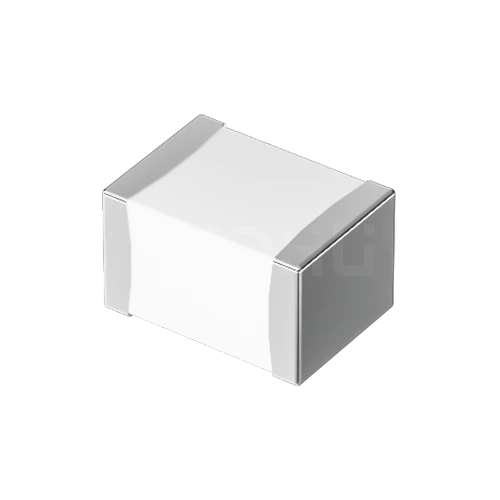 |
WHGD400V1P0B | SPEC | 2 PIN | 400 | 900 | 1 | 3.2mm*2.7mm | -40 °C to 85 °C |
|
||
|
|
WHGD200V1P0B | SPEC | 2 PIN | 200 | 650 | 1 | 3.2mm*2.7mm | -40 °C to 85 °C |
|
||
|
|
WHGD090V1P0B | SPEC | 2 PIN | 90 | 600 | 1 | 3.2mm*2.7mm | -40 °C to 85 °C |
|
Broaden the selected filters or clear the current search.
By electrode count
Electrode count decides how many lines one part protects and whether they fire together.
How to select
Start from the line voltage, then the surge standard, then the downstream withstand.
Choose a DC breakdown comfortably above the highest voltage the line sees in normal service, including ripple, so the tube never fires during operation.
Identify the waveform and level the equipment must survive, then pick a surge current rating that covers it with margin at the stated waveform.
A GDT is slow and its arc voltage is not zero. Confirm the downstream parts tolerate the impulse breakdown voltage and the time the tube takes to fire.
On signal lines a GDT is almost always the first stage. Add a faster, lower-clamping device behind it, with series impedance between them.
Parameters
Breakdown is quoted twice, DC and impulse, and the two behave very differently.
The voltage at which the tube fires under a slowly rising DC test, quoted as a window rather than a single figure. Select above the line working voltage.
The much higher voltage the tube reaches before firing on a fast surge. This, not the DC figure, is what the downstream circuit actually sees.
Peak current the tube can divert at a stated waveform, and how many times. Compare candidates at the same waveform or the numbers do not correspond.
Typically very low, often around one picofarad, which is why GDTs suit high-speed lines where semiconductor protection would load the signal.
Leakage in the off state. A high value means the tube is effectively invisible to the line until it fires.
Two electrodes protect one line to ground. Three electrodes share a common ground electrode across two lines so both fire together.
Compare
Energy handling, response speed and capacitance separate the three technologies.
Return to the selector ↑Application review
Confirm the surge class, the line count and what the GDT has to coordinate with.
Documents
Datasheets carry the tested breakdown window, surge rating and creepage requirements.
Showing representative available file sets. Search to find a specific SKU.
VOOHU’s published product content is reviewed by its engineering team. Specifications, downloads and technical support information are tied to specific part numbers, so you can verify them before requesting samples or a quotation.
Category overview
A GDT is the heavy-duty first stage of a protection chain. Understanding why it cannot be the only stage is what makes the selection work.
Discuss a new design
Contact FAE for a replacement assessment.
Already have a part number? Request samples or a quote.
Two electrodes sit in a sealed envelope of inert gas. Below the breakdown voltage the gap insulates and the tube is effectively absent from the circuit. When the voltage rises far enough the gas ionises, the gap collapses to a low-impedance arc and surge energy goes to ground. The arc then extinguishes and the tube resets.
A GDT fires slowly. On a fast surge the voltage overshoots well past the DC breakdown figure before the gas ionises, and that impulse figure is what the downstream circuit actually sees. The arc voltage is not zero either. So the GDT takes the energy and a faster clamp behind series impedance handles the residual.
Two things, and they are the reason to use one. Energy handling is far beyond what a semiconductor clamp of similar size can absorb. Capacitance is typically around one picofarad, so a GDT can sit on a high-speed line without loading it, where a TVS array would cost you bandwidth. That combination is hard to get any other way.
FAQ
Answers cover how a GDT works, where it sits in a protection chain and its limits.
Two electrodes face each other across a sealed gap filled with inert gas. Below the breakdown voltage the gap insulates and the tube is effectively invisible to the circuit. When the voltage rises far enough the gas ionises, the gap becomes a low-impedance arc and surge energy is diverted to ground. When the surge passes, the arc extinguishes and the tube resets itself.
The DC figure is measured under a slowly rising voltage and tells you when the tube fires in steady conditions. The impulse figure is measured on a fast surge and is much higher, because the gas needs time to ionise. The impulse voltage is what your downstream circuit actually sees, so design against that one.
Usually not. It fires slowly and its arc voltage is not zero, so a fast transient gets partway through before the tube responds. Standard practice puts the GDT first to absorb the energy, series impedance next, and a faster low-clamping device such as a TVS last to handle what remains.
Capacitance. A GDT is typically around one picofarad, low enough that it barely loads a high-speed differential pair. A semiconductor clamp with comparable energy handling would add far more capacitance and cost you bandwidth. That is the trade the GDT wins.
Set it comfortably above the highest voltage the line reaches in normal service, including ripple and any expected transients that are not faults. Too low and the tube fires during ordinary operation. Too high and the impulse breakdown may exceed what the downstream circuit can survive.
A two-electrode tube protects one line to ground. A three-electrode tube shares a common ground electrode between two lines, so when one side fires the other follows almost immediately. That keeps the voltage difference between the two lines small, which matters on balanced pairs.
They degrade with use. Each firing erodes the electrodes slightly, so the breakdown voltage drifts over many events. The datasheet states how many surges at a given waveform the part is rated for. In installations that see frequent strikes, treat the GDT as a maintenance item rather than a fit-and-forget part.
With a complete part number, send the part number, quantity, delivery region and the date you need it. If you are still selecting, send the line working voltage, the surge standard and level you must meet, the number of lines and the operating frequency if it is a high-speed port.
Engineer support
Send the candidate part number and the condition you need reviewed. Sample support can be added after the selection is clear; commercial questions may be discussed in the same engineering conversation.
Include the document revision
Temperature, isolation voltage and PoE current basis
Pin count, pitch and spacing between pin rows
To help prioritize samples and evaluation
When you need candidates and a comparison of differences
Engineering review identifies candidate parts and explains the differences.
From the selector or engineering review
Prototyping / pilot build / production
Specify sample and production timing separately
Compliance documents, material declarations or third-party reports
Samples are free of charge. Sample quantity and lead time depend on the part number and project stage. Sales will respond on business days.