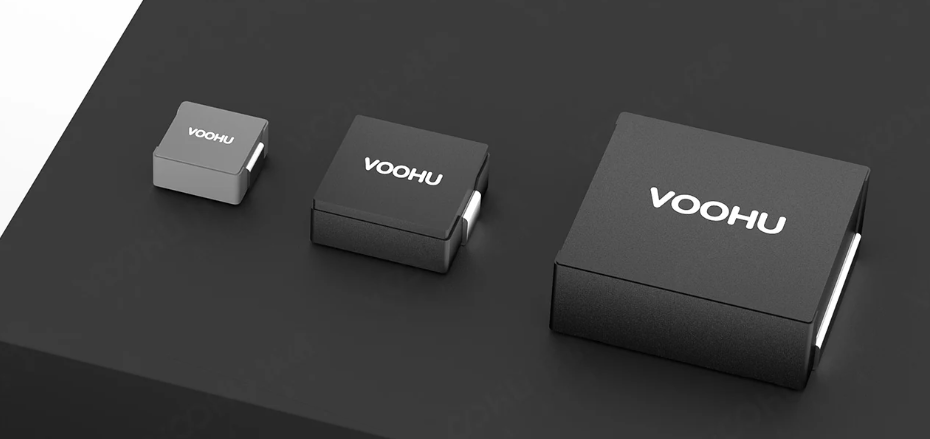

What should I do if imported network transformers are discontinued and prices rise? VOOHU domestic Pin-to-Pin replacement selection and verification points
What should I do if imported network transformers are discontinued and prices rise? VOOHU domestic Pin-to-Pin replacement selection and verification points
1. The real dilemma of engineers: The "replacement" of network transformers is not that simple
"This imported network transformer has been discontinued", "delivery is scheduled to be after 30 weeks", "the price has increased again" - Hardware engineers working on Ethernet ports are chased by procurement or PMC to ask the same question almost every year: Can they immediately find a domestic Pin-to-Pin replacement? The first reaction of many people is: the package is the same and the turns ratio label is the same (1CT:1CT), so just replace it directly for proofing. The result is often: the link can be connected with short jumpers and without PoE in the laboratory, but it overturns as soon as it reaches the EMC chamber, 100-meter long line, PoE power supply or incoming material withstand voltage test - the return loss (RL) falls out of the template at high frequencies, the network becomes hot or even magnetically saturated under PoE, and the Hipot is broken down. What's the problem? Because "encapsulation is the same" is only a necessary condition for substitution, but it is far from a sufficient condition. Starting from the physical layer and circuit principles, this article explains clearly what parameters must be aligned and what pitfalls a network transformer must align to achieve a truly reliable Pin-to-Pin replacement, and also provides the replacement selection and verification process for VOOHU's full range of LAN transformers.
2. Why “the same package” does not mean “can replace”: looking at key parameters from the physical layer
The network transformer is essentially a set of high-frequency isolation transformers with a center tap and a common mode choke. It is responsible for impedance matching, DC isolation, and common mode suppression at the same time. IEEE 802.3 and various PHY manufacturers have a complete set of electrical template requirements for it. Any misalignment may make the link "connectable but unreliable." The parameters that are most easily overlooked and most likely to cause trouble when replacing are broken down one by one below.
1. Turns ratio and PHY type: Look at the PHY reference design first, don’t just copy the nominal number
10/100/1000Base-T Most PHYs adopt a 1CT:1CT turns ratio and auto-transformer structure; however, there are still some PHYs that require 1:1 or specific taps. Current-driven and voltage-driven PHYs also have different requirements for turns ratios and terminations. Before substitution, be sure to check the magnets parameters and reference circuit recommended in the target PHY data sheet. Wrong selection of the turns ratio will directly lead to level mismatch, failure to negotiate, or increased bit error rate. The Gigabit port has four differential pairs that are all involved in sending and receiving, and the turns ratio and symmetry of the four windings must be consistent.
2. Open circuit inductance (OCL) and inductance drop under PoE bias
OCL is the core low-frequency parameter of the network transformer, and 802.3 requires ≥350µH (100kHz, 8mA bias). The real pitfall is the OCL drop under bias magnetism: when PoE is powered, DC current flows through the center tap, and the iron core DC magnetic flux rises, and the OCL will decrease accordingly; if the OCL of the substitute material drops below 350µH under the same bias, insufficient low-frequency inductance will cause baseline wander and bit errors. Many imported material manuals only indicate OCL at 0mA, while qualified domestic replacements must still meet 350µH at the same 8mA or even the actual PoE DC bias - this is the root cause of "it can pass without PoE, but problems will occur as soon as PoE is turned on".
3. Leakage inductance, return loss and insertion loss: compare the entire template curve
Leakage inductance (gigabit typical ≤0.4µH) directly affects high-frequency return loss and signal rising edges. The return loss (RL, the full frequency band is usually required to be ≥16~18dB), insertion loss (IL, ≤1.0~1.1dB), and common mode rejection ratio (CMRR) of alternative materials must meet the 802.3 template along the entire curve, rather than just looking at a certain frequency point to meet the standard. The larger the parasitic capacitance between layers and lines, the worse the CMRR and the easier it is for common mode noise to be coupled to the cable. This is a common driver of EMC radiated emission exceeding the standard.
4. PoE bias current rating and saturation margin
Under 802.3af/at/bt (Type1~4), the DC current of PSE or PD is injected into the network transformer through the center tap, and the iron core must leave sufficient unsaturation margin. If the imported material is marked with "PoE+" or a certain Type level, the bias current rating of the domestic replacement must be aligned or higher; at the same time, it depends on the winding DC resistance (DCR). DCR deviation will produce I²R heating and increase the temperature rise under the bias current. Ignoring this point will often cause the network to become hot and reduce reliability after long-term operation after replacement.
5. Isolation withstand voltage and safety regulations: It can be higher, not lower
The network transformer is responsible for primary side isolation, with a typical Hipot of 1500Vrms/2250Vdc; used for industrial, outdoor or ports that need to pass lightning surge certification, often requiring 3000~4000V or even higher. The isolation pressure resistance of the substitute materials should be aligned with or higher than that of the original imported materials, and 100% pressure resistance testing of incoming materials should be carried out in accordance with the safety regulations of the whole machine. Do not reduce specifications to save costs.
6. Pin definition and mechanical packaging: the same package may also be "mirror image"
For "same package", it is still necessary to check pin 1 direction, center tap pin position, LED pin (integrated RJ45), device height and taping direction pin by pin. Different manufacturers may have mirrored or rotated pin arrangements. If you do not check the direct patching, it may cause functional abnormalities or damage to the PHY. The reflow soldering curve and temperature resistance must also match the existing production line process to avoid new manufacturability problems caused by material changes.
3. VOOHU domestic alternative methodology and selection table
VOOHU Electronics provides solutions covering rates from 10M to 18GFull range of LAN transformerswithSYT Integrated Magnetic RJ45, which can be used as Pin-to-Pin replacement for mainstream imported packages. We recommend advancing according to the “five-step substitution method”, which is both fast and stable:
- Copy all parameters, not just the package:Call up the imported material manual and list the turns ratio, OCL (including bias conditions), RL/IL/CMRR template, leakage inductance, Hipot, PoE current level, DCR, package and pins to form a comparison list.
- Seat selection series:10/100M selection10/100Base-T series;Gigabit selection100/1000 series(Solo words such asWHSG24301GM, multi-port selection WHDG); 2.5G/5G selectionWHSQ/WHDQ series; For 10G/18G, choose WHSM series; if you want to replace RJ45 together to save area, choose SYT integrated magnetic RJ45.
- Key checks:Focus on checking that OCL ≥ 350µH, Hipot ≥ imported materials, RL/IL and the entire template meet the standards under bias magnetism, and the pins are in the same direction and are not mirrored.
- Proofing verification:100-meter long-line link, RL/IL frequency sweep, PoE temperature rise, Hipot, EMC pre-scan, five must-dos.
- Small batch certified:Trial production in small batches and re-test the consistency (Cpk), and then release the quantity after confirming that it is stable.
The following table provides a comparison of common imported packages to VOOHU alternative models to facilitate quick positioning (the models in the table are only marked with text for ease of retrieval):
| Application/Rate | Typical imported packaging type | VOOHU alternative models/series | turns ratio | Key calibration parameters | Applicable scenarios |
|---|---|---|---|---|---|
| 10/100M single port | 16pin SMD network change | 10/100Base-T series | 1CT:1CT | Bias magnetic OCL≥350µH, Hipot 1.5kV | Set-top box/100M network port/consumer |
| Gigabit single port | Single port Gigabit network converter (H1102 type) | WHSG24301GM | 1CT:1CT×4 | Bias magnetic OCL, RL≥16dB, PoE current | Switch/router/gateway single port |
| Gigabit multi-port | Dual/Four-port Gigabit Ethernet Converter | WHDG series | 1CT:1CT×4 | Crosstalk and magnetic bias consistency between ports | Multi-port switch/PSE |
| 2.5G/5G | Multi-rate network change | WHSQ/WHDQ series | 1CT:1CT×4 | Tighter RL/IL, insertion loss margin | 2.5G/5G uplink port |
| 10G/18G | 10G network transformation | WHSM series | According to PHY | High frequency RL, low insertion loss | 10G uplink/server |
| Integrated solution | Discrete network transformer + ordinary RJ45 | SYT Integrated Magnetic RJ45 | According to rate | LED/pin/PoE sync check | Space is tight/reducing BOM material number |
4. Conclusion
Domestic replacement of a network transformer, if done right, can simplify the supply chain, shorten delivery time, and reduce costs without sacrificing link quality and reliability; if done wrong, it will often cost more in the certification and mass production stages. There is only one core principle: align the parameters, not just the package - especially the OCL under bias, the entire RL/IL/CMRR template, isolation withstand voltage and PoE current rating, and then use the "five-step substitution method" to make the proofing verification solid. VOOHU provides imported standard full-rate LAN transformers and SYT integrated magnetic RJ45, as well as supporting samples, parameter comparison tables and FAE support to help engineers do the "material change" thing quickly and reliably.
Frequently Asked Questions (FAQ)
Q1. Can the network transformer be directly replaced with the same package?
cannot. Consistent encapsulation is only a necessary condition. It is also necessary to align the turns ratio, OCL under bias (≥350µH), RL/IL/CMRR entire template, isolation withstand voltage (≥ imported material), PoE bias current rating and pin direction, and complete proofing verification. If any one of them fails to meet the standards, it may be "connectable but unreliable" and overturn in the EMC darkroom or 100-meter long line scene.
Q2. Should I choose 1CT:1CT or 1:1 for the turns ratio?
Depends on PHY. 10/100/1000Base-T Most PHYs use a 1CT:1CT auto-coupling structure, but a few PHYs or current/voltage driver differences will require different turns ratios and terminations. Be sure to refer to the magnets and reference circuits recommended in the target PHY data sheet. Do not just copy the nominal values of old materials.
Q3. After changing the materials, the network port can be connected, but packets are occasionally lost and the long-term connection is unstable. How to troubleshoot?
Most likely, the OCL drop under bias magnetization causes the baseline to drift, or the leakage inductance/return loss does not meet the standard. Use a vector network analyzer to scan the RL/IL and compare it with the 802.3 template, and retest the OCL at 8mA and actual PoE bias. If you change the material to ≥350µH under bias (such as the WHSG series Gigabit network converter), the improvement can be obvious.
Q4. What should we pay special attention to when replacing under PoE power supply?
The center tap must pass the DC bias current. Focus on the bias current rating and saturation margin, which must be aligned with the PoE/PoE+ (Type1~4) level of the imported material. Also check the DCR. If the DCR is too large, it will generate heat and increase the temperature under bias. Be sure to ensure that OCL does not fall below 350µH under bias magnetism.
Q5. Can the isolation withstand voltage be reduced to a lower specification to save costs?
Not recommended. The substitute material Hipot should be aligned with or higher than the imported material (typically 1500Vrms/2250Vdc; the lightning surge port needs to be higher), and 100% of the incoming material voltage resistance test should be done according to the safety regulations of the whole machine. Falling below the system safety requirements will bring security and certification risks, and the material money saved is far from enough to compensate.
Q6. Can integrated magnetic RJ45 replace "discrete network transformer + ordinary RJ45"?
Can. SYT integrated magnetic RJ45 integrates network transformer and connector, which can replace discrete solutions, save area and BOM material number. When replacing, align the rate, PoE level, LED and pin definition. SI/EMC verification requires RL/IL frequency sweep and PoE temperature rise test just like the discrete solution.