
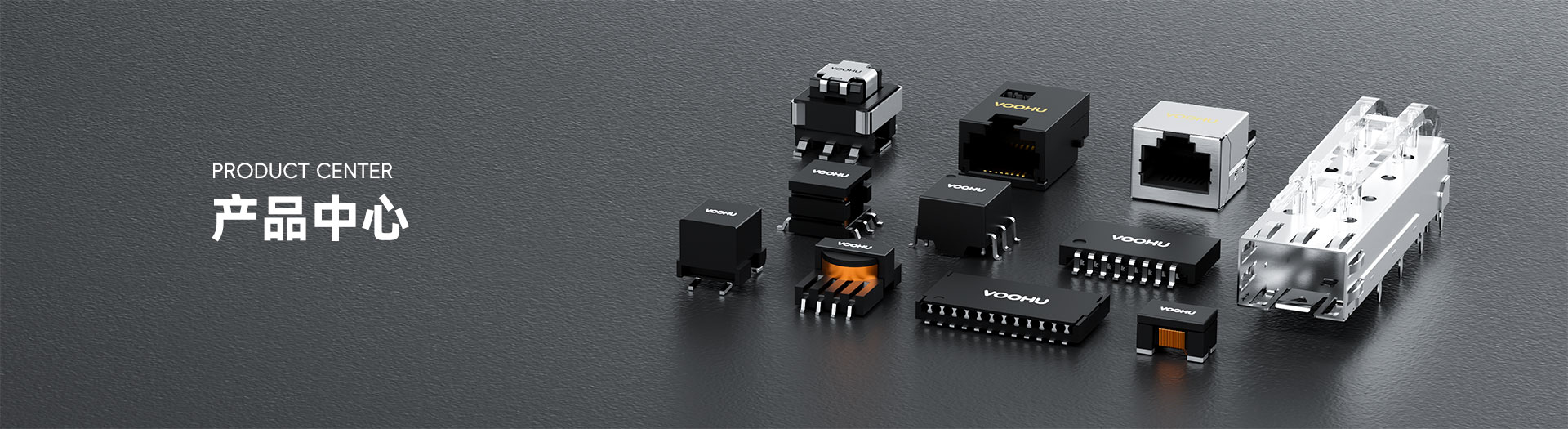
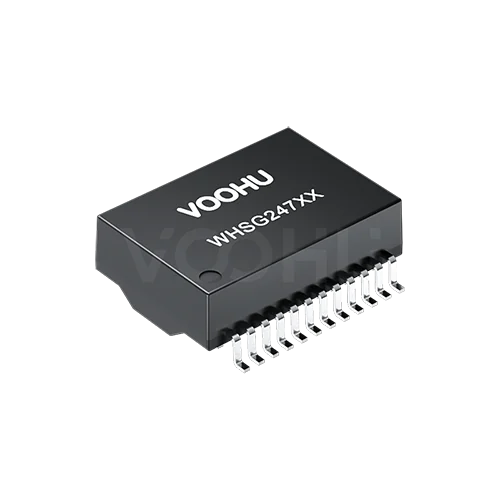
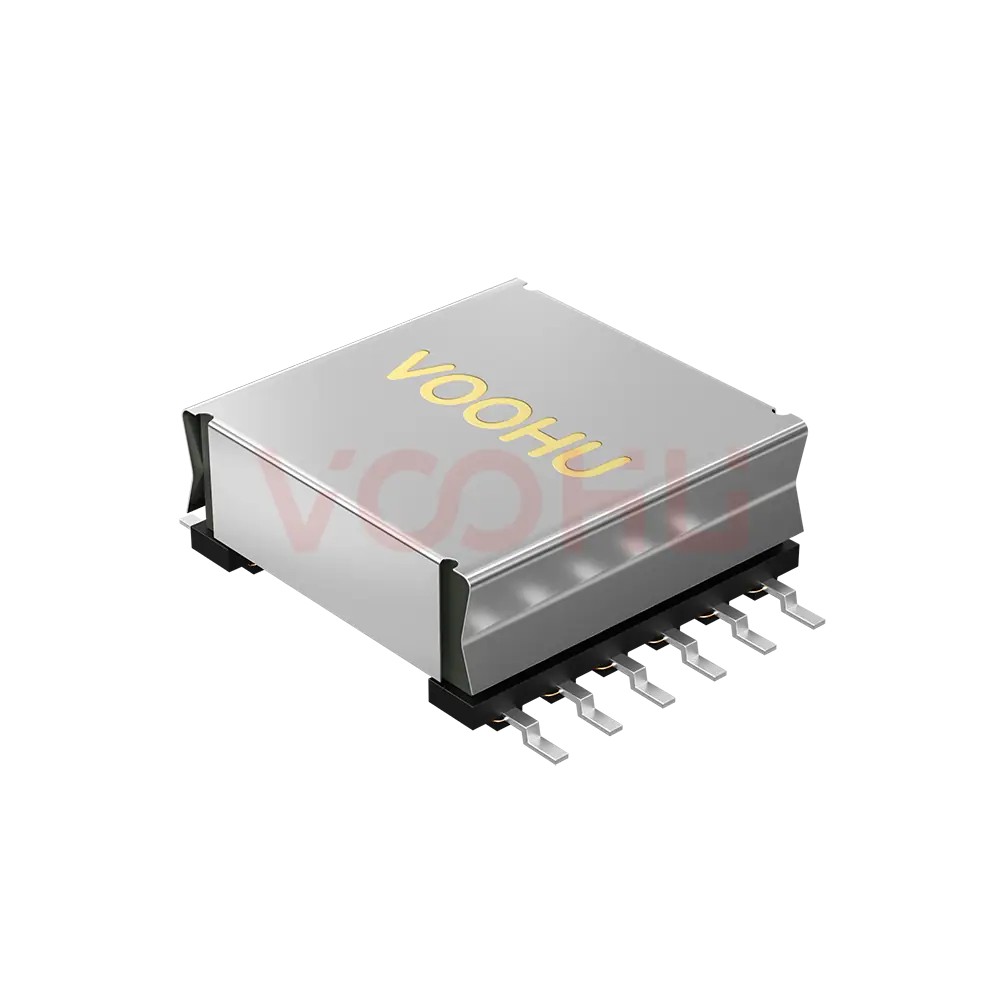
WHSG24706-1PTG Single Port SMD Gigabit Base-T PIN24 PoE LAN Transformer





Request a Quote
Leave your details and we will send a tailored volume quote.
Our sales team will contact you within 1 business day.
Contact Sales
Reach our sales team for pricing and lead time.

Submitted
We have received your request. Our sales team will contact you within 1 business day.




For technical assistance, please click the button below to add customer service or visit the sample request page to fill out the form. We will serve you as soon as possible.
Technical Support Email: fae.thorne@voohu.cn Phone: +86 400-1048-018
For more details, please visit the Download Center to get documents or click the button below to add customer service. We will serve you as soon as possible.





For small-volume orders, you can place orders directly on VOOHU Shop. We support VAT general/special invoices with a convenient and efficient process.
For technical assistance or sample requests, please click the button below to add customer service or visit the sample request page to fill out the form. We will serve you as soon as possible.
Customer Service Email: song.lei@voohu.cn Phone: +86 180 2130 1120
The WHSG24706-1PTG suits wide-temperature Gigabit PoE ports where the component may sit anywhere between -40 °C and +85 °C. Typical uses are access ports on industrial PoE switches, the network ports of outdoor access points and PTZ cameras, and powered ports inside unattended cabinets.
The datasheet for the WHSG24706-1PTG states "IEEE802.3at compliant performance---720mA Current Capability", so the centre taps are a supply path, but the figure is printed without a stated basis – ask VOOHU to confirm it before sizing copper. Where the port carries no power, a non-PoE part from the 100/1000 BASE-T range is the cheaper fit.
Because the WHSG24706-1PTG is meant to work with direct current flowing in its centre taps, and an inductance figure only means something when it is measured with that bias present. The OCL line of the WHSG24706-1PTG reads 350 µH min at 100 kHz and 0.1 V with a 14 mA DC bias, and that 14 mA is the current superimposed during the measurement – not a permitted load current and not a PoE rating.
Non-PoE parts in this package are measured at 8 mA instead. That is a difference in test conditions, so it cannot be turned round and read as a ranking of current capability. What actually sets the saturation margin in service is the direct current the centre taps really carry and the temperature the part reaches, both of which have to be checked in the finished unit.
Take the WHSG24706-1PTG unless the port needs the higher proof voltage, in which case take the WHSG24701F0. The two carry the same IEEE802.3at wording with the same 720 mA figure, the same temperature range and the same footprint, so isolation is the field that separates them: 1500 VAC for the WHSG24706-1PTG against 4000 VAC for the other part.
The WHSG24706-1PTG is published without a reflow profile or an MSL grade, so a line that needs those on file should either request them from VOOHU or select the part that publishes them. Nothing else in the electrical specification changes between the two.