
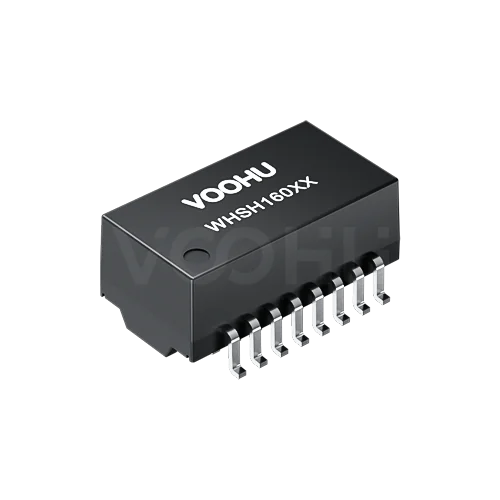
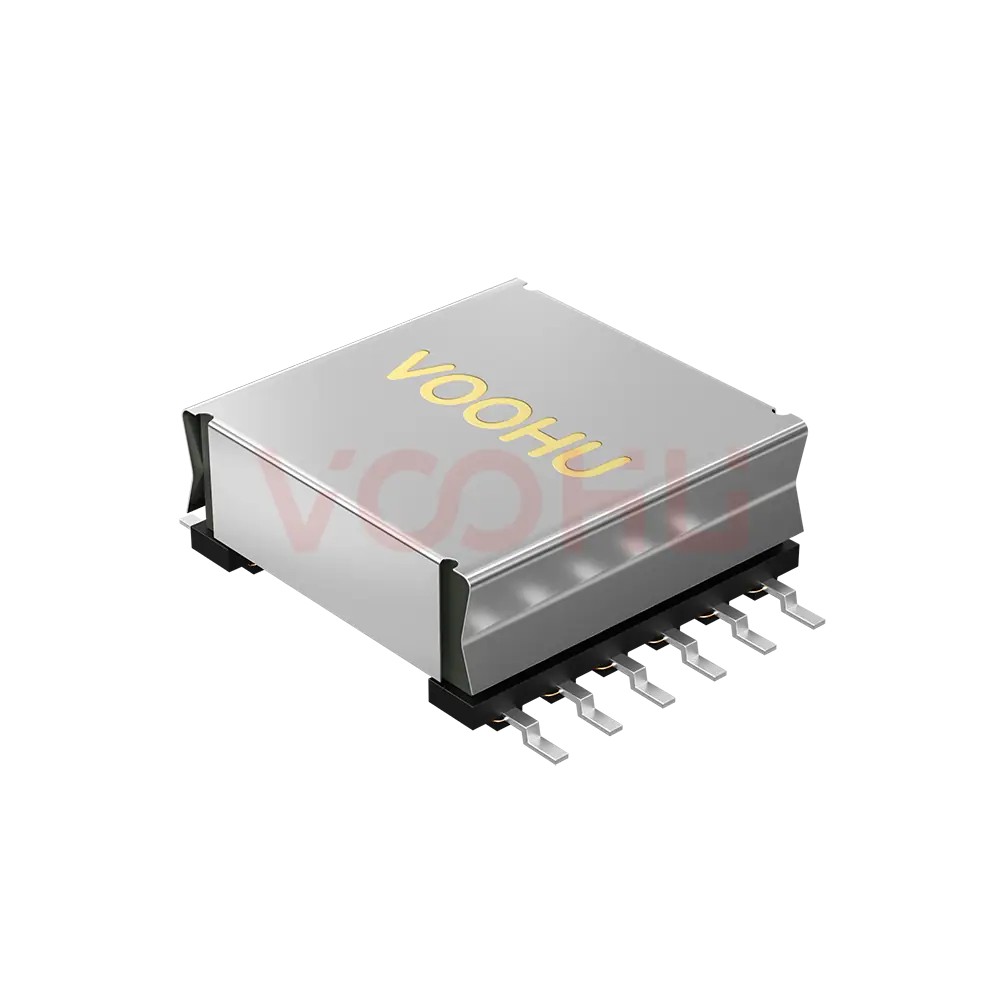
WHSH16037D0 Single Port SMD 10/100 BASE-TX PIN16 LAN Transformer





Request a Quote
Leave your details and we will send a tailored volume quote.
Our sales team will contact you within 1 business day.
Contact Sales
Reach our sales team for pricing and lead time.

Submitted
We have received your request. Our sales team will contact you within 1 business day.



For technical assistance, please click the button below to add customer service or visit the sample request page to fill out the form. We will serve you as soon as possible.
Technical Support Email: fae.thorne@voohu.cn Phone: +86 400-1048-018
For more details, please visit the Download Center to get documents or click the button below to add customer service. We will serve you as soon as possible.





For small-volume orders, you can place orders directly on VOOHU Shop. We support VAT general/special invoices with a convenient and efficient process.
For technical assistance or sample requests, please click the button below to add customer service or visit the sample request page to fill out the form. We will serve you as soon as possible.
Customer Service Email: song.lei@voohu.cn Phone: +86 180 2130 1120
Yes — the WHSH16037D0 carries both: an operating range of -40 °C to +85 °C and 2500 VAC isolation.
This is worth stating explicitly because the other parts on the same outline each upgrade one axis only, so a design needing both can easily conclude the family has no answer. The body is the same 12.80 × 6.90 mm as the standard parts in the 10/100 BASE-T range. Whether it drops onto the land pattern already on your board is something to confirm with VOOHU against your footprint drawing — matching outline dimensions alone are not enough to justify the swap.
Same voltage, different dwell: the WHSH16037D0 is held at 2500 VAC for 5 s where the WHS16037-2KG is held for 2 s. The leakage criterion is 1 mA on both.
Voltage and dwell form one condition, and comparing only the voltage half produces a false equivalence. Choose by which condition the system's safety documentation states — where the acceptance clause calls for the longer hold, the 5 s part is the one that matches. Operating temperature also differs between the two, so check that alongside.
No. Insertion loss, return loss, cross talk and common-mode rejection are stated exactly as on the standard parts of the same outline.
Insertion loss is -1.1 dB Max from 1–100 MHz, return loss is given in four bands, and cross talk and common-mode rejection are both -30 dB Min. The higher isolation on the WHSH16037D0 is therefore not bought with bandwidth or link margin. The datasheet also carries an MSL grade and a complete reflow profile. Other grades are listed in the 10/100 BASE-T range.